
Placeways: An Online Heritage Exhibition & Walk
In Association with Creative Places Ballaghaderreen & Ballaghaderreen Arts Festival.
Welcome!
Stories, Memories, Vintage Photos & Memorabilia with Anna King, Eithne Gallagher & Community.

On August 10th, 2024, Anna and Eithne Gallagher hosted a reflective heritage exhibition at ‘The Shambles’ in Ballaghaderreen. This event marked the culmination of eight months of Anna’s involvement with PLACEWAYS, a series of walks exploring creative ways of connecting with place. The exhibition featured heartfelt contributions from community members, as well as stories and folklore collected during Anna’s artist residency.

More photos of the event below.
Placeways

Monica Duff’s Store: Original Photographs from the ‘Michael Gallagher Collection’ - generously on loan from Malachy Gallagher.

Busy Market Day in Ballaghaderreen.
We begin our online version of this event with an audio story about the old Ballaghaderreen Railway Station, followed by another audio piece by Michael Cawley, who shares some of his treasured memories of Monica Duff's store. Additionally, we have included a selection of original photographs from the ‘Michael Gallagher Collection’, accompanied by photographs and cherished memorabilia shared by our local community. This curated selection offers a glimpse into the heart and soul of the town’s rich heritage.
Join Seamus and Imelda as they share their recollections of the Railway Station in Ballaghaderreen. Credit slide included.
Charles Strickland petitioned for a station to be built because Ballaghaderreen had become a significant trading centre for the whole region. After many years of delay, the Ballaghaderreen to Kilfree branch railway line opened November 2nd, 1874. There were two intermediate halts at Edmondstown and Island Rd.
Once a vital hub on the Midland Great Western line to Sligo, the station facilitated the transportation of goods, including agricultural produce and livestock, alongside three daily passenger trains.
It was an incredibly sad day for the local community when the train ceased operation on 2nd February 1963. More info here.

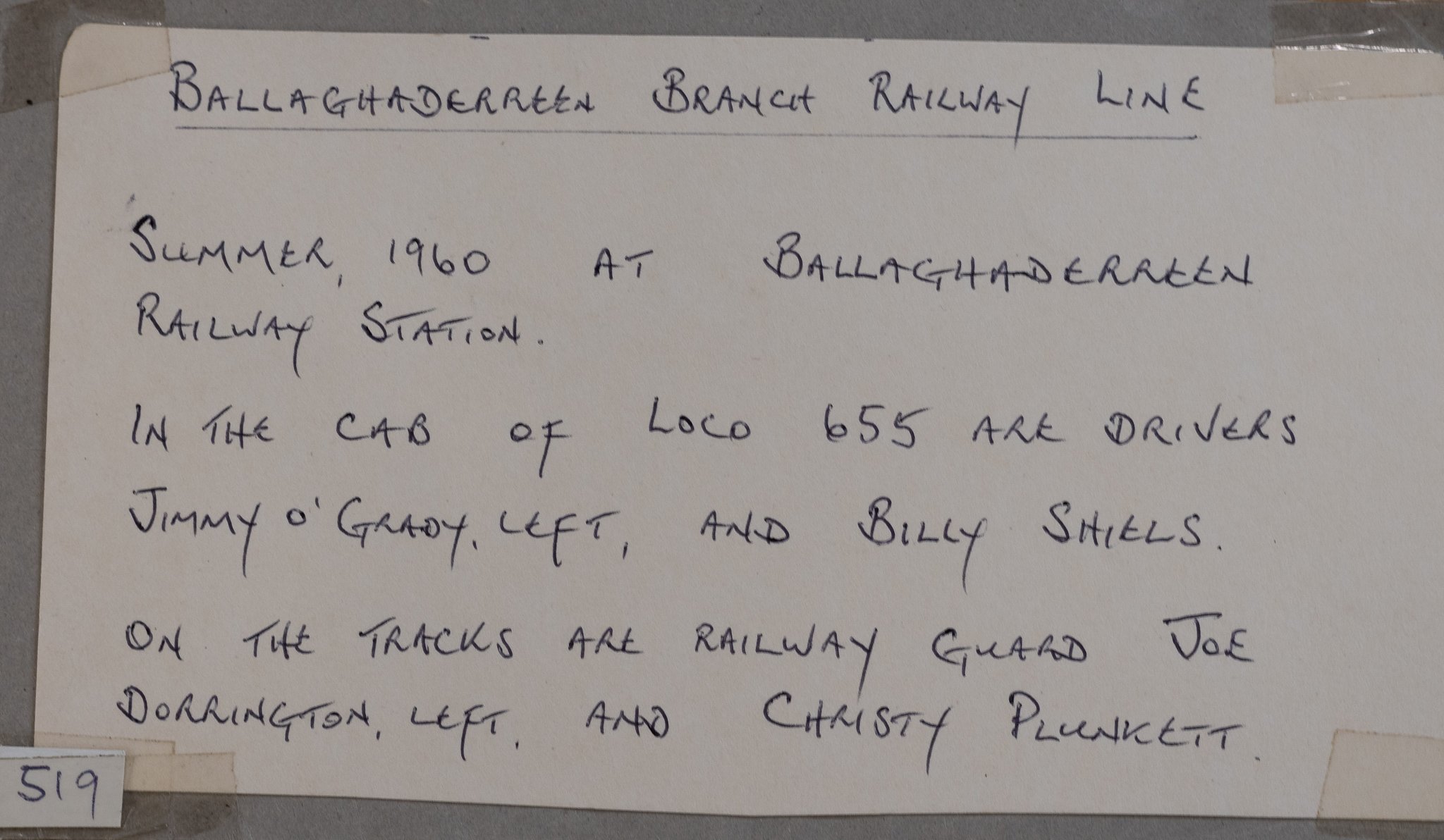
Ballaghaderreen Railway Station. 1957. Original Photographs from the ‘Michael Gallagher Collection’.


The Michael Gallagher Collection




The Michael Gallagher Collection


Rear Railway Lamp from the last train of 1963. Photo taken by Anna King at the Exhibition on August 10th. Lamp kindly on loan from Padraig Mulligan.

Original Painting by Seamus Coleman of the Railway Station. This painting was inspired by our PLACEWAYS storytelling project. It SOLD at the Ballahaderreen Art Festival Art Exhib.
Monica Duffs

Original Photograph from the ‘Michael Gallagher Collection’.
Thomas Dillon (ancestor of former Fine Gael leader James Dillon) opened a store in Ballaghaderreen around 1812. This store was later passed on to his sister, Monica Duff, and then to Anne Deane, Monica’s daughter. Under Anne’s management, Mon Duff’s became one of the largest employers in the region.
The store included a grocery, drapery department, ironmonger’s store, boot, shoe, and leather warehouse, bakery, and a spacious yard dealing in manure, farm seeds, animal feedstuffs, fuel, and builders' supplies. It also housed a bottling factory and operated a thriving farm at Kilcolman on the town’s edge. (Ref: 1.).
Listen to Michael Cawley's memories of living at Monica Duffs. Please scroll up to the beginning if you land here.

Original Photograph of Mon Duff's window display, from Pat Timon.

Jim Hiney and Henry Murray. Duff's Bar. August 1964 - Photo from Pat Timon.
The Michael Cawley Collection
All photos of original memorabilia taken by Anna, unless stated otherwise.

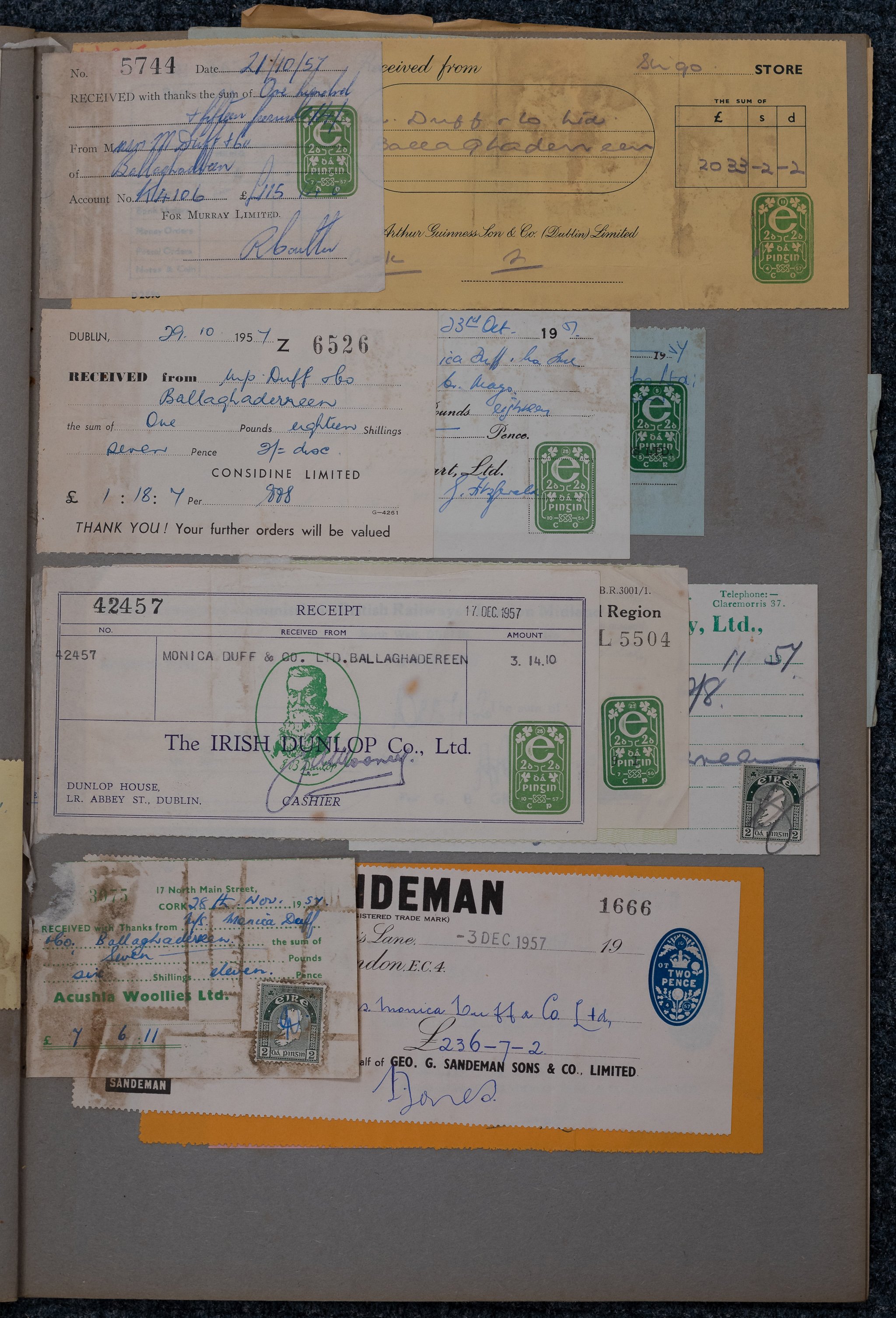
Trading Journal: 1878


Monica Duff Stamps.

Time Book & Staff Wages, with Stamp.


Original Printing Plate


Original Printing Plates

Hat Stretcher
The Tom & Brian Colleran Collection




The Imelda Towey Collection

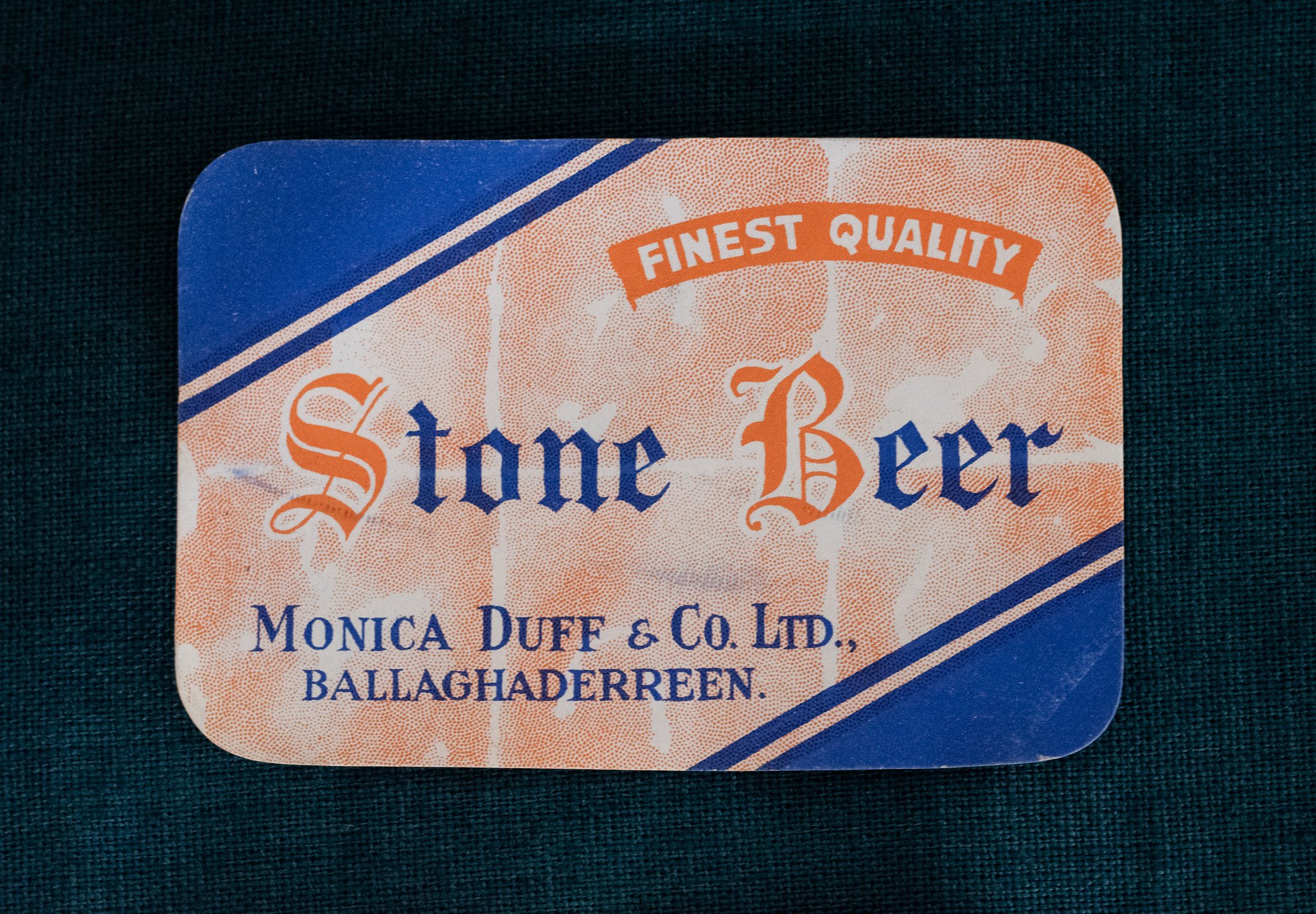

Bottle from Pat Timon who worked at Monica Duff’s bottling department from 1965 - 1967.


Pipes on loan from John Coleman.


A sneak peek behind the scenes, unpacking the Michael Gallagher Collection:
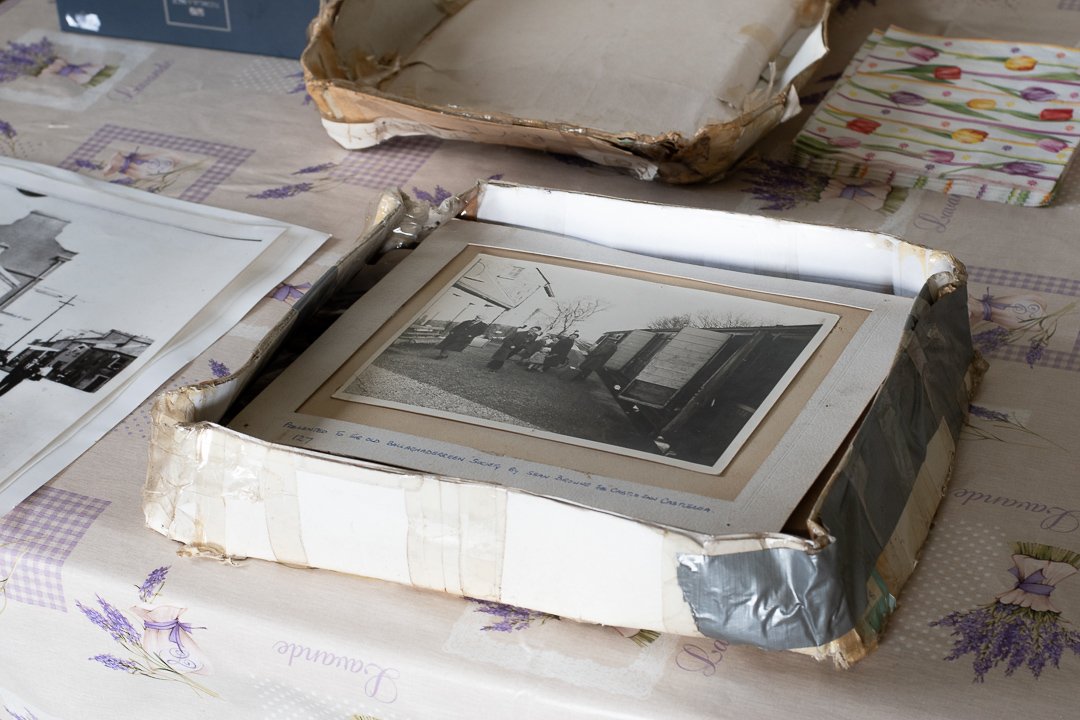
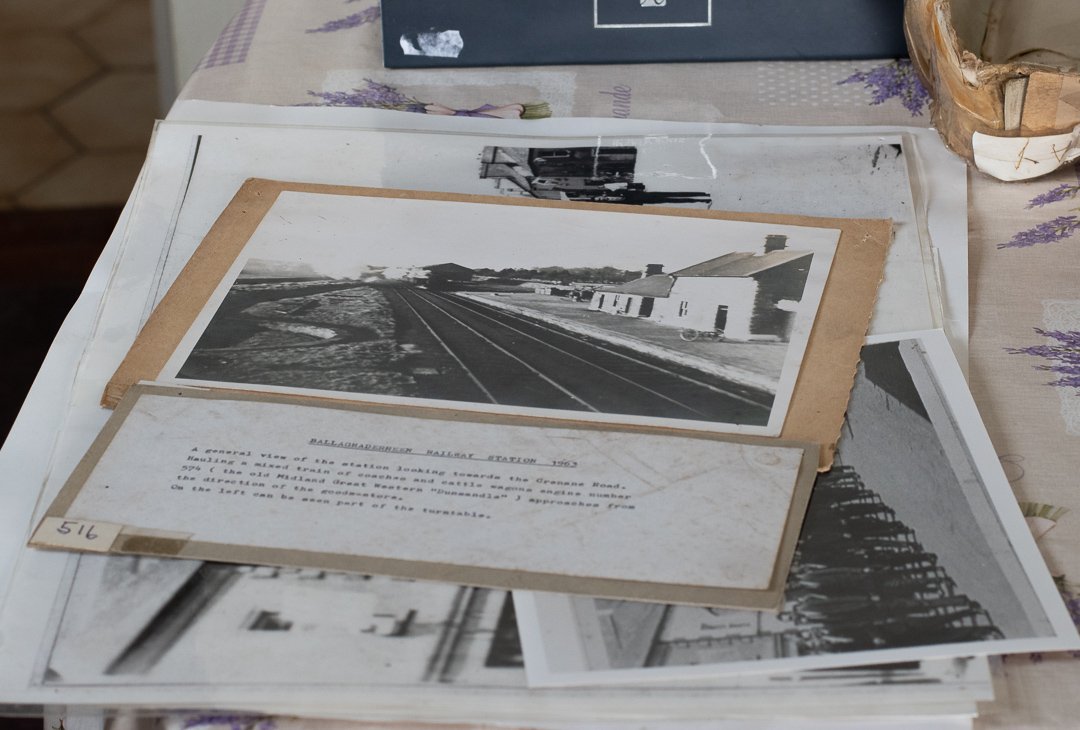
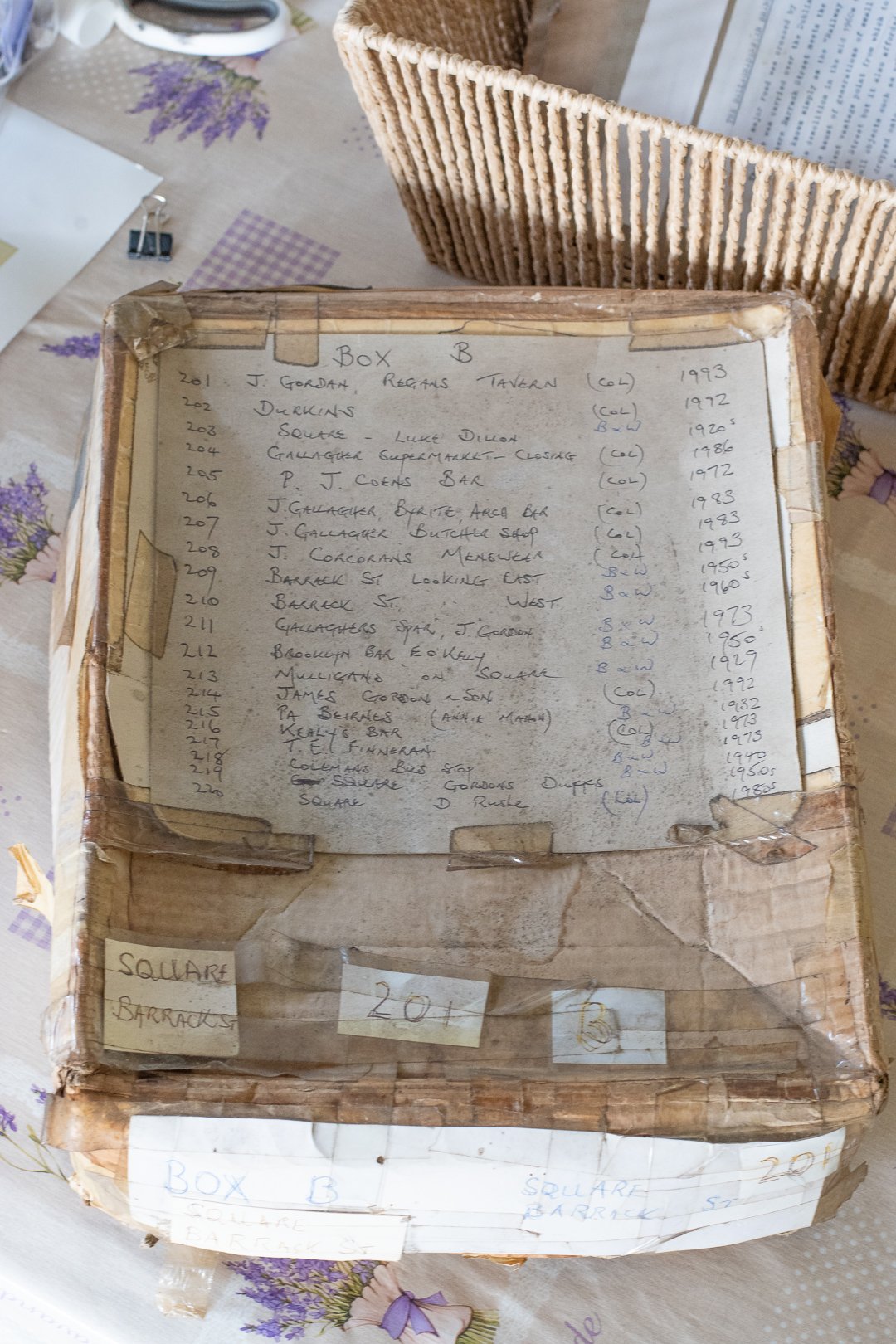

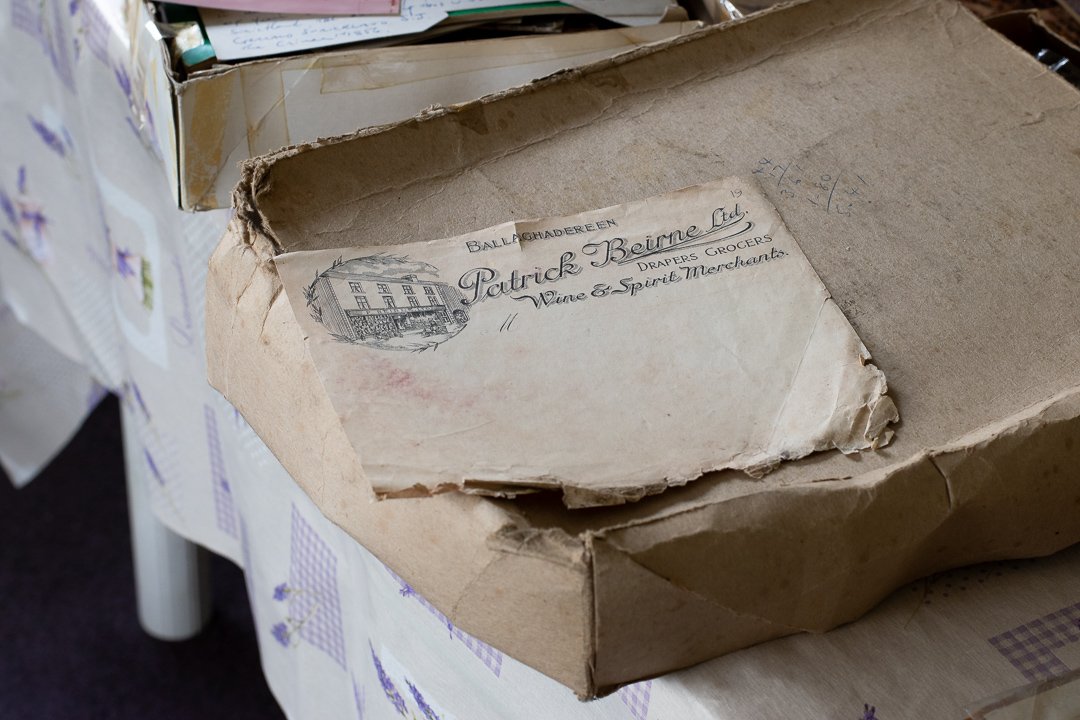
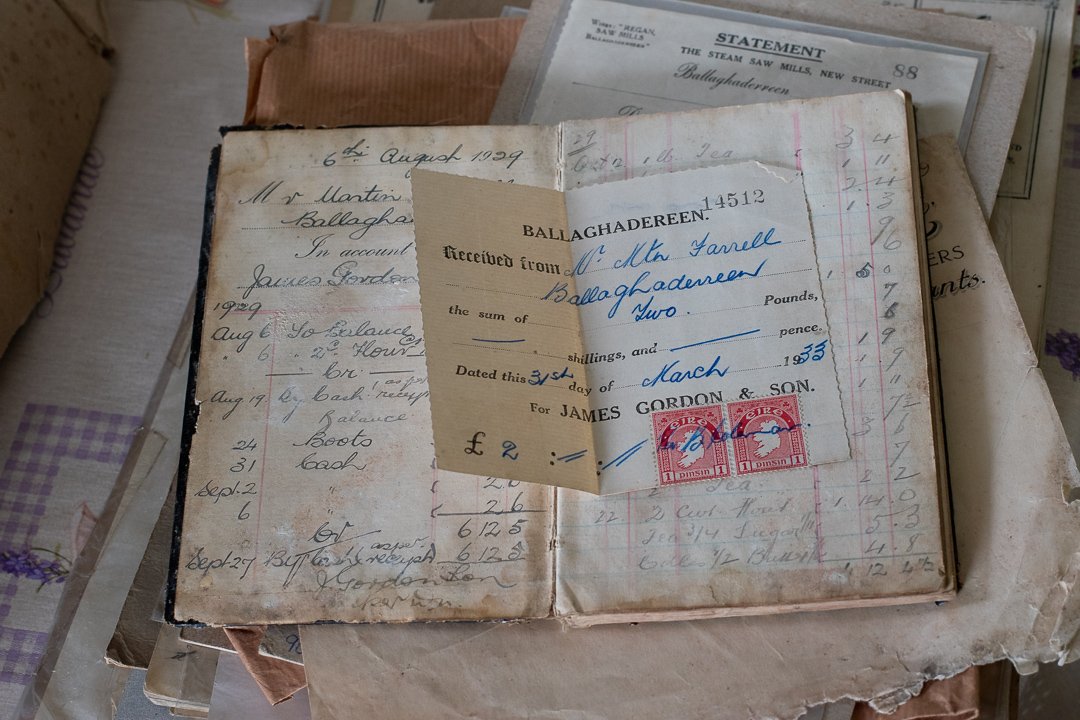

Photo: Michael Gallagher Collection.

Snapshots from one of the Heritage Walk & Exhibition that inspired this online exhibition. Photos taken below by Eithne Gallagher.


Anna & Eithne would like to extend a heartfelt 'thank you' to everyone involved in our PLACEWAYS Heritage Walk & Exhibition.
Malachy Gallagher ‘The Michael Gallagher Photography Collection’.
Michael Cawley
Imelda Towey
John Quinn
Seamus Coleman
Tom & Brian Colleran
Conor O'Connell
Pat Timon
Margaret Garvey
Padraig Mulligan
Brian Mulligan
Neil Sheridan
Anne-Marie Burke & John Coleman.
Thank you Tommy Murray for Narration.
A BIG THANK YOU to Eithne Gallagher for your support throughout the curation of this event.
Thank you Ballaghaghderreen Arts Festival.
Thank you to Eithne McGarry and the Oakwood Nursing Home.
Credits for Exhibition:
Railway sounds by Billy Maher. Thank you Paul McCann from the Railway Preservation Society of Ireland.
Fantastic Venue: The Shambles.
Ref.1: An Irishwoman’s Diary, by Mary Gallagher. Irish Times.
In addition to sharing treasured memories and images of the past, this multimedia exhibition highlights the importance of bringing heritage to ‘life’ through intergenerational storytelling.
Our online and offline event is an opportunity to reflect upon the importance of gathering and sharing memories. Anna will continue to share insights gained from the community, highlighting how creative storytelling can enrich our understanding of the past, foster connections between generations, and preserve Ballaghaderreen’s unique social history.
For further info on how to get involved - ring Anna: 086 3952831 / creativeplacesballagh@gmail.com

Original negatives from the Michael Gallagher Collection.


Edmondstown House Heritage walk
Contemplative Walk III
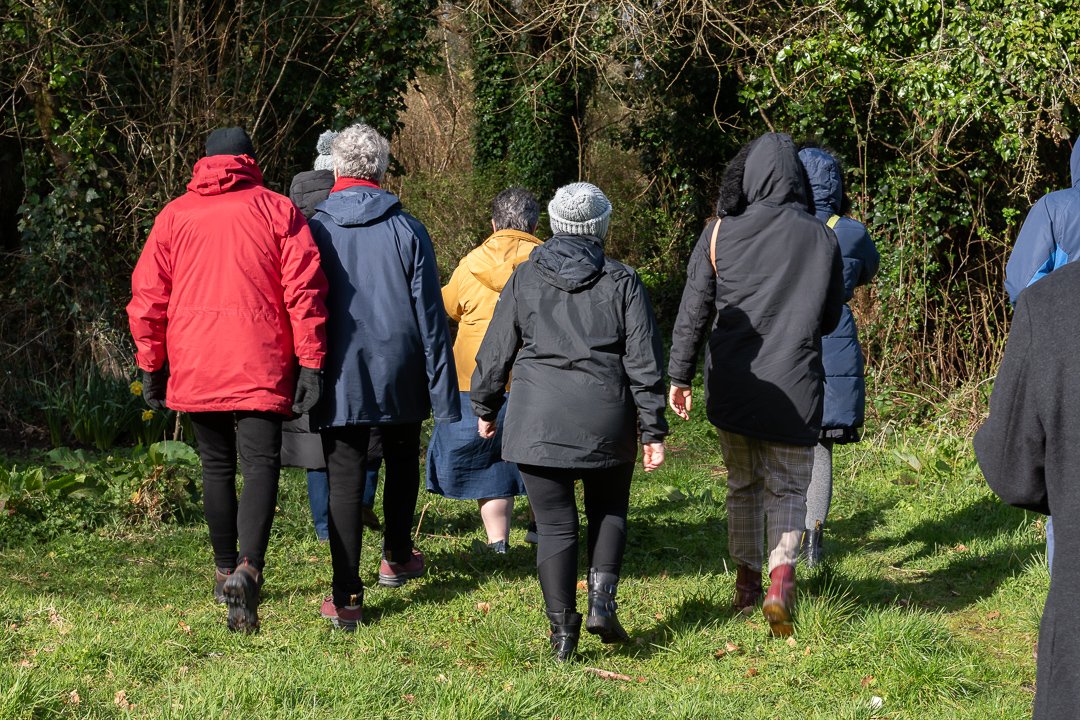
Our Community Contemplative Walks
Edmondstown House
Today’s diary provides a brief history of Edmondstown House, followed by reflections upon its revival under the stewardship of the Ewings family.

Photo from Edmondstown House Facebook
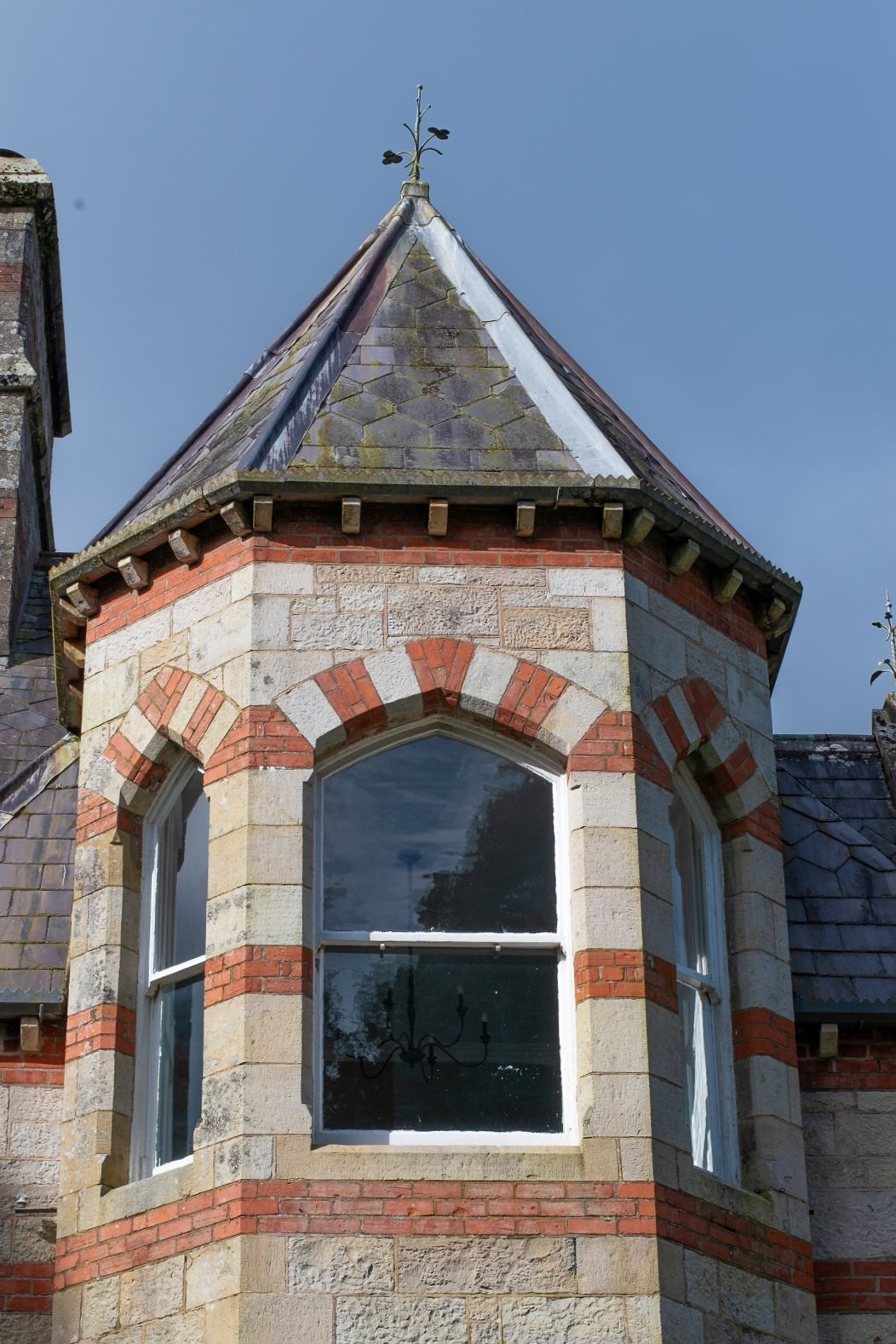
Built in 1864, by Captain Robert Arthur Costello, Edmondstown House (also known as the Bishops Palace) is a rare example of Victorian Gothic architecture. It has some striking features, including pointed arch window openings, a magnificent tower, and a distinctive limestone, red brick exterior.
The house was designed by the renowned architect John McCurdy, who is celebrated for his remodelling of Dublin's iconic Shelbourne Hotel.
Costello passed away in January 1891 at the age of 59. He found his final resting place in the grounds of the former Dominican Priory of Urlaur, established by his ancestors in the 15th century. His tombstone bears the inscription 'Arthur Robert Gorges Costello, last Dynast and Baron De Angulo.' Ref. 1

Photo from Ballaghaderreen Past & Present Facebook.
In the late 1800s, the House changed hands to the Roman Catholic diocese of Achonry, intended for use as a diocesan college. However, St Nathy’s subsequently relocated to Ballaghaderreen Barracks, leaving Edmondstown House dormant for a number of years. It wasn't until 1911 that the then-Bishop of Achonry, Patrick Morrisroe, took up residence in the building, a tradition continued by his successors for the next century. Ref. 1
Fast-forward to the present day: David and Chloe Ewings and their two children, Agnus and Seamus, have lived in Edmondstown House since 2018.
Edmondstown House has many grand features, including the falcon family crest and stone plagues with Costello’s initials.
Photos by Anna King:
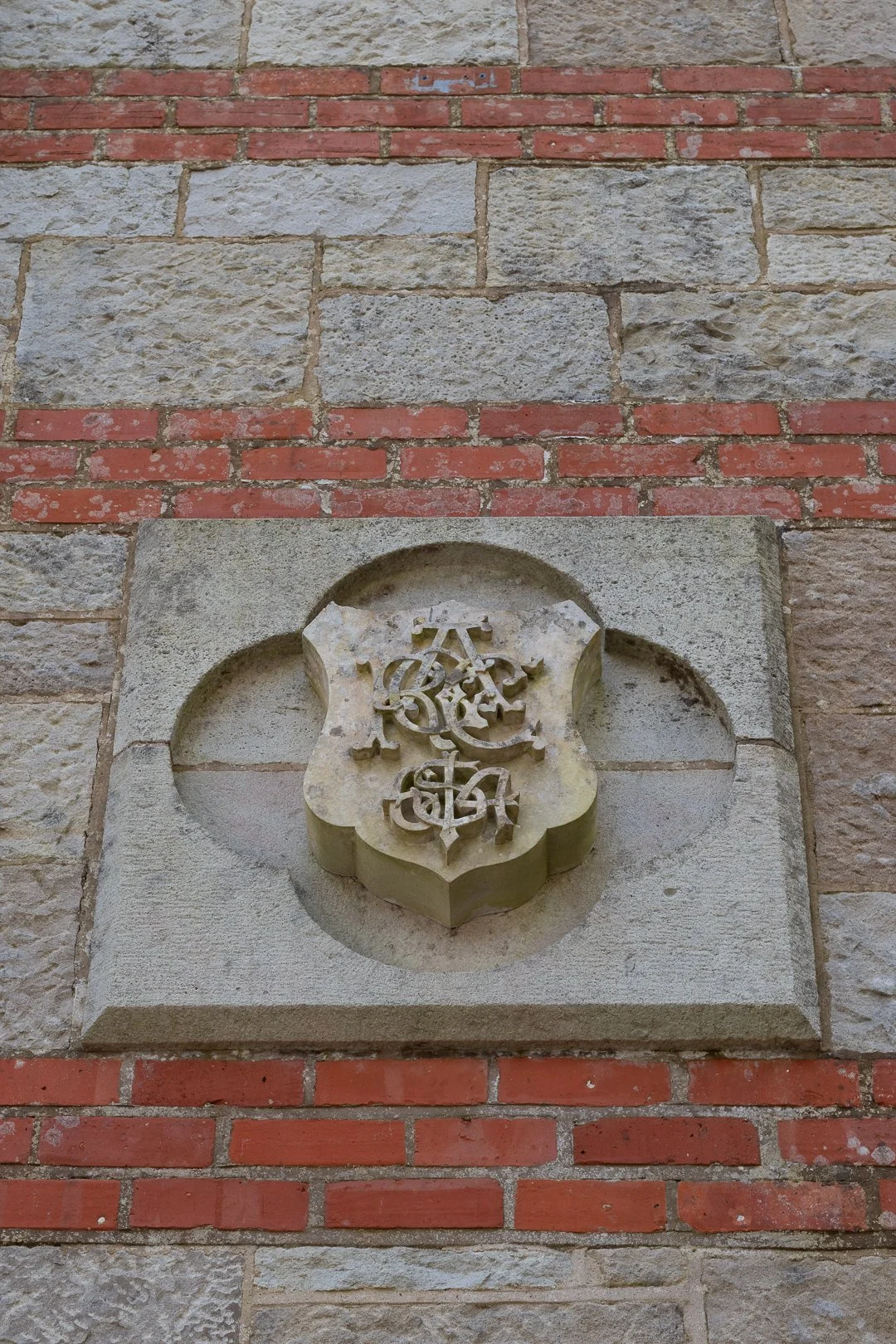
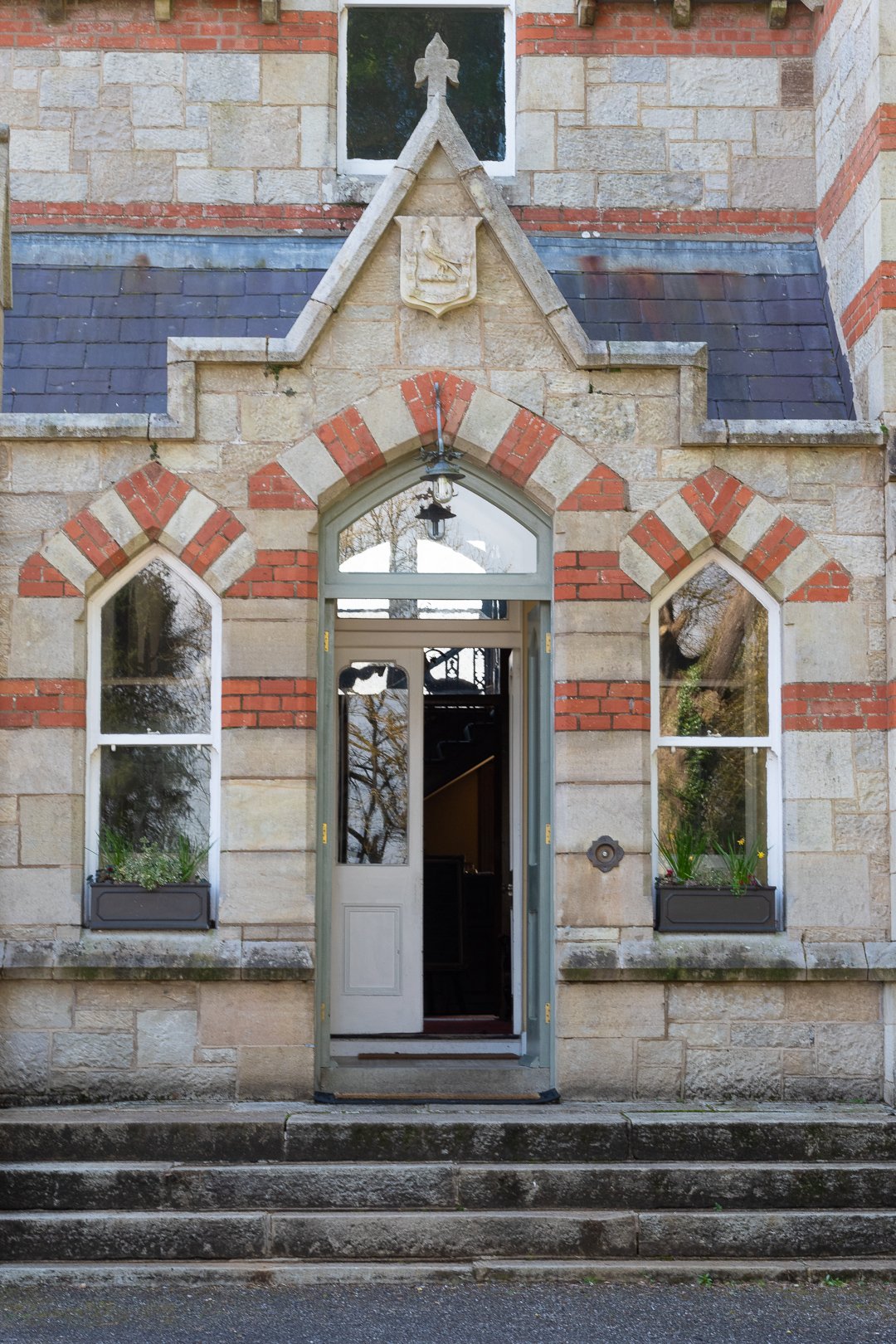
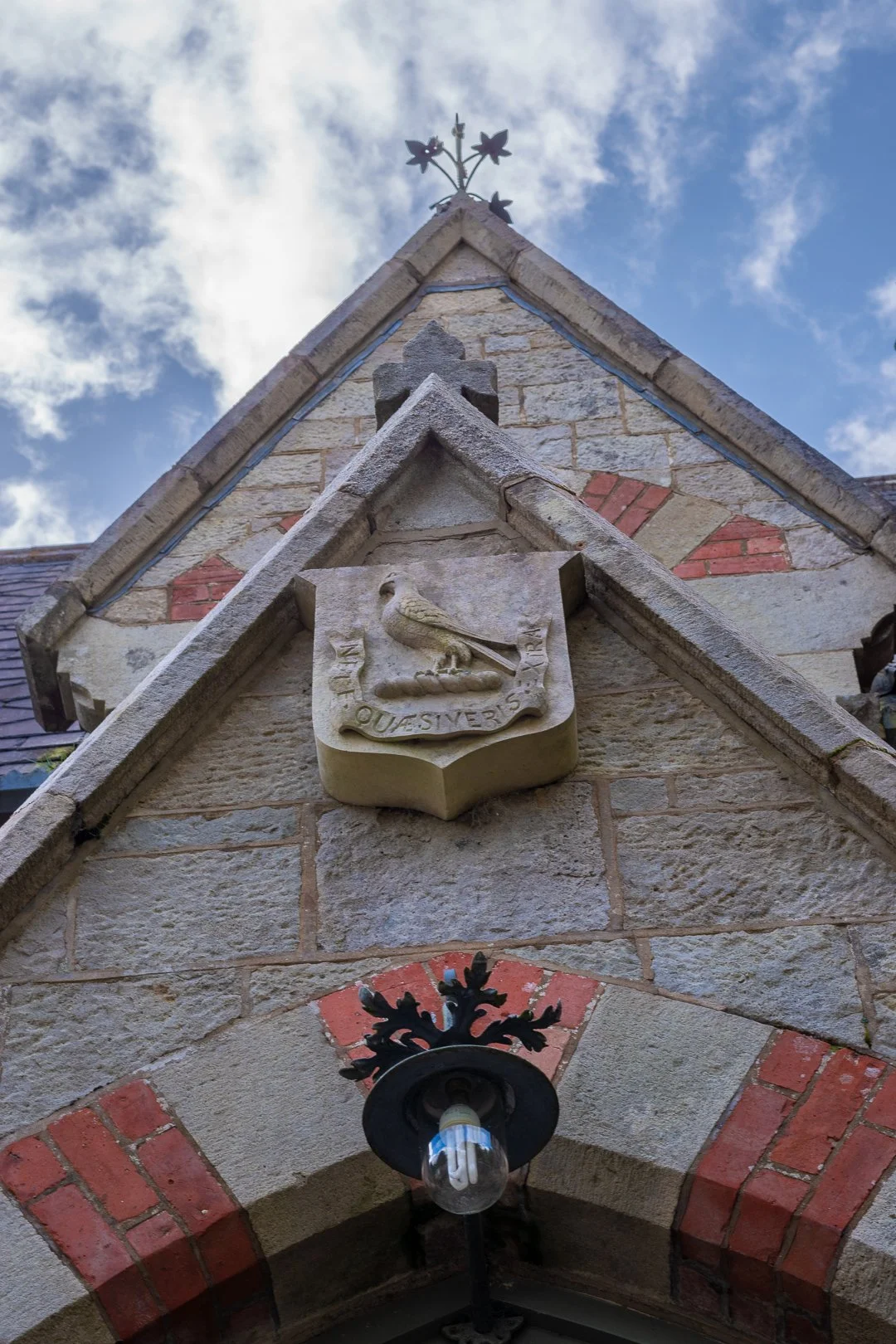

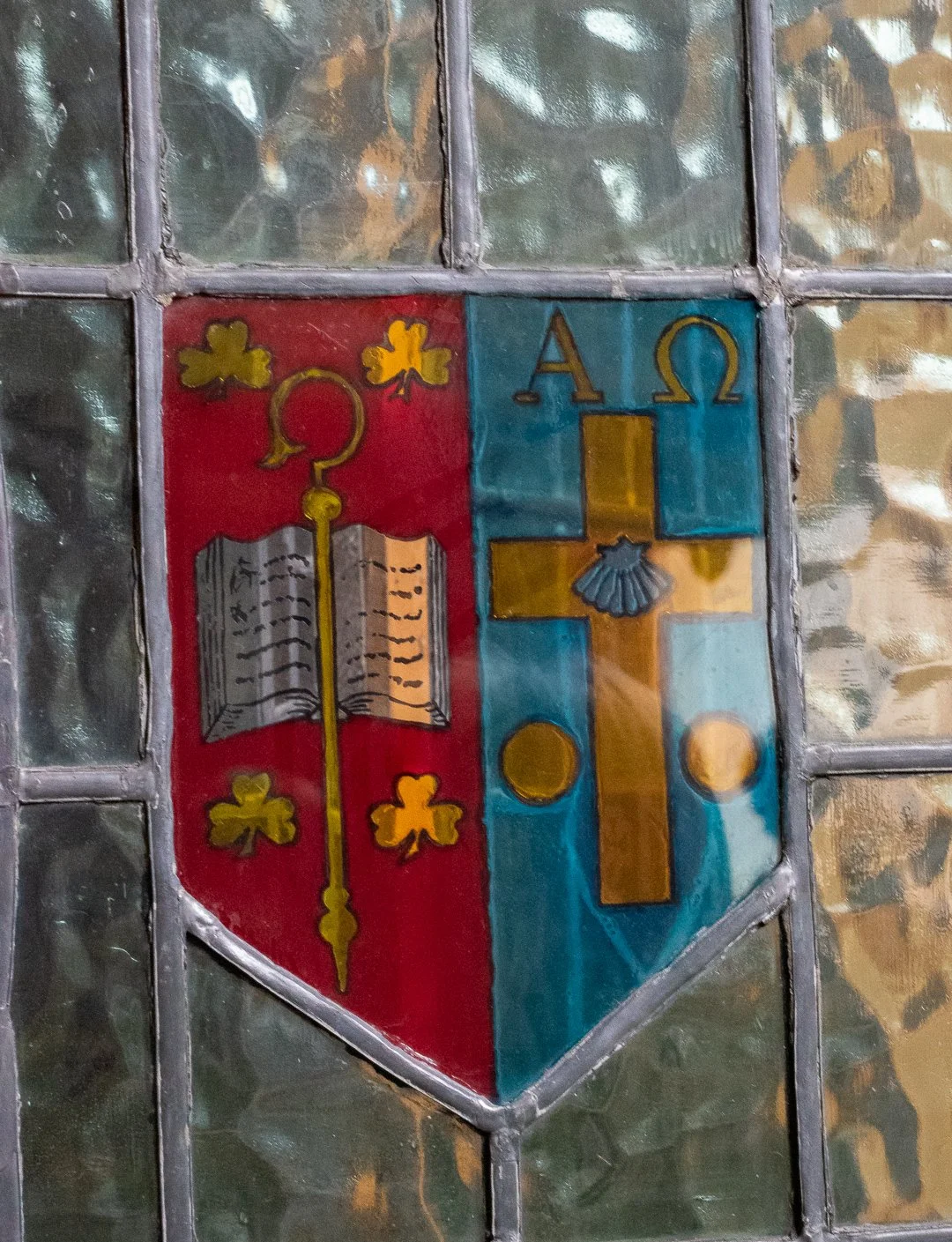
Joshua Clarke & Sons, Dublin. Est. 1877
The stunning stained-glass features in Edmondstown House were crafted by the son of Harry Clarke, Ireland's most celebrated stained-glass artist. Born in Dublin on March 17th, 1889, Harry Clarke left an indelible mark on the world of stained-glass until his passing in 1931.
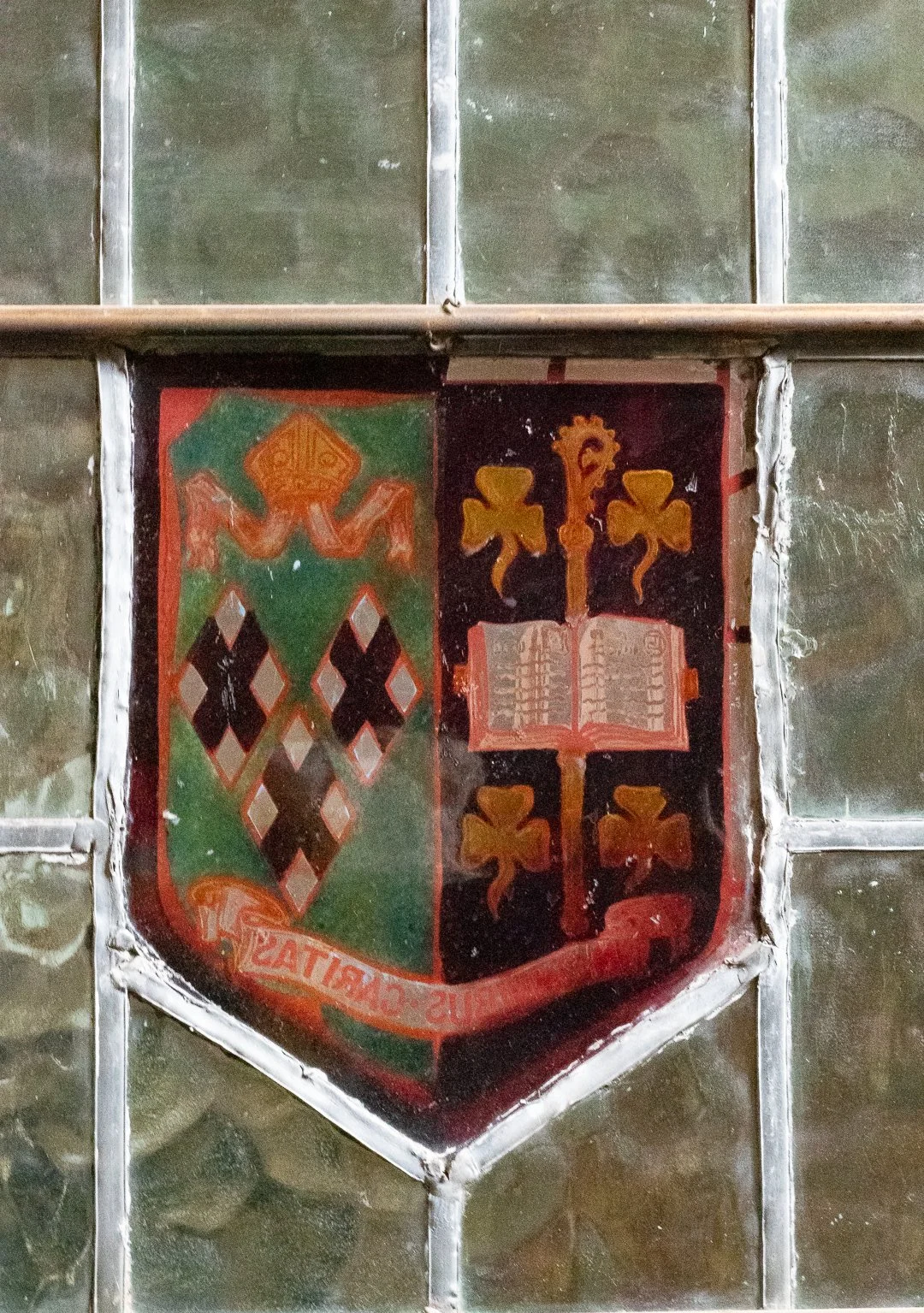
The edmondstown house revival
David and Chloe have meticulously restored Edmondstown House, infusing it with renewed vitality and charm. Importantly, their dedication goes beyond mere renovation; they have cultivated a profound ethos of stewardship, ensuring that the heritage of this area is preserved for generations to come.
They have also opened their doors to the wider community, offering a unique opportunity for visitors to immerse themselves in the rich history of the area through site-specific theatre and music events.
In doing so, they have reinvigorated the significance of the house, and developed a cultural hub for all to enjoy.

Grape and Vine Cornice.
Heritage, art & contemporary living
The power of site-specific theatre is its ability to forge a deep connection between the audience and the performance space, often transforming overlooked locations into immersive theatrical settings. The events at Edmondstown are an intimate and authentic experience, where the history and character of the house become an integral part of the performance, thus enriching the audience's sensory experience.
Check out Edmondstown House facebook for event updates.
David and Chloe’s sensitive restoration, combined with their emphasis upon heritage and the arts, is an interesting theme to consider in relation to our PLACEWAYS project:
The couple are not only revitalising the estate - their work is also fostering a deeper sense of connection to place for the wider community.
The symbolism of restoration

A Midsummer Night’s Dream, at Edmondstown House
Beyond being a part of Ballaghaderreen’s fascinating history, Edmondstown has evolved into a symbol of hope, where the metamorphosis of the house represents rebirth, transformation, and optimism. For communities grappling with isolation, or lack of amenities, the revival of the house and grounds provides an inspiring example of how abandoned spaces can be (re)imagined into meaningful places for community gathering.
The deeply textured layering of the ‘old’ with the ‘new’ over many centuries at Edmondstown House, has resulted in a rich and dynamic setting that is ideal for exploring local history and culture, within the context of contemporary issues.
This remarkable endeavour underscores the intrinsic value of revitalising abandoned heritage sites; a poignant issue echoing throughout Ballaghaderreen's evolving townscape.

Photo from Edmondstown House Facebook
labour of love
David's ongoing labour of love amidst the perpetual demands of Edmondstown House serves as a poignant symbol of resilience. As fragments of the old structure crumble, or require work – he confronts a tangible reminder of the passage of time and the inevitability of change and decay.
In a world inundated with disposable conveniences and fleeting experiences, David’s steadfast commitment to preserving and restoring the house has profound significance. It embodies a counter-narrative to the prevailing culture of disposability, emphasising the enduring value inherent within heritage, craft, and the art of perseverance.

David Ewings
Visting Edmondstown House was an absolute delight for our group!
A huge ‘thank you’ to David and his family for such a memorable experience!
All of the themes outlined in today’s diary will be considered in more depth through our project - PLACEWAYS.

This particular wallpaper is of the Anaglypta variety, which is one of the oldest wallpaper brands in the world - established in 1887.
Castlemore flax mill & castle Heritage Walk
Contemplative Walk II

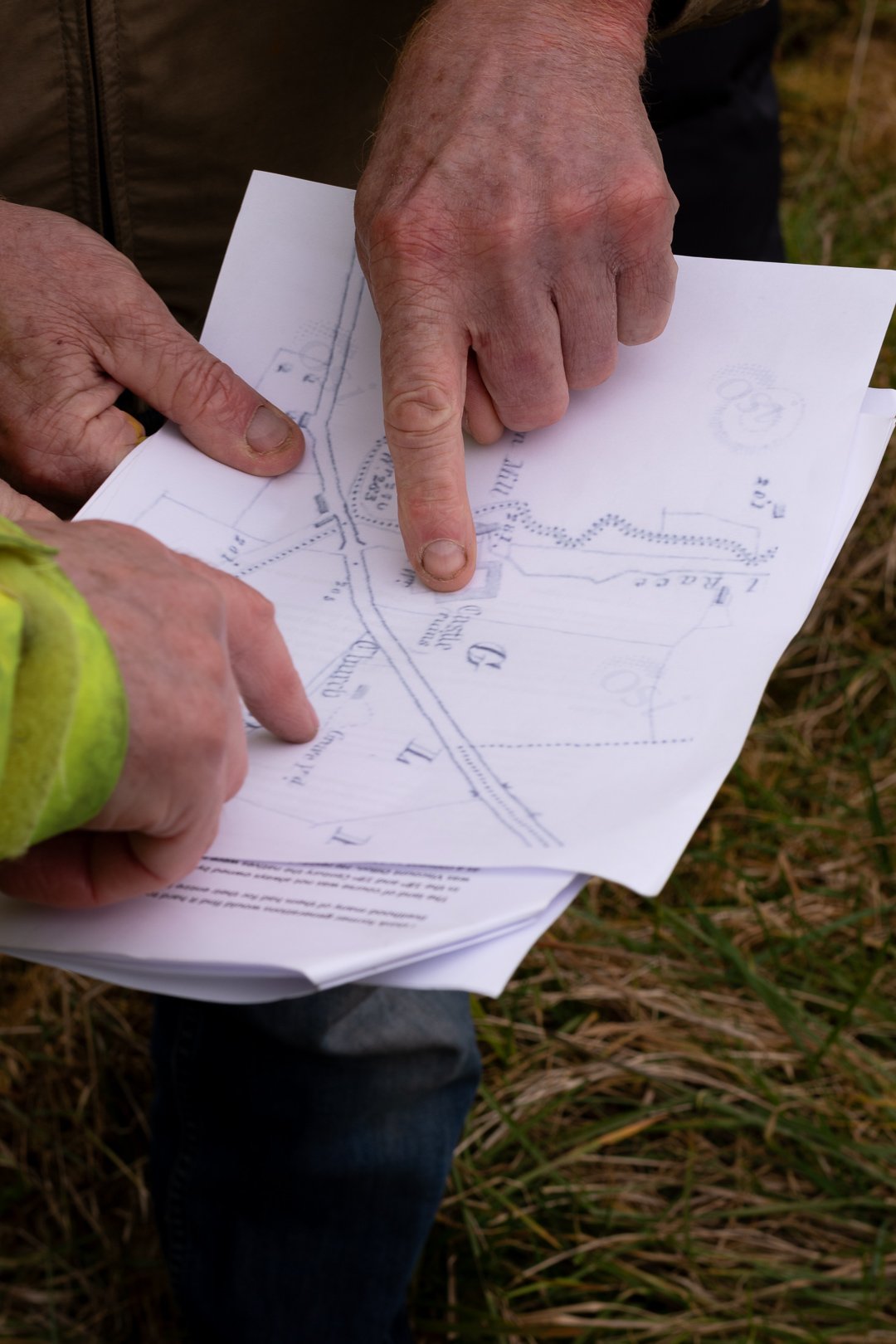
Map of the Flax Mill and Castle, sourced by Joe Geever, a member of our group. Ordnance Survey, Ireland.
Welcome to a collection of diary entries that explore the essence of our contemplative walks around Ballaghaderreen's heritage sites.
In collaboration with members of the local community, this diary will evolve into a multimedia series featuring audio recordings, videos, and artworks that encapsulate the personal narratives shared during these gatherings.
Furthermore, as we collect more stories, we will keep this diary updated, so follow us on Instagram for all the latest news!
This blog begins with an overview of insights gained from our walks, followed by relavent history and folklore associated with Castlemore Mill and Castle.
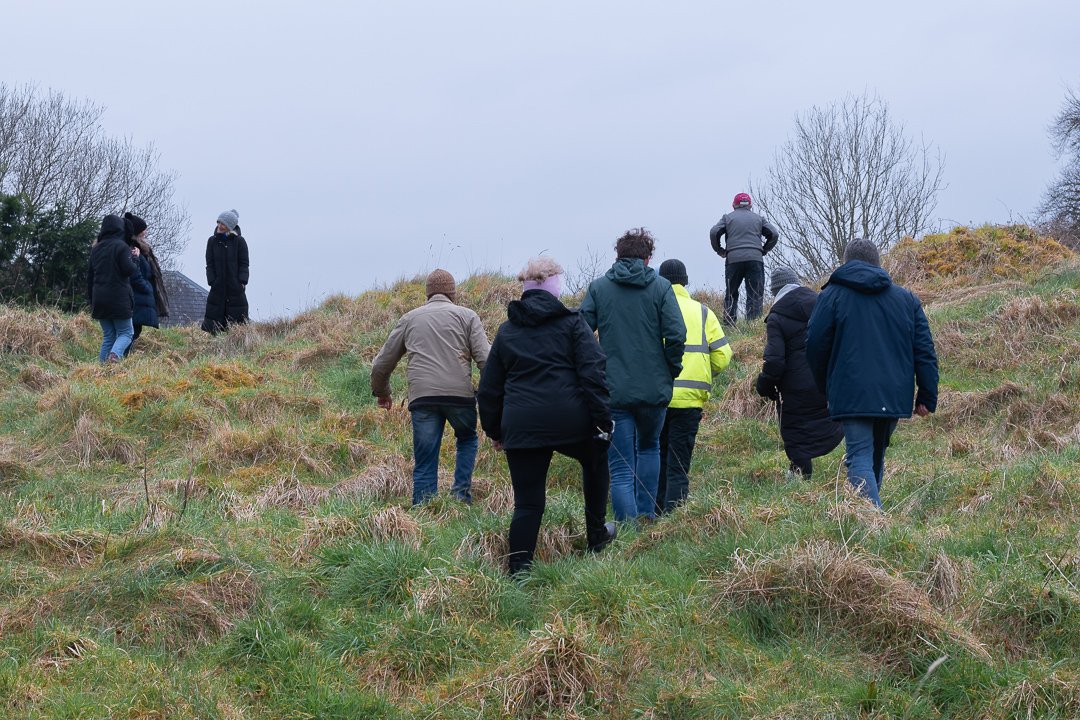
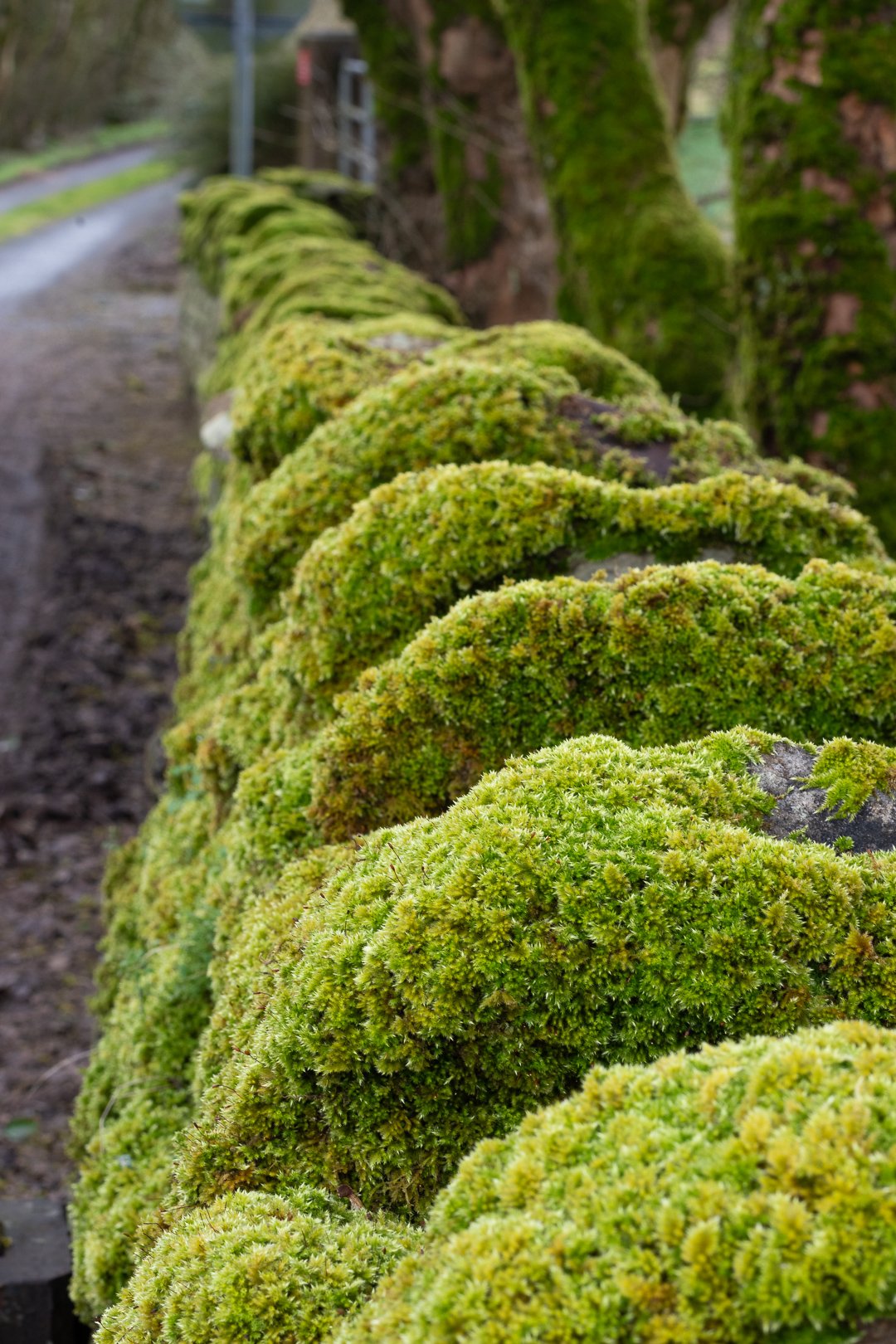
Our Contemplative Walks have highlighted that heritage is more than just a physical remnant of the past, or a geographic location with a focus on materiality.
It has become clear that preserving heritage involves more than just conserving the tangible, such as sites, objects, and structures. Indeed, it’s the intangible - our emotions, memories and stories - that foster a profound sense of place for people living in the area.
The stories and memories shared during our walks were at times deeply moving; evoking emotions of sadness and loss, as well as sparking joy and excitement at the prospect of exploring the locality as a collective, rather than individually.
When we share these experiences collectively, we gain a fresh perspectives that can enrich our interactions and engagement, allowing us to see a familiar environment anew, as diverse viewpoints weave together a vibrant tapestry of understanding; one that is dynamic and forever changing.
The Dynamic and enduring nature of heritage
Engaging with the site’s tangible and intangible qualities simultaneously offered us a unique opportunity to palpably sense the ‘spirit' of the place we were visiting. It became clear that this kind of multi-layered engagement was just as significant as learning about the historical significance of these sites. Within the context of PLACEWAYS this point highlights the dynamic potential embedded within heritage experiences.
This insight is worth further investigation, especially in relation to the value of consistently interacting with heritage through regular celebrations, ceremonies, story-telling sessions, and art projects. Consistent multi-layered engagement with heritage may help (re)establish a sense of community identity and belonging, because it invites meaningful, embodied experiences that have the potential to endure over time.
Castlemore Castle and The Old Flax Mill

A Copper Engraving Print of Castlemore Castle, belonging to Eithne Gallagher. Created 1791. Published in 1797, by Hooper and Wigstead, London. Purchased at Kenny’s Bookshop, Galway. Mayo is referenced in the title because up until 1898 Ballaghaderreen was in the Mayo district.
Caisleán Mór was constructed in 1356 by the De Nangle family of Norman descent. Eventually, the family adopted the name Costello - Mac Oisdealbhaigh. However, following the castle's destruction during the 'Flight of the Earls', the Mac Oisdealbhaigh clan erected a substantial residence about a mile away from Caisleán Mór. This property eventually became Thomas Strickland’s home (agent for Viscount Dillon). Ref. 1.
The Ruins of Caisleán Mór. Photos taken by Eithne Gallagher in 1983.
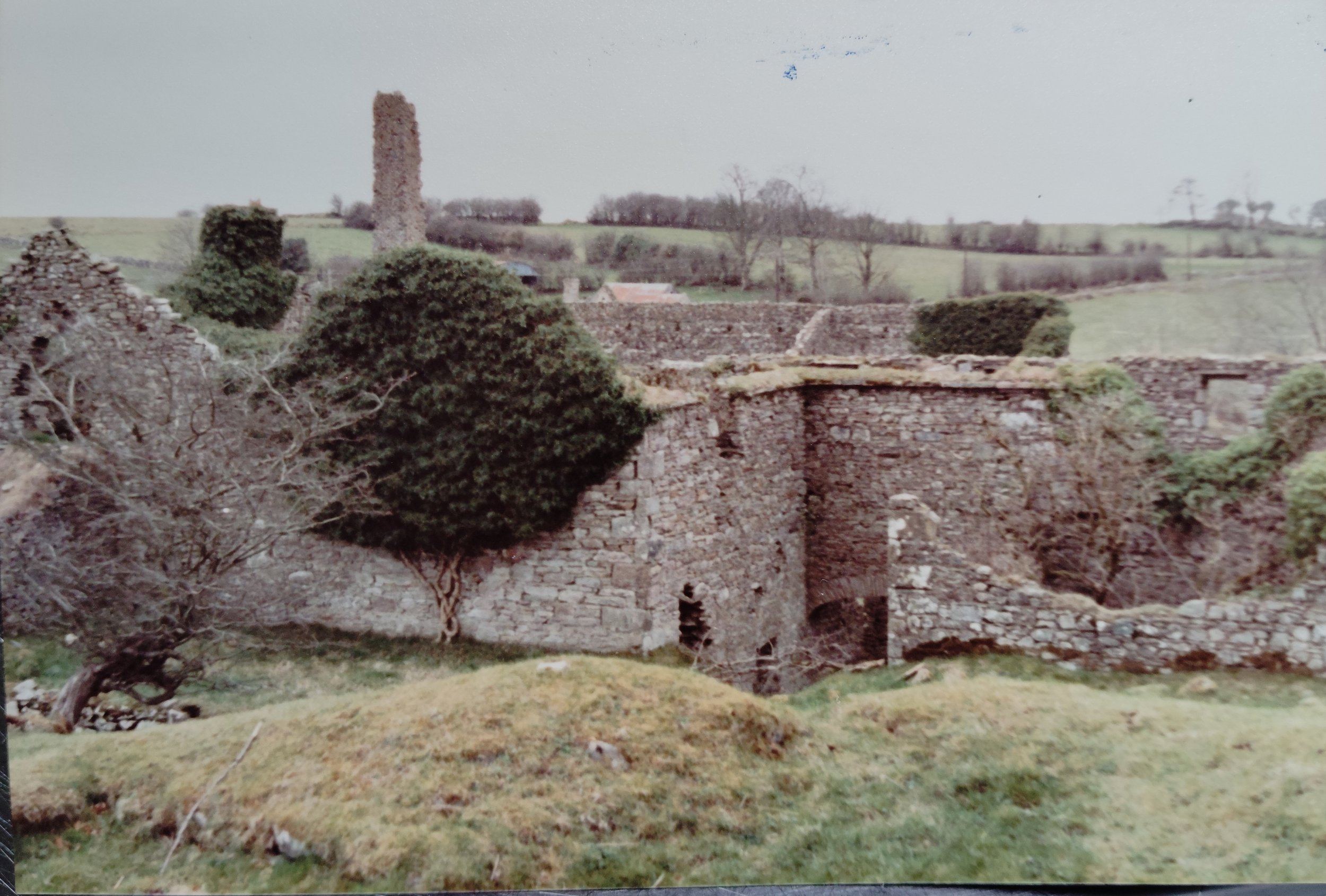
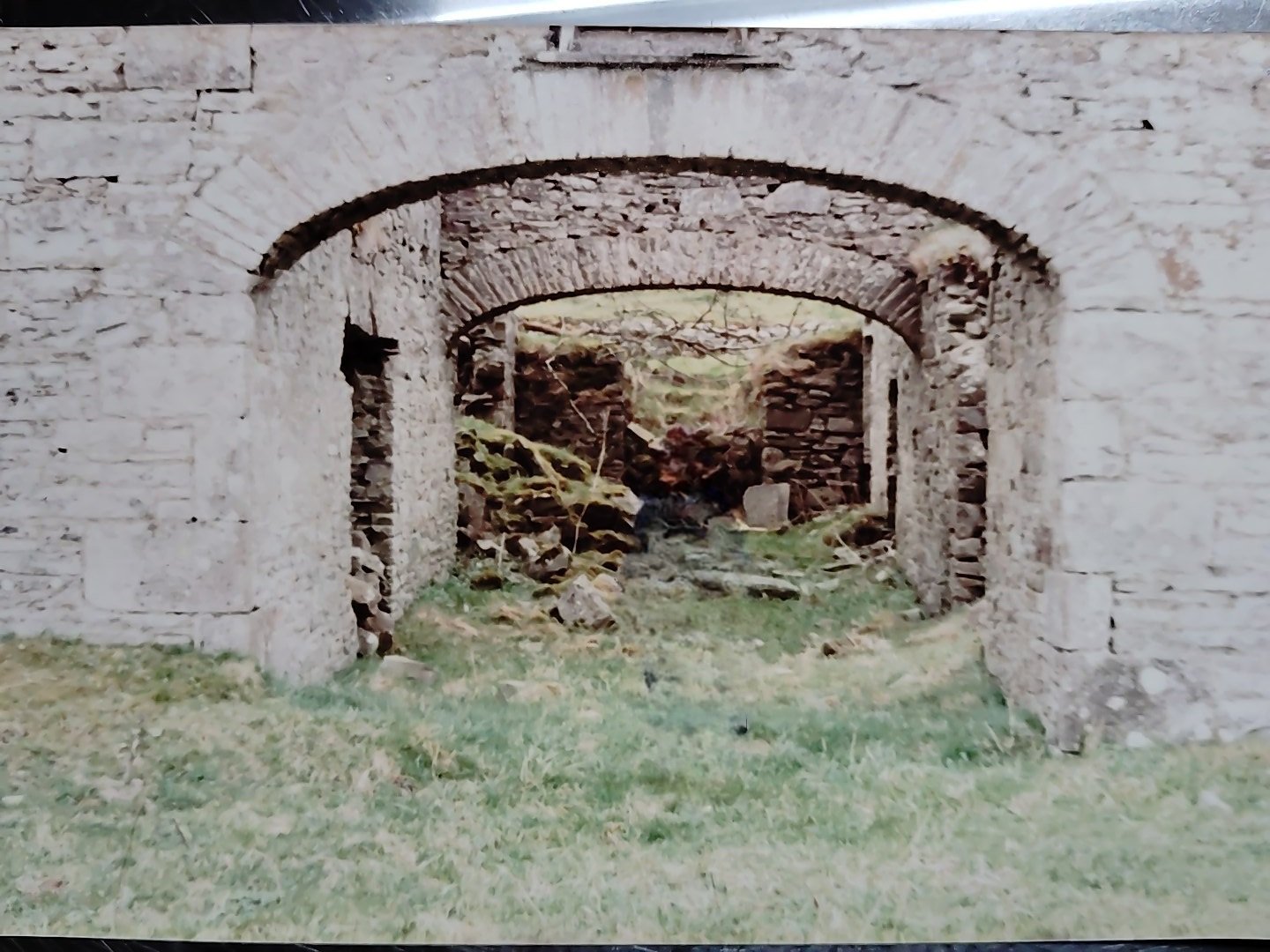
Once a symbol of power and prosperity, Caisleán Mór now lies in ruins. Today, only a handful of weather-beaten moss covered stones remain - a poignant reminder of the fleeting, impermanent nature of life.
In just a few years, nature will completely reclaim this site, burying the remnants of Caisleán Mór beneath layers of decay and sediment. All that will endure are memories, deeply woven into the intricately textured landscape.
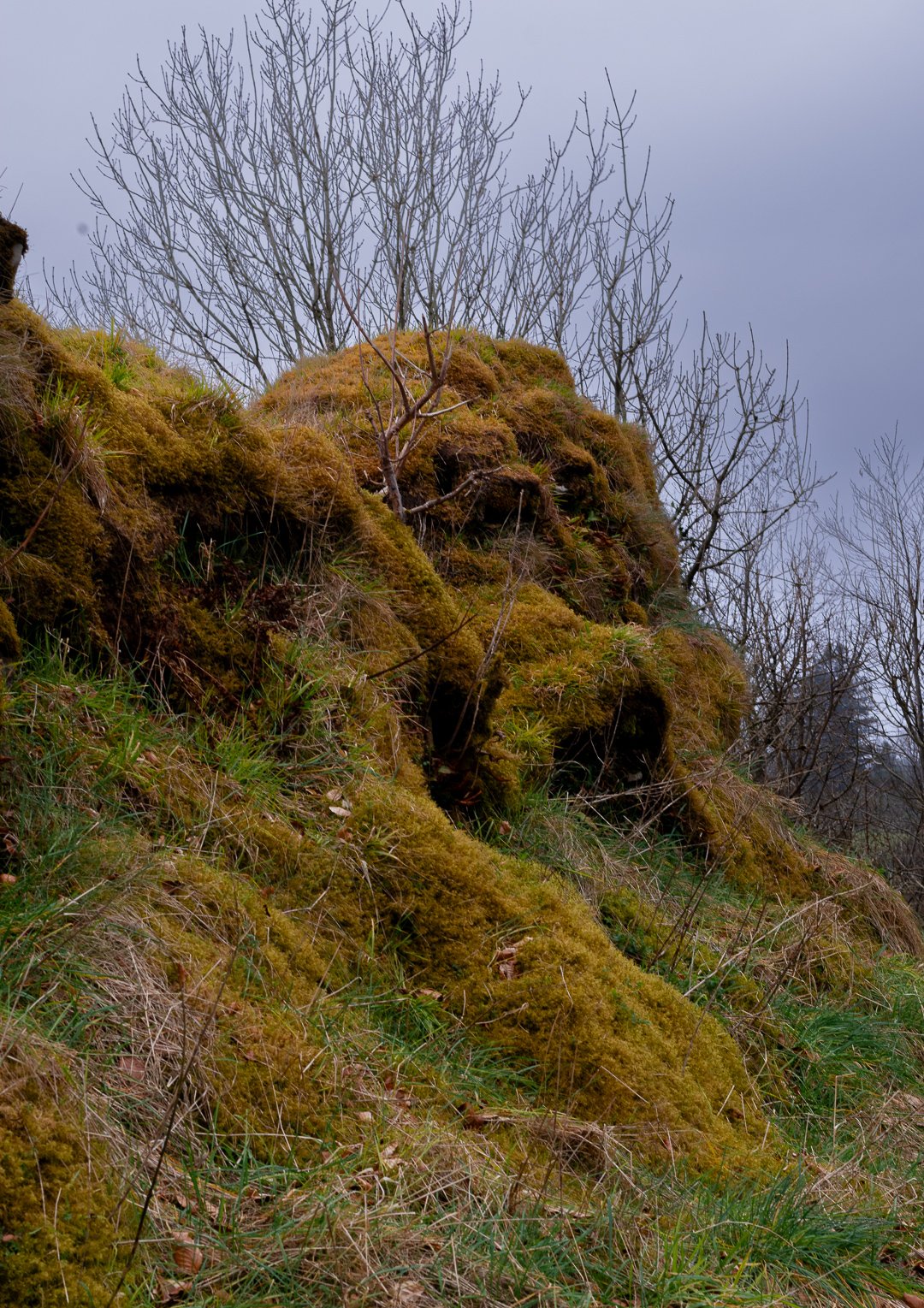
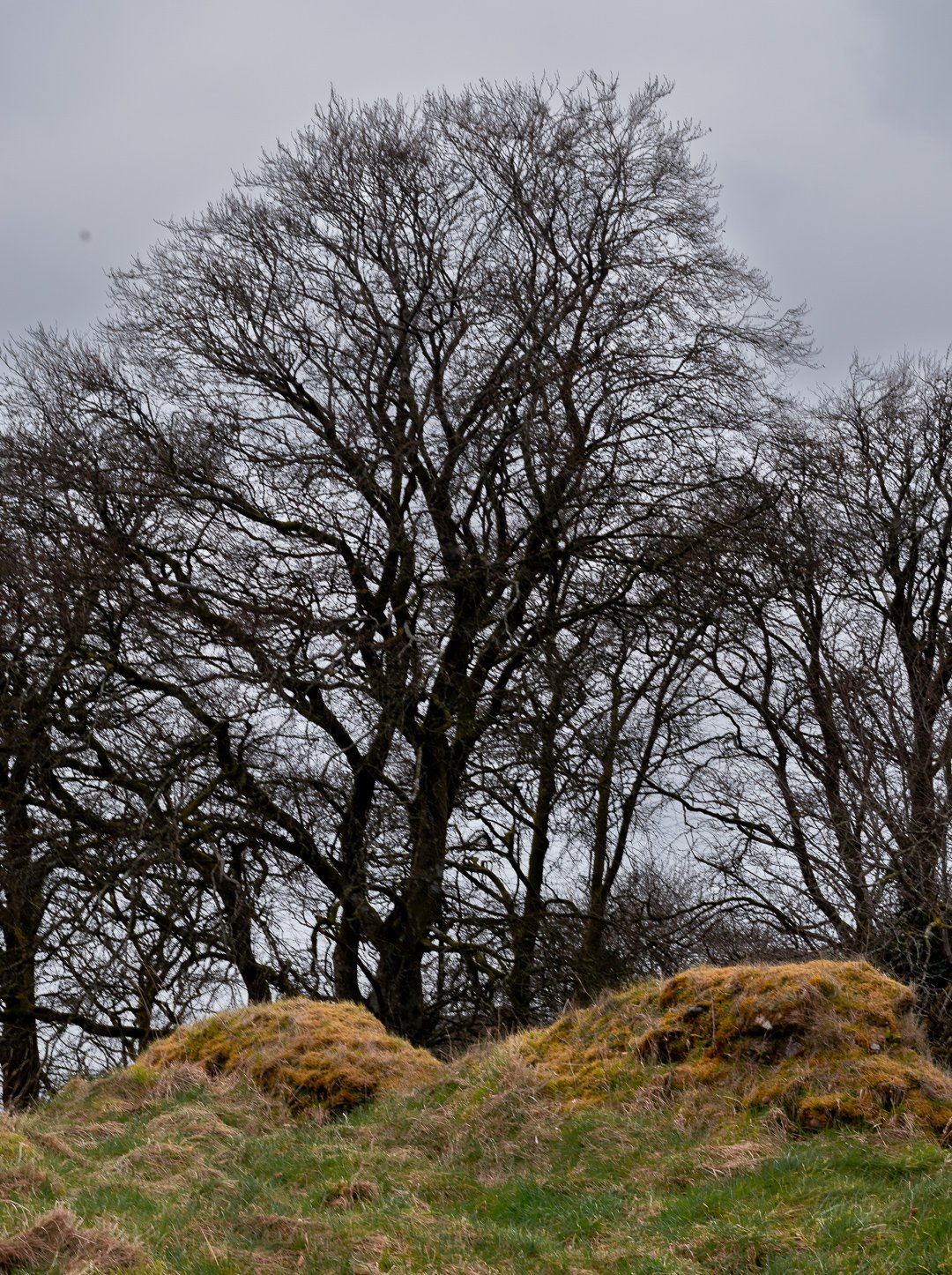
Remnants of the castle wall, by Anna King

The Flax Mill
Built in the late 18th Century by Charles Strickland, The Flax Mill is now privately owned, and it has undergone significant renovation.
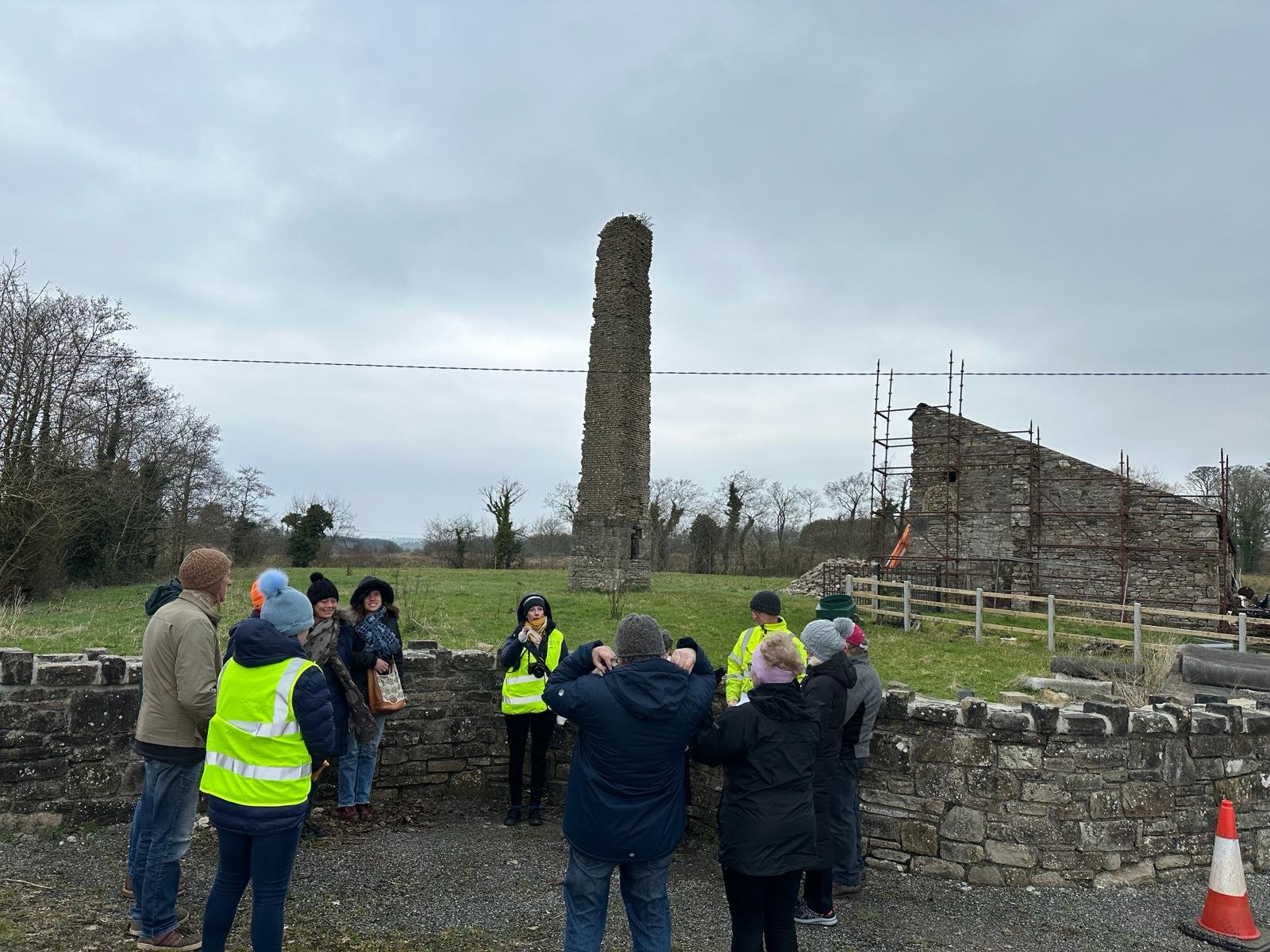
Our group at the Flax Mill site. Photo by Niamh McGarry.

The Flax Mill. Taken in 1940, by one of Eithne Gallagher’s family.
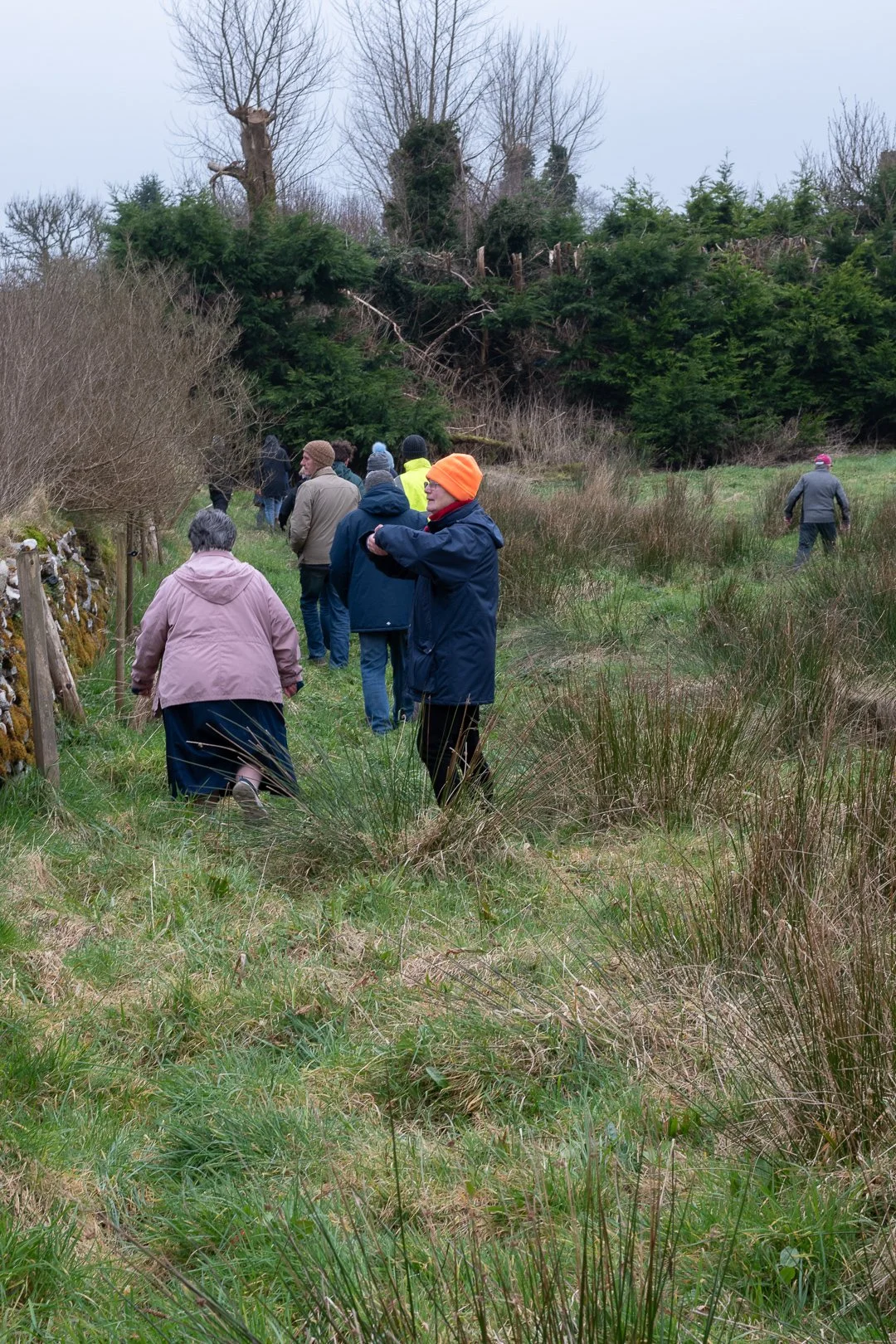
Our Flax Mill gathering emphasised the vital role of storytelling in strengthening our bond with place. As we recounted personal and inherited tales about the Mill, we journeyed back in time, while at the same time remaining deeply connected to the present moment.
This is an embodied process of layering past experiences within our current reality.
We collectively pieced together fragments of the past by re-imagining the bustling, vibrant flax industry of the late 18th and early 19th centuries.
We learned how flax growers travelled to the Mill from distant places, illustrating once again (as with the Creamery during our previous walk) the profound inter-connectedness of rural life in the past.
We marvelled at the beauty of the sky-blue flax flowers, and pondered their symbolism: resilience, rebirth and new beginnings.
And, there was a moment of suspended awe as our group gazed with curiosity through the wood toward the stream that was once the lifeblood of the mill's activities. These were moments that connected us to the ebb and flow of nature's timeless rhythm.
We chatted about the process of ‘retting’, which involved placing flax sheafs into hollows (called pits) for two weeks, where stream water (and natural microorganisms) broke down the hard outer bark and separated the fibres. The long fibres were called ‘lines’, which were woven into linen in Northern Ireland, and the shorter fibres (tows) were spun locally, and made into fabric similar to cotton. Mike Carty shared a story of how flax growers would stay over night in tiny dwellings beside the river to mind the flax.
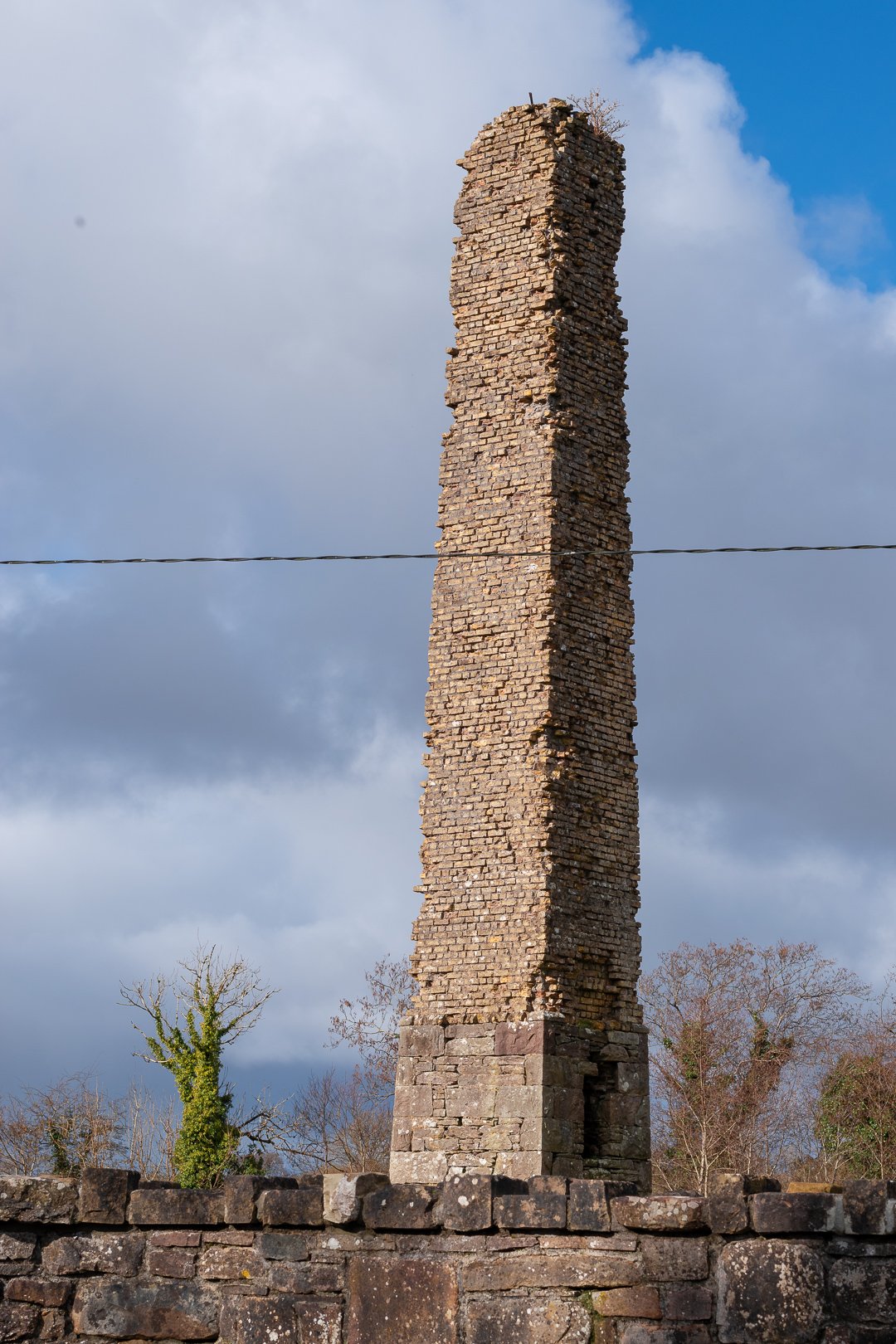
The Mill Chimney, by Anna King
The Mill went through many changes over the years. In the mid 19th century the flax mill was closed and turned into a corn mill, processing oatmeal from local oats and wheat (Ref.1).
Local folklore emphasises that the pollution from the ‘retting’ process killed local salmon in Lough Gara, which led to the fishing authorities closing the flax mill. Another reason could have been that water driven mills were becoming obsolete due to the steam engine replacing the wooden paddle wheel - a view reinforced by a member of our group, Joe Geever, who commented that apparently “the steam engine shook the walls, as it was too powerful for the traditional water driven mill”.
In 1905, the Steward family from Boyle (who were skilled engineers) upgraded the mill and turned it into a saw factory.
Our walk concluded at the Community Garden

Lastly, we paused to appreciate the simple pleasure of receiving a pineapple sage plant from Maria May Fleming; a gesture that reflects the generous spirit of the participants taking part in our walks.
Thank you to all who attended - I really value and appreciate your contributions. Our next walk is on Saturday 23rd March. Details HERE.
Sources:
Echoes of Ballaghaderreen, by Siobhán Regan.
Schools Folklore Collection: Dúchas

Mike Carty, A member of our walking group,
The Old Creamery & Railway Station
Contemplative Walk I

Ballaghaderreen Station. Ref.1
Welcome to a series of diary entries that capture the essence of our contemplative walks around Ballaghaderreen's heritage sites.
In collaboration with members of the local community, this blog teases out some of the themes relevant to the sites we visit, and the stories shared. In the weeks ahead, this diary will evolve into a multimedia series of audio recordings, videos, and artworks that capture the personal narratives exchanged during these gatherings.
The Creamery
The creamery co-operatives in Ireland were vital centres for local and regional trade, milk processing and social life up until the mid-20th century.
Their decline was mainly due to the advent of larger-scale dairy processing factories, technological advancements in the industry, and increasing competition from more efficient centralised processing facilities. This shift occurred gradually, over several decades.

The original creamery was located at the back of St. Mary’s Hall, opposite the Cathedral. A new larger facility was built in 1908 (now Circular Road). Photo: Ref. 1.
the heart of community life
During our walk to the creamery we were transported back to the 1930s. We shared tales of milk deliveries by horse-drawn carts and the significance of the 'Lazy Wall’, where farmers waited to weigh their milk.
We considered how the Wall represented more than just a space for people to gather. It was a place to share stories, forge relationships, and build meaningful connections between different people within the locality.
We chuckled at the old tradition that marked a young lad's transition to 'manhood', by his ability to lift a heavy milk can; and we pondered the importance of preserving the past, while at the same time embracing the inevitable changes that have shaped many towns and villages across Ireland.
These observations provide some interesting insights for further PlaceWays research, particularly the role of public spaces for meaning-making (a point emphasised again during our station walk).
The creamery was more than just a trading centre. It was the heart of the community–where significant social interactions took place, important ‘rites of passage’ for young people were woven into everyday life, and a visceral connection to place was felt.
collaboration was a cornerstone of rural life In the 1930’s
The farmers of Ballaghaderreen were faced with the daunting daily task of transporting their milk to the creamery by horse and cart. To ease this burden, they organised themselves into groups of six farms. Under this arrangement, the farmers took turns in delivering the collective’s milk to the creamery, which meant just one trip a week for each farmer. On the seventh day, the farmer’s wives would churn their own milk to ensure they had enough supplies for the week ahead.
This collaborative effort not only lightened the load for individual farmers, but it also fostered a sense of community and shared responsibility.
It is worth noting that the creamery, as well as the local egg store, were important sources of employment for women in the area. During the 1930s, working full-time at the creamery typically yielded an average monthly wage of 4-6 pounds, providing vital income and economic stability to many women in the community (ref.2).
The Old Railway Station
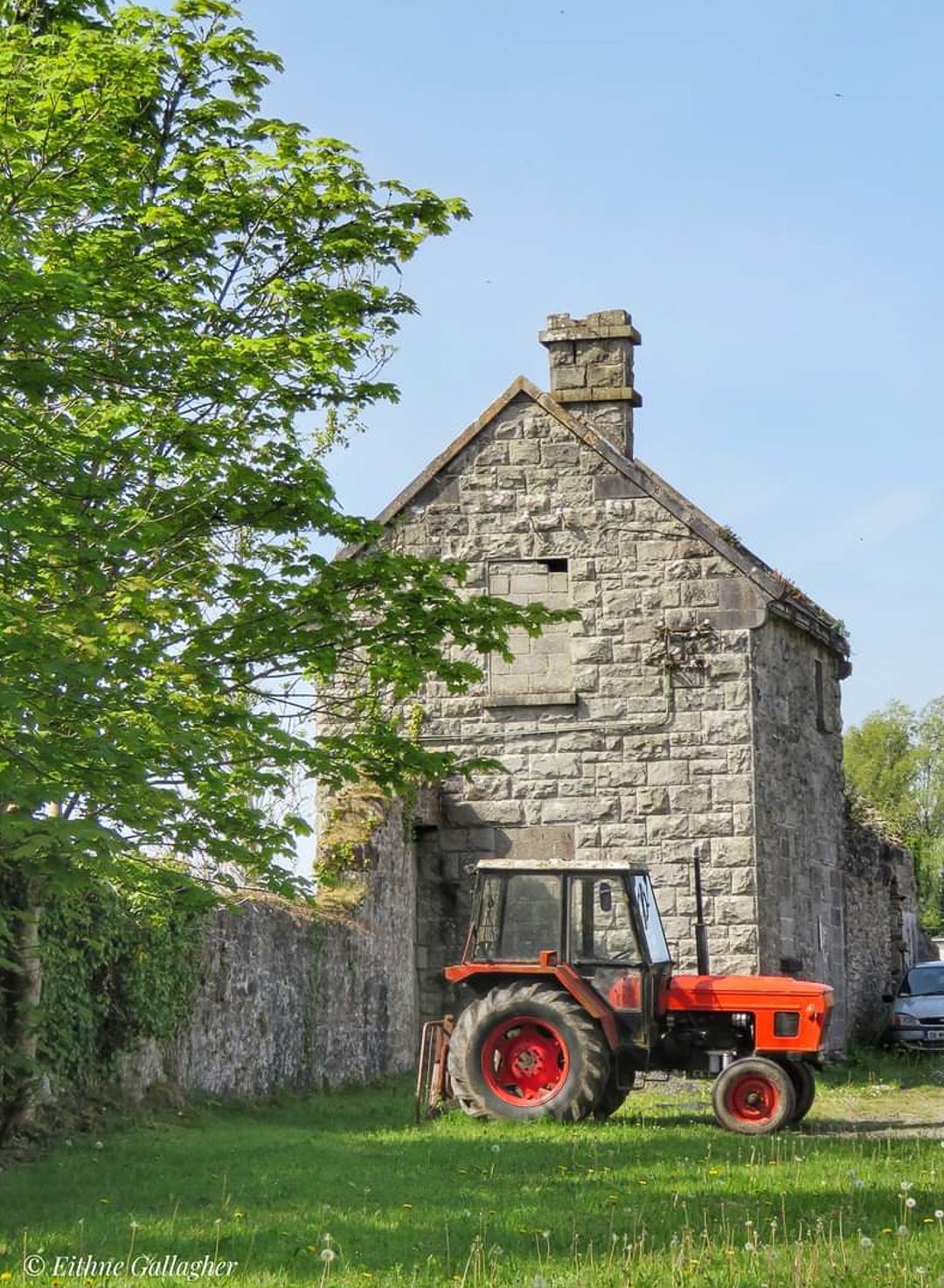
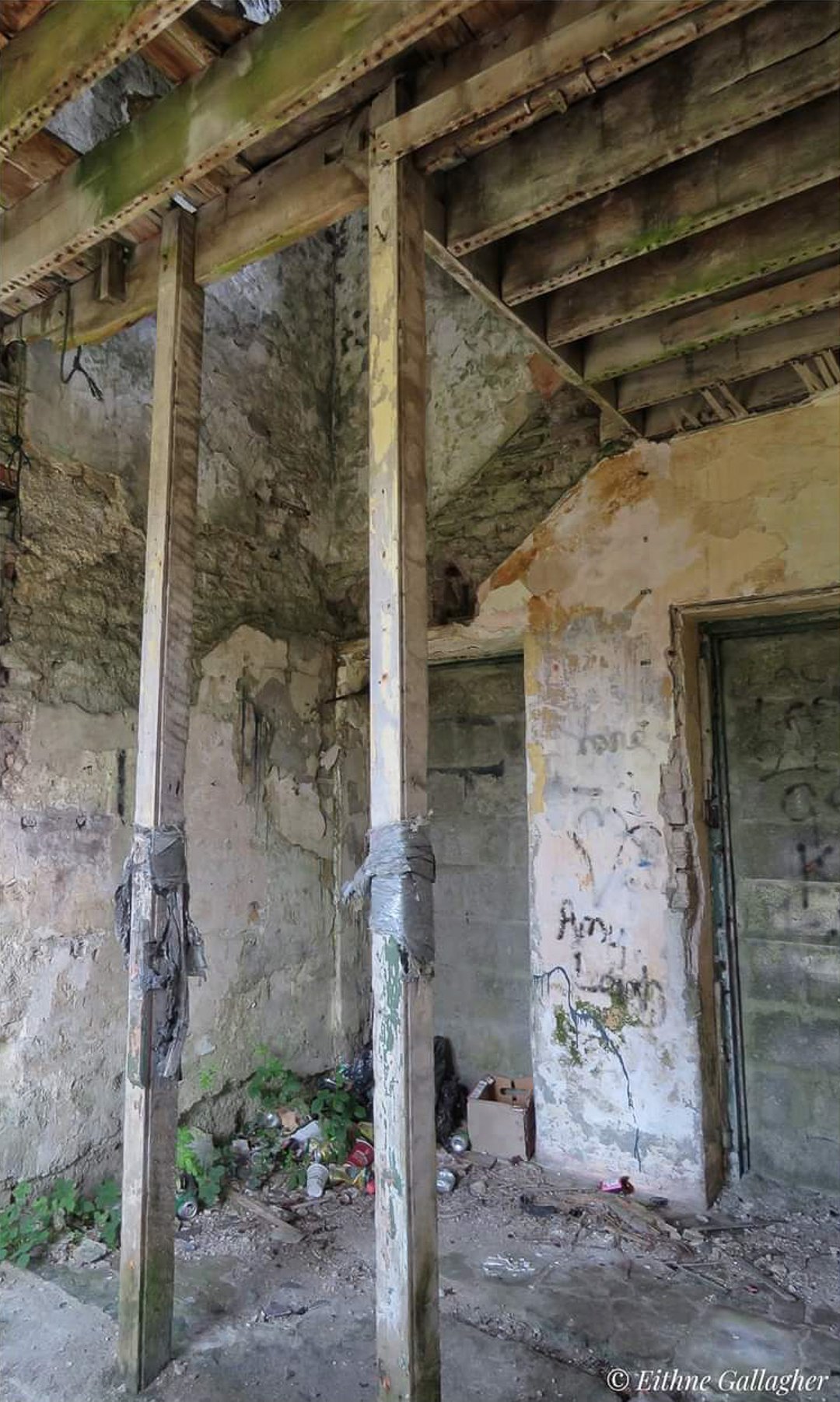
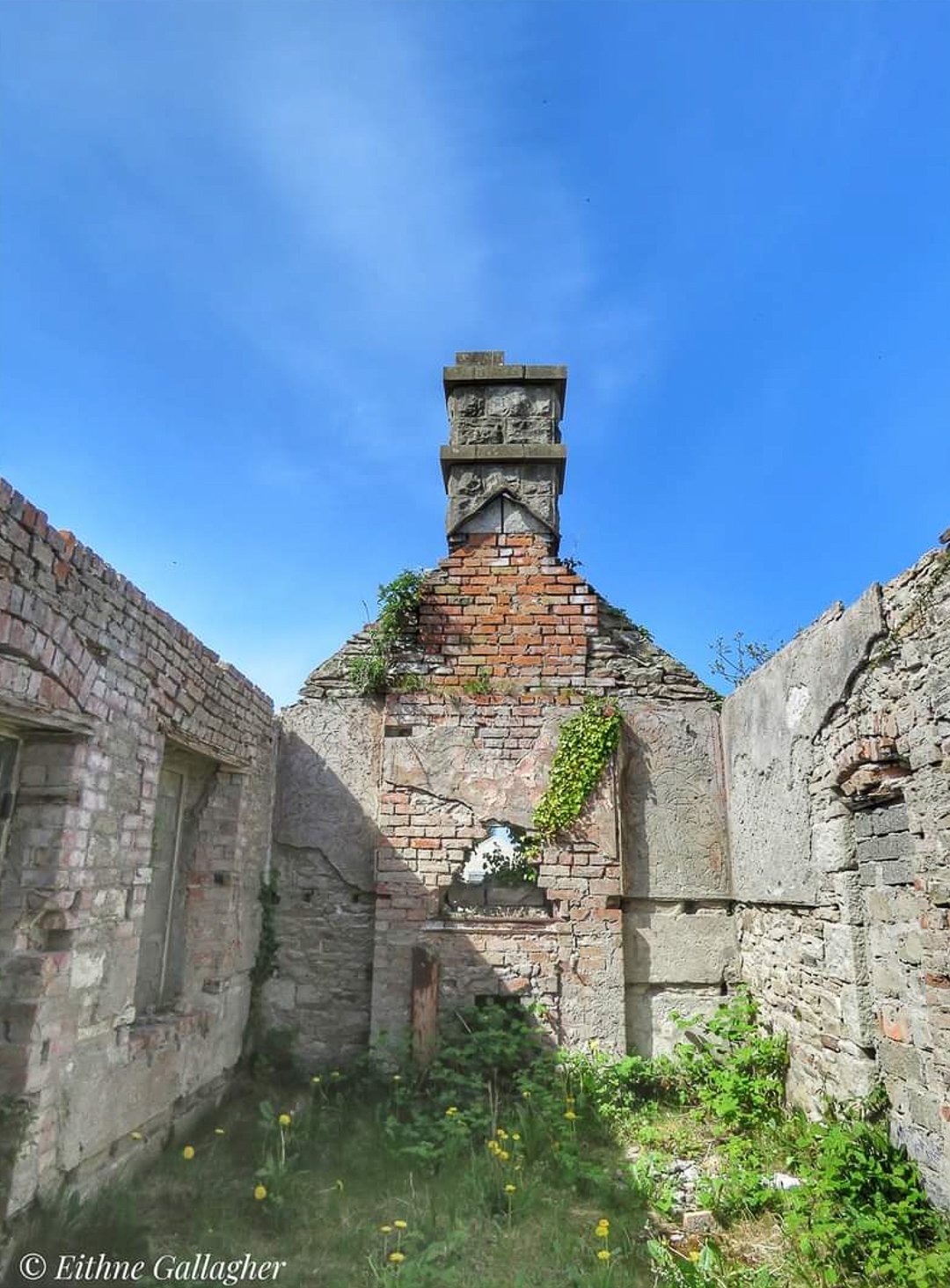
The next stop on our contemplative walk was the old railway station, where the time worn crumbling facade of the ticket office maintains a majestic presence, despite the passage of countless seasons.

Charles Strickland petitioned for a station to be built because Ballaghaderreen had become a significant trading centre for the whole region. After many years of delay, the Ballaghaderreen to Kilfree branch railway line opened November 2nd, 1874. There were two intermediate halts at Edmondstown and Island Rd.
Once a vital hub on the Midland Great Western line to Sligo, the station facilitated the transportation of goods, including agricultural produce and livestock, alongside three daily passenger trains.
Photo Credit: From the ‘Michael Gallagher Collection’.
As depicted by the photograph above, Ballaghaderreen Railway Station held a significance beyond mere transportation. It served as a poignant focal point for community interaction, where people gathered to bid farewell to loved ones, or welcome family arriving from distant places.
This sentiment was reinforced by a member of our group who shared a poignant recollection of being one of the passengers on 2nd February 1963; the day the train ceased operation. Her vivid storytelling captivated our attention, as she recounted a cherished family excursion, complete with the sound of clinking tea-cups and the gleam of a delightful silver teapot, all aboard the final train to depart from the Great Western Ballaghaderreen line.

Ballaghaderreen Railway Station c.1950s. Source: Ballagha Past & Present Facebook Page
Notably, the station operated without a signal cabin, which was rare in it’s time. The instruments were instead housed within the Station House itself.
The station house was eventually demolished to make way for the new entrance to the town. All that remains is a small part of the platform, the derelict ticket office and the goods store (with it’s long cattle bank platform), which is currently being used for community activities. The water tower and single road engine shed have also been demolished, and a health centre now stands on their site (ref. 3)
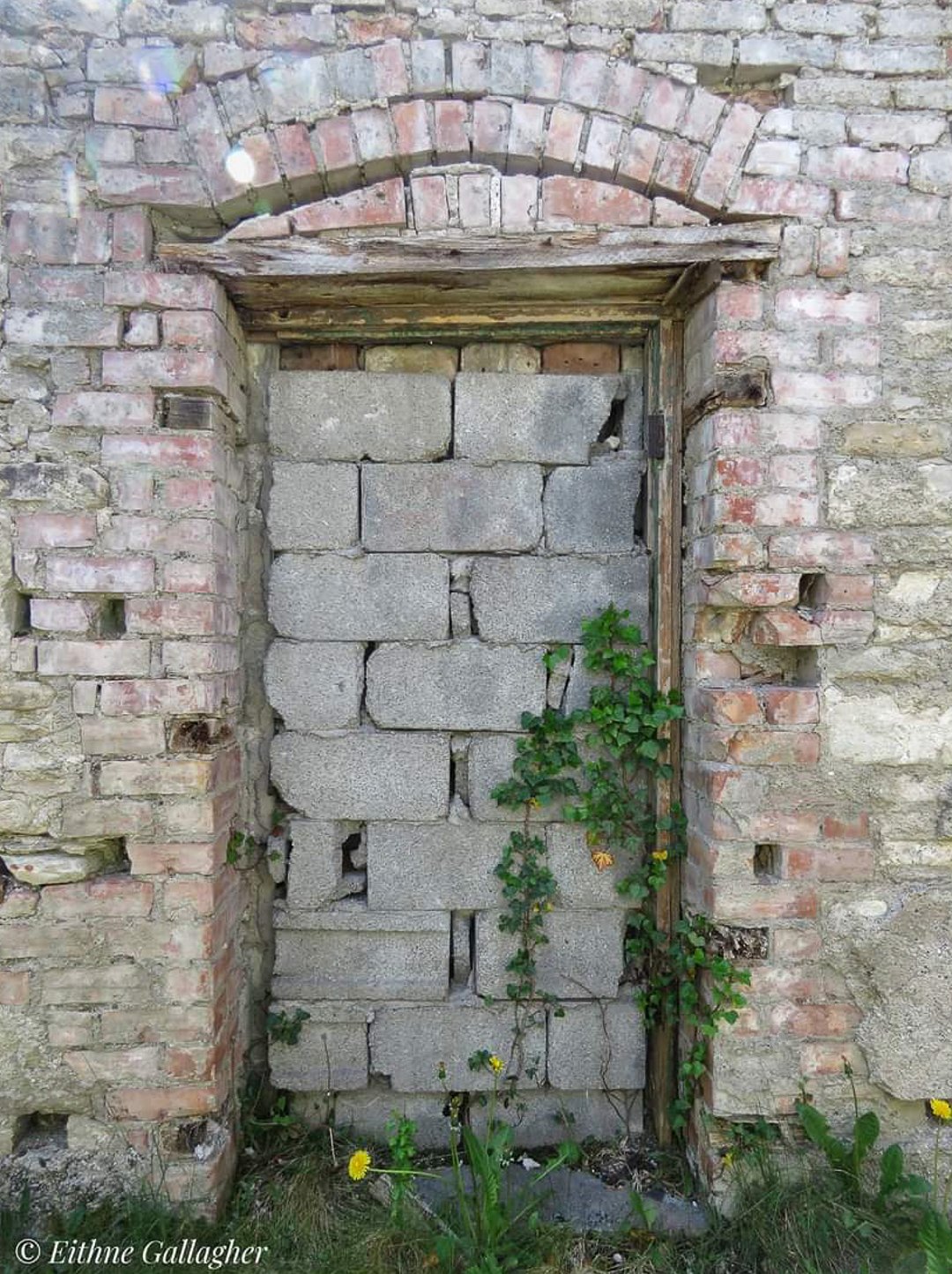
A Series of Photographs of the Station’s Ticket Office, by Eithne Gallagher:


our journey continues
The walk from the station to the Ballaghaderreen Community Garden was a moving transition… during which we discussed reviving the railway station site as a place to both anchor and nurture the old and new for future generations.
These snippets merely scratch the surface of the rich conversations shared during our walk. Keep an eye on our groups’s instagram feed for updates on how these stories will evolve.
All of these blogs are active and on-going, so please visit back regularly to check updates. If any historical information is inaccurate, please contact Anna with details: info@annaking.ie
Resources:
Ref. 1: Photos + General Information: Ballaghaderreen Past & Present Facebook Page.
Ref. 2: History Blog - Kathleen Roddy Glynn.
Eithne Gallagher Photography
Ref. 3: www.eiretrains.com
PLACEWAYS is part of the Creative Places Ballaghaderreen project, funded by the Arts Council of Ireland and supported by Roscommon County Council.
Thank you Eithne, for discovering this lovely film about Ballaghadareen Railway Station.
From Brusna to Kilmovee
Field Walk
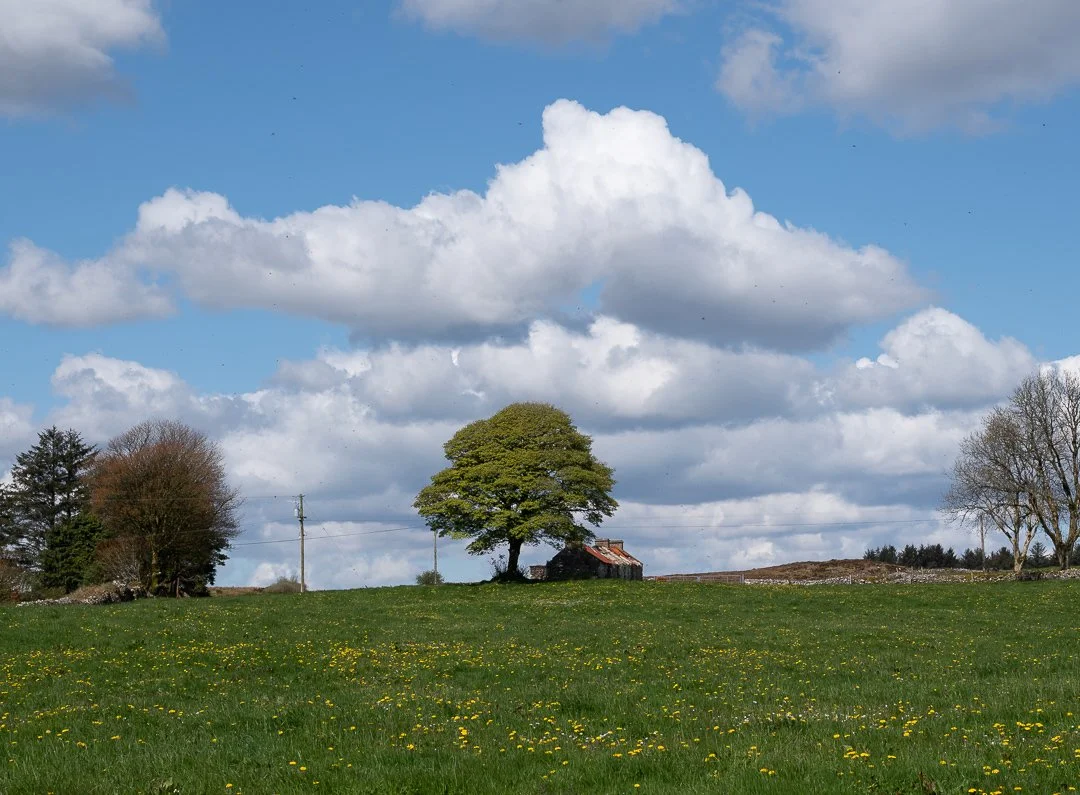
All photos by Anna, unless otherwise stated.
Thank you to my guides: Jolanda van Herk & Barbara van Seventer, for sharing some of your favourite heritage sites near Ballaghaderreen, Roscommon, and Kilmovee, Mayo.
I always walk the land to become acquainted with the stories, character and seasonal rhythms of a place that I visit. This walk is part of a series of ‘Contemplative Walks’ taking place throughout 2024 in Ballaghaderreen and surrounding areas.
While all of my other diary entries include narrative and themes shared throughout our walks, today’s blog is a visual exploration of three stunning heritage sites.
A spectacular walk to Brusna Ring fort


Brusna Stone Fort, photo by Barbara van Seventer

A Mystical Hawthorn Grove

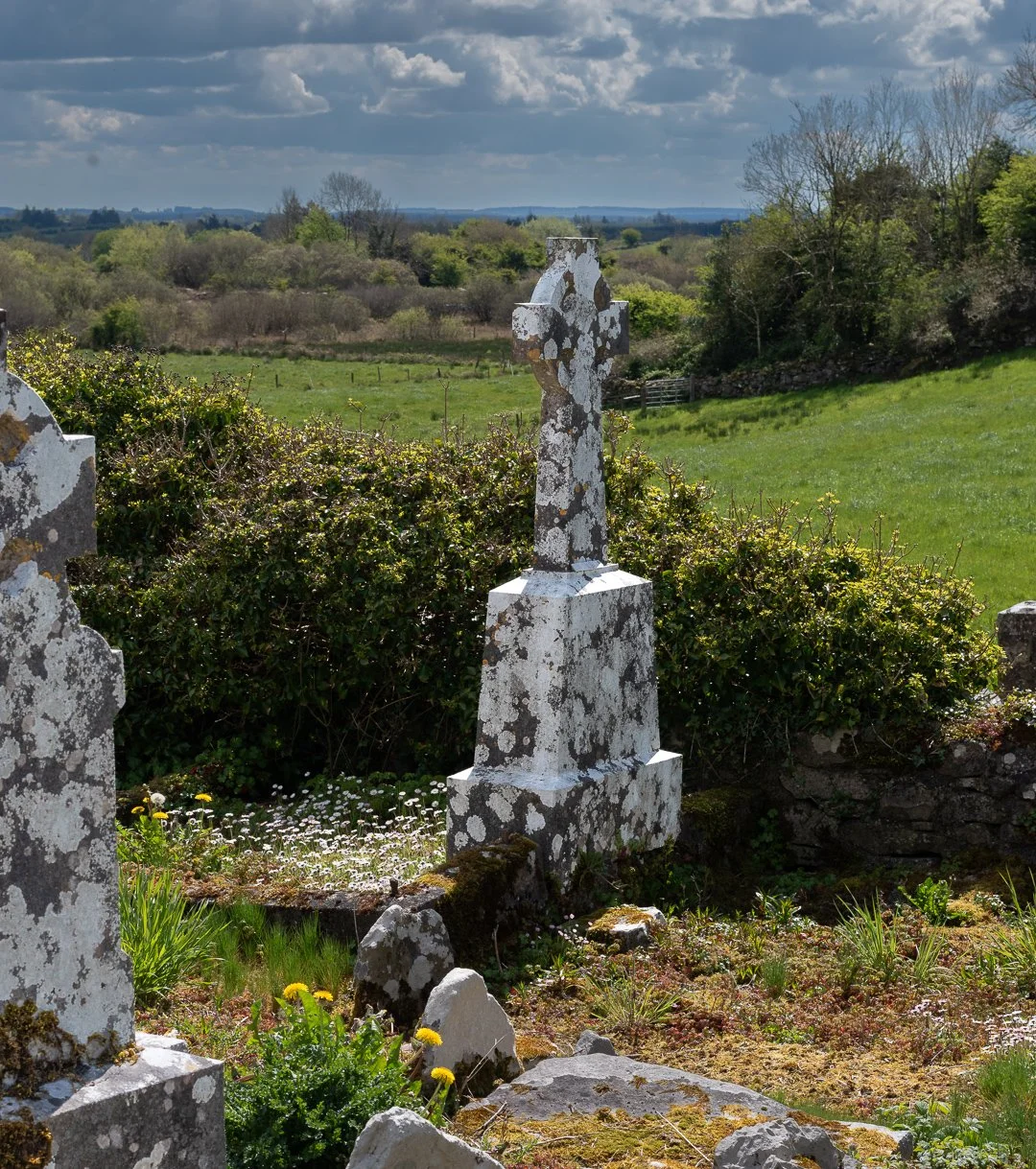
St Patricks Cemetery, Rusheens, Kilmovee.


Penal Altar
Ruined remains of St Patrick’s church, also known as An Teampall, Nua - or the New Church.

Ogham Stone, Rusheens, Kilmovee
This ogham stone may date back to the late 4th or early 5th century AD, making it one of the oldest in Ireland (one of only eleven in County Mayo). It is situated next to a small holy well called ‘Tobar na Bachaille’, or the ‘well of the crozier’ (Ref. 1).

Tea & Scones at Kilmovee Heritage Centre


Reference 1. The Kilmovee Heritage Trail

Contemplative Walks | PLACEWAYS