
Art Essays
Chaosheng Zhang
The Interplay Between Darkness & Light
This pinned essay was written in 2021 and remains one of my favourite pieces.

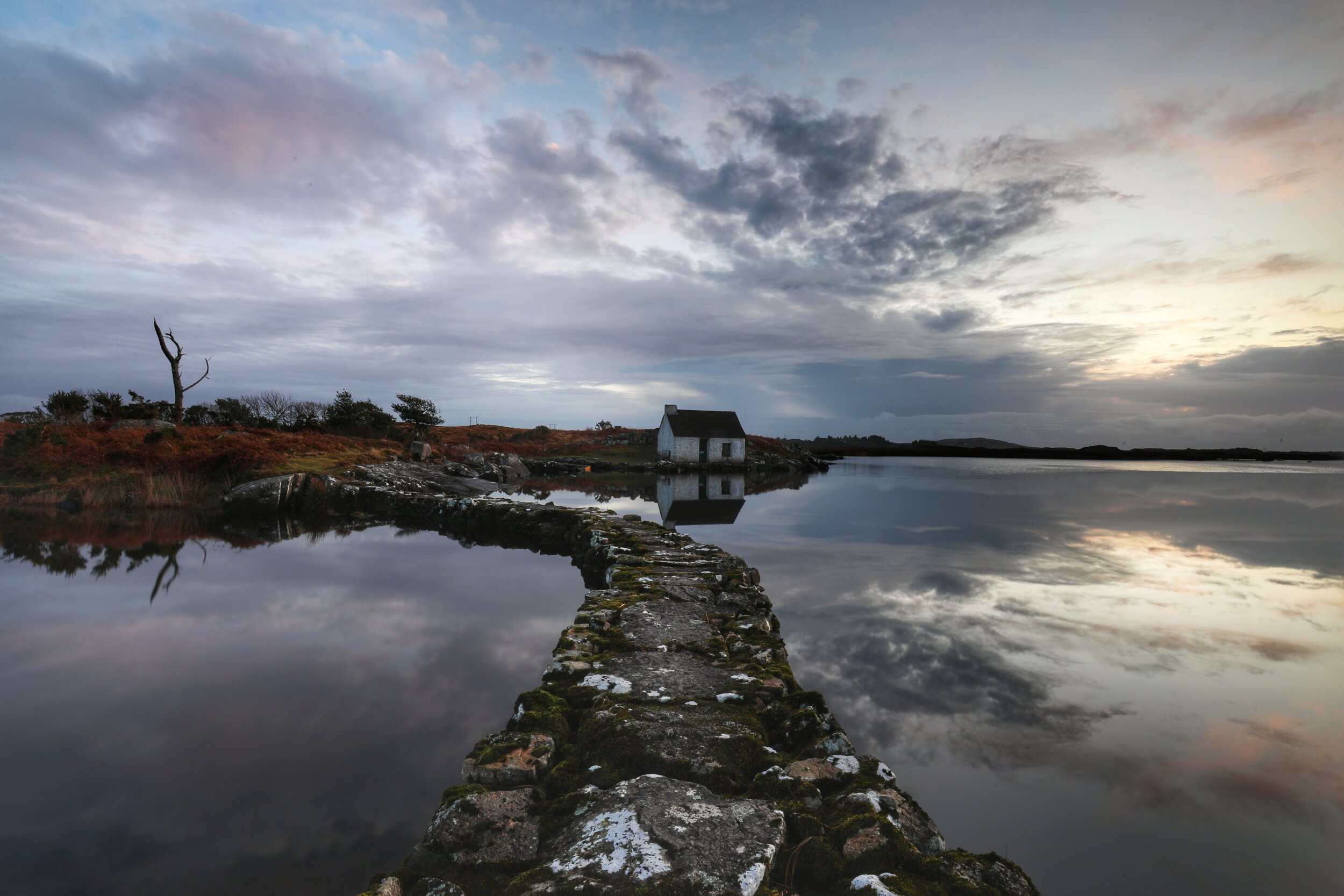
The Fisherman’s Hut, by Dr. Chaosheng Zhang
John Ruskin once suggested that Turner’s paintings “stirringly and truthfully measure the moods of Nature.” With this in mind, I am delighted to introduce the photography of Professor Chaosheng Zhang.
Although painting and photography are different mediums, I cannot help but draw a parallel between Turner’s atmospheric sensibility and certain collections within Chaosheng’s work. While distinct in context and style, both artists share an intuitive understanding of tone, palette and light, and both gesture toward silhouettes of life suspended within space.
On occasion, there is even a shared sense of sombre grace.
One of Chaosheng’s photographs that stays with me is The Fisherman’s Hut. Its storied landscape evokes something of Turner’s emotive vision: darkness giving way to light, the memory of what has passed beside the possibility of what may yet unfold.
Just at the point where the pathway draws us inward, a sense of stillness settles, and I find myself wondering what it might be like to fish in that cold, unyielding place.
As Turner’s career evolved, he became less concerned with the details of objects and increasingly devoted to the radiance of nature itself: light moving across water, the sublime force of weather, the poetry of ordinary moments.
The result is an immersive experience for the viewers of his scenes.
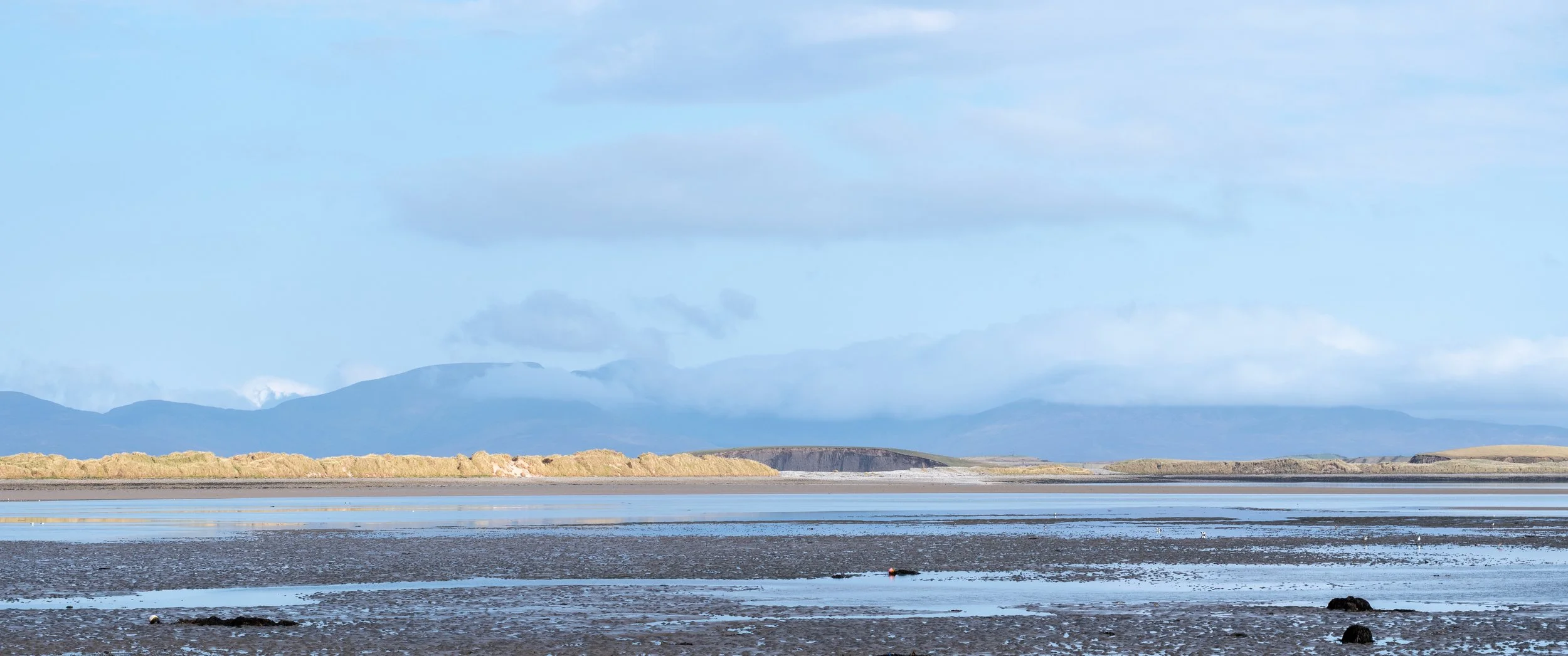
Silver Strand
Chaosheng’s Silver Strand series evokes a similar experience.

Silver Strand, by Dr. Chaosheng Zhang.
These images invite us into the sensory atmosphere of the moment. Mist, horizon, tide and light merge into a field of perception where something subtle is revealed; the feeling of being held within a living landscape.
Turner immersed himself in the wild, shifting brilliance of weather.
Chaosheng’s knowledge of weather patterns clearly shapes his craft, but it is his relationship with nature – attentive, patient, reverent – that radiates though his photographs.
Through tone, colour and delicate transitions of light, Chaosheng captures the intangible movements of place: the breath of dawn, the weight of mist, the gentle pull of tide.

Silver Strand, by Dr. Chaosheng Zhang.
Mist and Light
Ruskin described Turner’s Snow Storm: Steam Boat off a Harbour’s Mouth as “one of the very grandest statements of sea-motion, mist and light ever put on canvas.” While Chaosheng’s images do not convey Turner’s turbulence, they share a fascination with these same elements. Mist and light become their own language, shaping emotion, deepening atmosphere, transforming the ordinary into the contemplative.
There is an elegance in Chaosheng’s relationship with the natural world.
His images suggest participation: an attunement to contours, landforms and shifting weather that feels both humble and deeply present. Each photograph is a story in its own right. Their spacious, often minimalistic composition allows our imagination to wander, not away from the image – but through it, weaving our own memories into the vast expanses.
I have curated this small selection of photographs (more below) to highlight Chaosheng’s unique sensitivity to light, and to offer a moment of pause: an opportunity to witness how his work captures the essence of passing time.
In the vastness of his seascapes, there is a stillness that invites us inward, a space in which we might take shelter and find peace within the changing shades of dawn, dusk and mist.
About the Artist
Originally from China, Chaosheng Zhang has lived in Galway with his family for over twenty years. He is a Professor at the School of Geography, Archaeology and Irish Studies at the University of Galway. Alongside his acclaimed academic work, he is a passionate photographer with a wide following on social media.
You can find him on Instagram and Facebook at the links below.
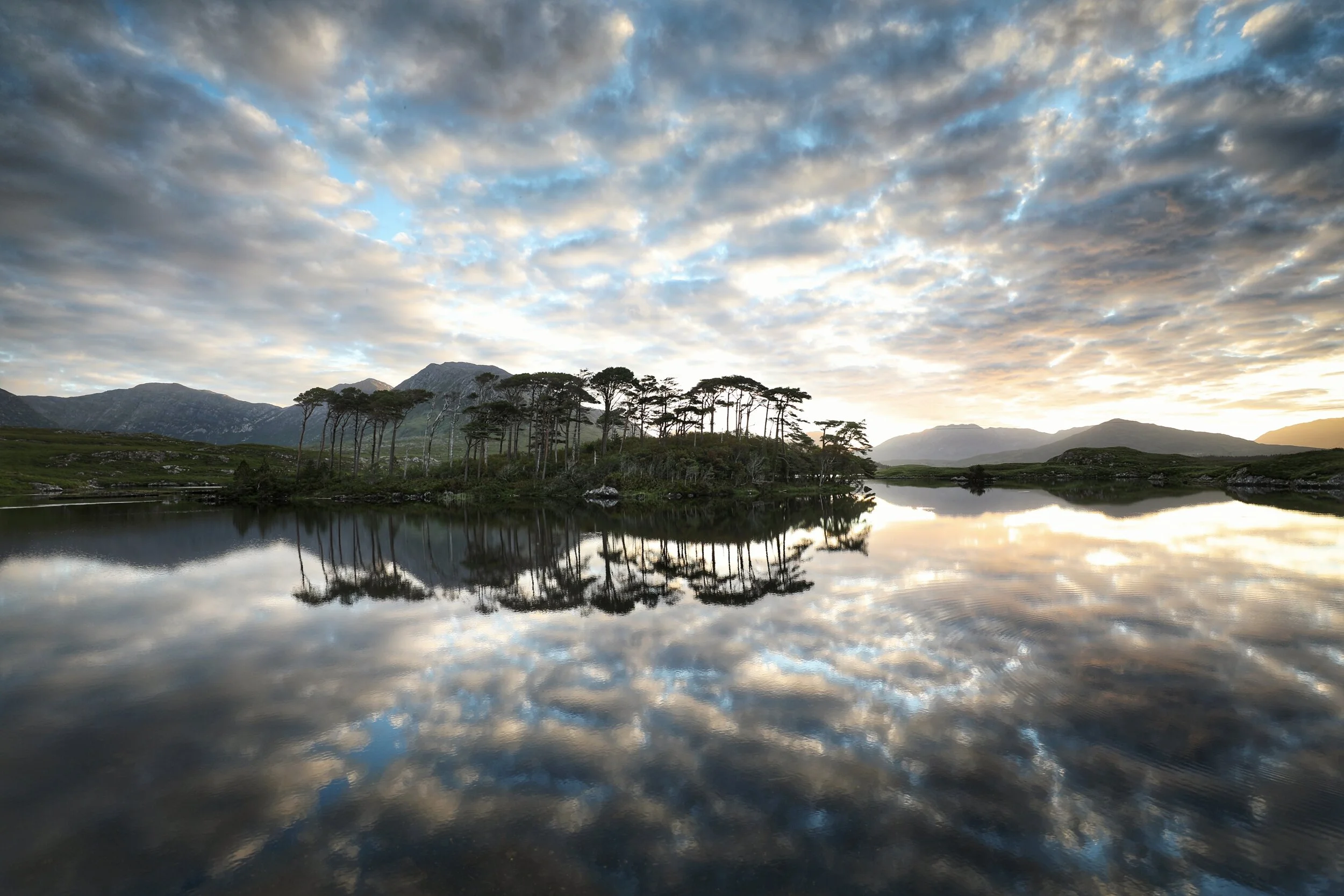
Connemara, by Dr. Chaosheng Zhang.

Reeds on Lough Corrib, by Dr. Chaosheng Zhang.

The Claddagh, by Dr. Chaosheng Zhang.
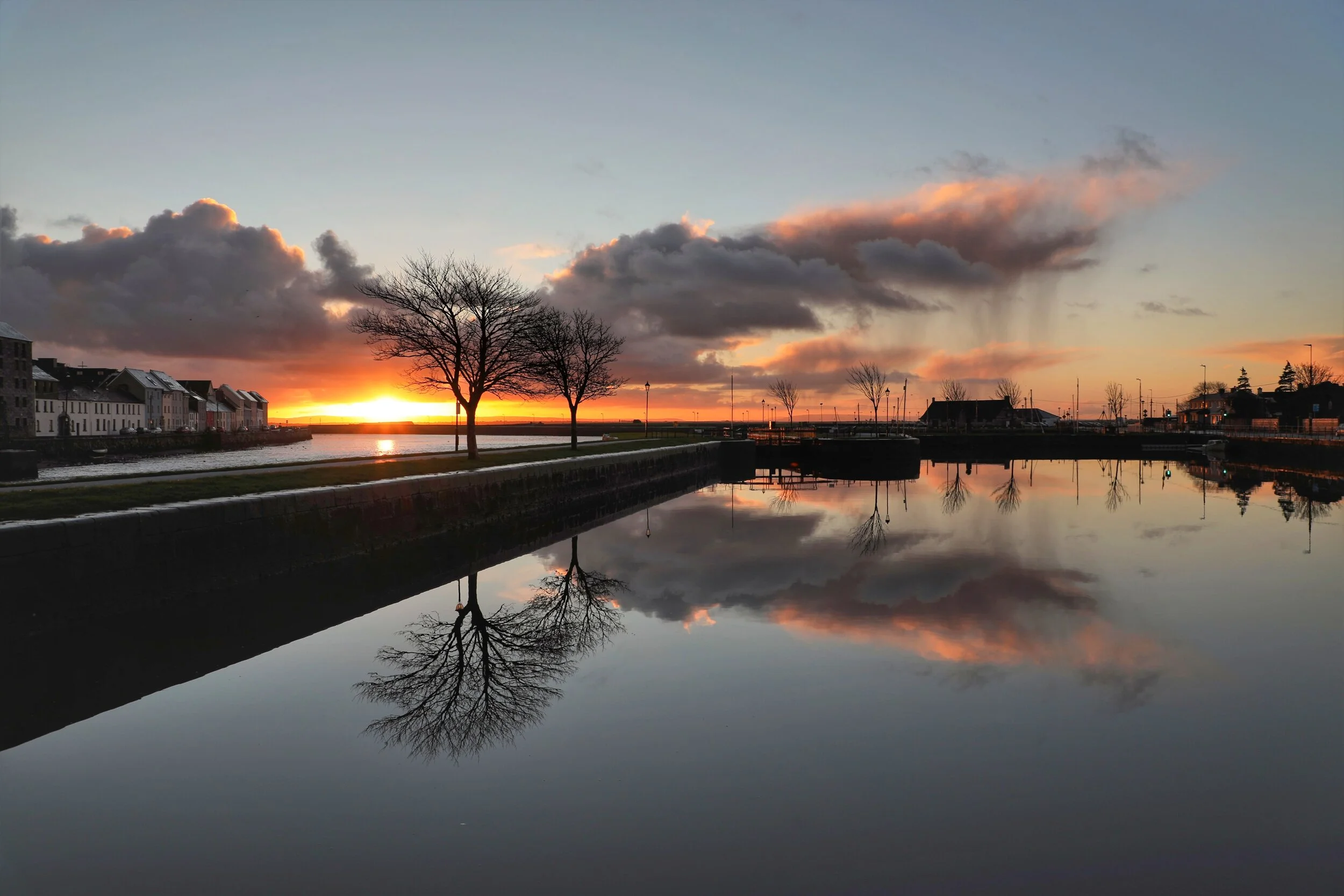
The Long Walk, By Dr. Chaosheng Zhang.
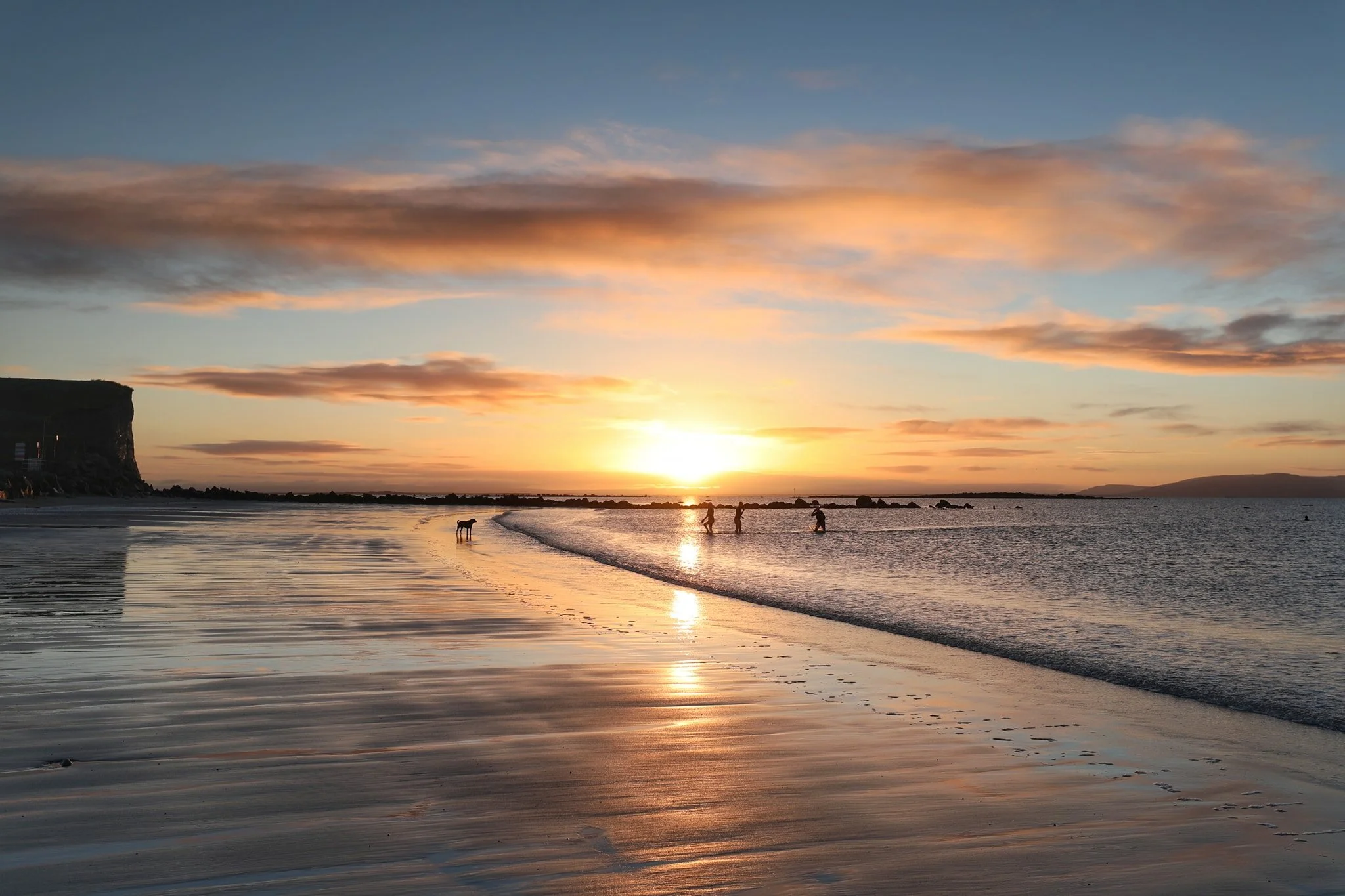
Silver Strand, By Dr. Chaosheng Zhang.
References:
Reference 1. Andrews, K. (2020) To take good photos, you need to learn geography. Capturing the beauty of Galway in the photography of Dr. Chaosheng Zhang. Galway Advertiser. Oct 22th.
Reference 2. Piper, David and Philip Rawson. (2000) The Illustrated History of Art. London: Chancellor Press.
Reference 3. Source of quote: www.tate.org.uk/

Andrea Roggi Exhibition
A Visual Essay. Cortona, Italy
Andrea Roggi’s sculptures resonate deeply with me, especially those featuring olive trees and graceful human figures rising skyward with open arms and unfurling branches.
His work reflects many of the themes I explore in my own creative practice, such as interconnection, the natural world, and the invisible threads that bind us to the earth and to one another.

During a visit to Cortona, Italy, I was especially drawn to the way Roggi merges the organic essence of trees with the fluid, almost ethereal presence of human figures. It feels as though both belong to the same narrative of growth, transformation, and unity.

The olive has long been one of my favourite trees.
I adore its gnarled beauty and silvery leaves that shimmer in shifting light.
In Roggi’s hands, the olive tree becomes a symbol of timeless connection between body and land, memory and imagination, past and becoming.


For more information: www.andrearoggi.com
I saw Andrea’s work at the Circle of Life Gallery, Cortona, Italy.

The Art of Susan Retford
Understanding the Process

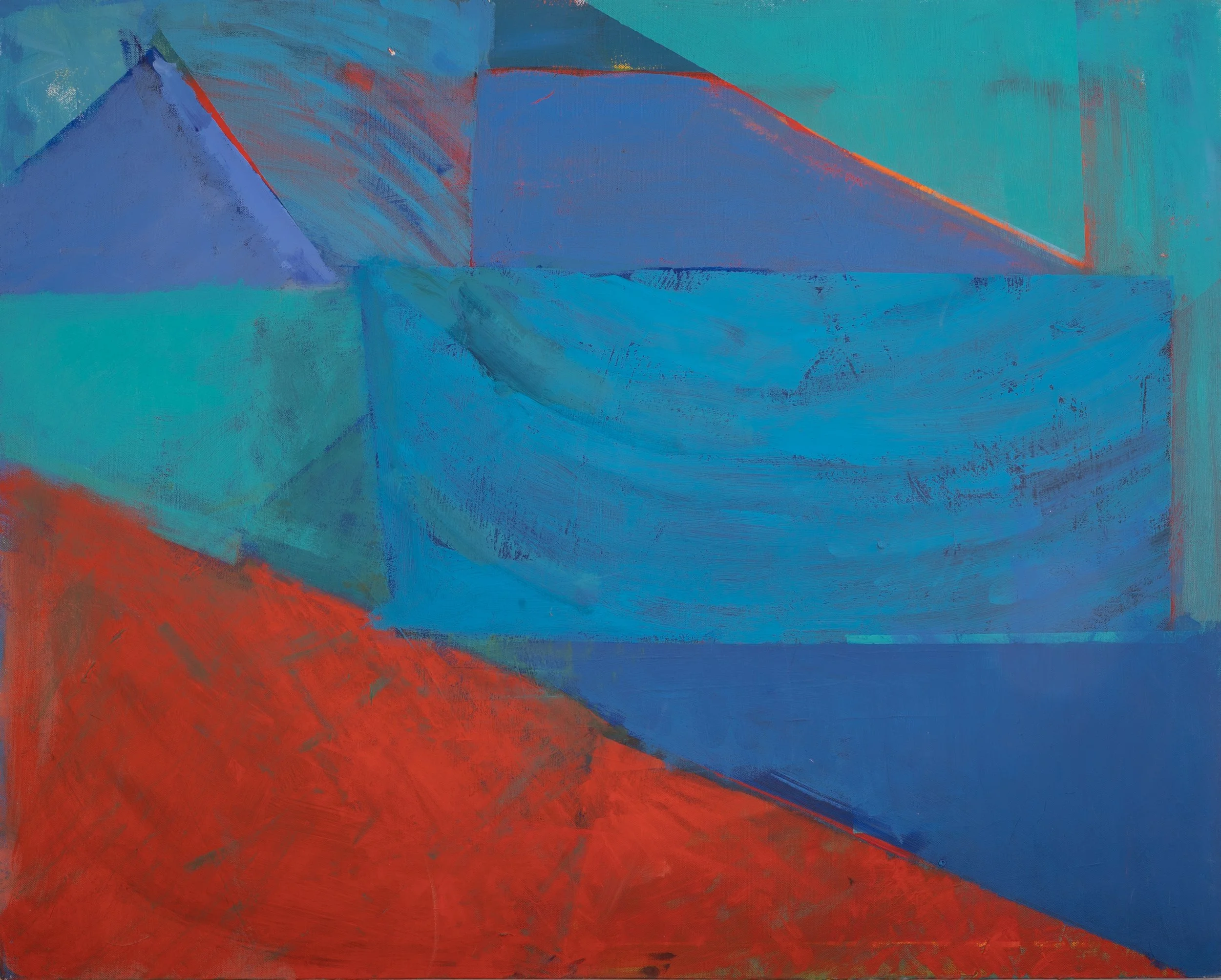
Cross Tides | 30 x 40 inches | Acrylic on Canvas, by Susan Retford
Born in South Wales, Susan Retford has been a painter since 1989. Since qualifying in Fine Art (painting) from Cardiff Art School, Sue has gone on to be a prolific painter. One of her most recent paintings: ‘North Atlantic Swirl’ has been selected for the prestigious 2024 ‘Royal Cambrian Academy Exhibition in Wales.
I started our conversation by asking Sue about how her work relates to health and well-being?
“Central to my philosophy of painting is that art is a process of self-discovery, and a means by which I/we create a third dimension of experience. The artwork is a bridge between me, my inner world, and the external world. My enduring interest in this unique quality of art-making resulted in me qualifying in the early 1990’s as an art therapist, and then psychotherapist. I have a deep interest in human development and mental well-being.”
Can you describe how this interest is reflected in painting?
“My love and the joy of painting and drawing has always been with me. I never tire of the surprise and adventure that accompany the making of images. In the first instance, as a shy and withdrawn young women – art gave me a window to the unexpressed, unexplored - and not very well understood adolescent psyche. The opportunity to communicate and represent my feeling within the safety and freedom of a canvas was a revelation, which began a love affair with art and psychology. I think it repaired something for me.”

Downs | 30 x 40 inches | Acrylic on Canvas
“My art is, and always has been, primarily about my emotional response to the subject I am painting. My work can be representational of reality, or abstract, symbolic representations of internal states. Often unconscious states of mind are revealed through my painting. I aim to create a metaphor of a union between inside and outside. Psychological and emotional, as well as experiential states inspired by the environment, are captured in colour, composition, mark, the rhythm, and the overall visual register of the painting, which plays a part in conveying the message to the viewer.”
Thats fascinating Sue, can you share your process?
“Photography and sketching in situ feature largely in my gathering of information from the world around me. Wild places: islands, highlands, woods in all weather inspire me visually and create my sense of connection with myself and the essential elements of life. Philosophy, personal experiences and psychotherapy also influence. Some of my paintings take many years to finish. They go through many iterations that very much reflect my internal process. It is this process of change, reflection and delving deep into the canvas of my own psyche that gives these paintings a sense of timeless movement, while also anchoring experience into structure, shape and form.”

Cornish Study, by Susan Retford
I am really interested in how you have collated collections that seem to be related to different emotional phases of your life, and the healing processes that you have experienced. Can you talk a little bit more about this, as well as your current intentions, interests and preoccupations.
“I am always interested in what is formed and what is fading; what is present and what is hidden. I portray this visually through juxtaposition, or fusion of colour, and in the variations of how edge meets edge and how forms and colour create space. The figure, the city and the enduring sea and landscape have been central themes in my work over the last 15 years. Concepts of human survival, adaptation of humanity and nature, the constant evolution and development of the self, and moving forwards also inspires me.
Paintings from 2018.
Peaceful Sea | 30 x 40 inches | Acrylic on Canvas, by Susan Retford
“Peaceful Sea” and “The Centre Cannot Hold” were made at a particular time in my life. They record my experience at the time; a time now faded. I make vague reference to the landscape in ‘Peaceful Sea’ aiming to convey space with perspective, but its an image that does not make complete reference to the external world. Nevertheless, it aims at a certain quiet, harmony and balance. It is a space that you can enter into.”

The Centre Cannot Hold. Acrylic on Canvas | 30 x 40 inches
“A sense of disquiet is more the message of ‘The Centre Cannot Hold’, which is a more uncomfortable space. The pull and push of the composition might leave the viewer with something restless; a space one cannot comfortably sit within. It represents the idea that forces in life sometimes conspire towards collapse, where opposing thoughts and differences overwhelm and breakdown. I explore how dissonance and conflict can ensue in life, which is part of the human condition. Fracture is inevitable!”
Paintings 2020: ‘Cross Tides’ - ‘After Hokusai – Oncoming Wave’ and ‘Gunwalloe Cove.
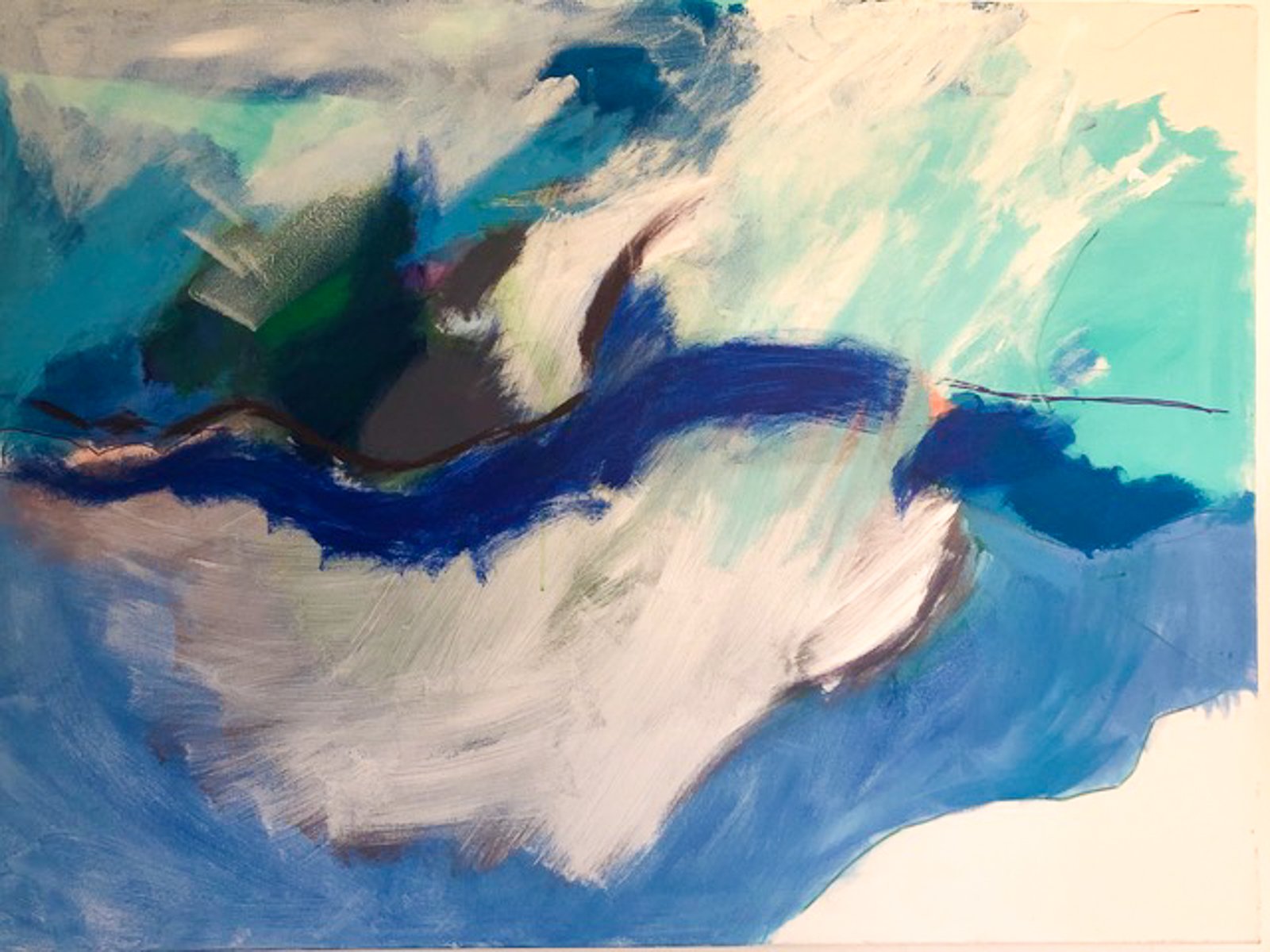
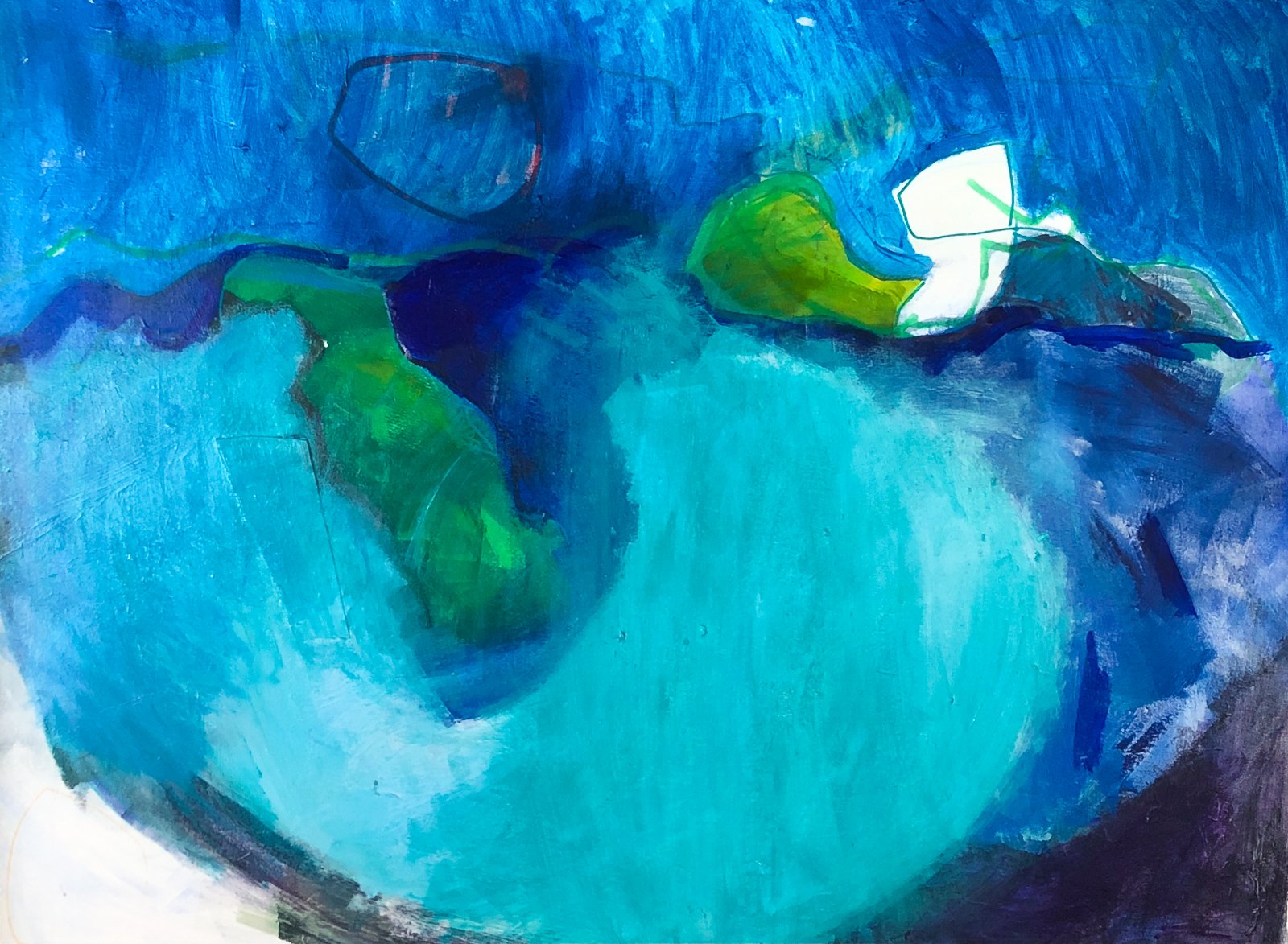
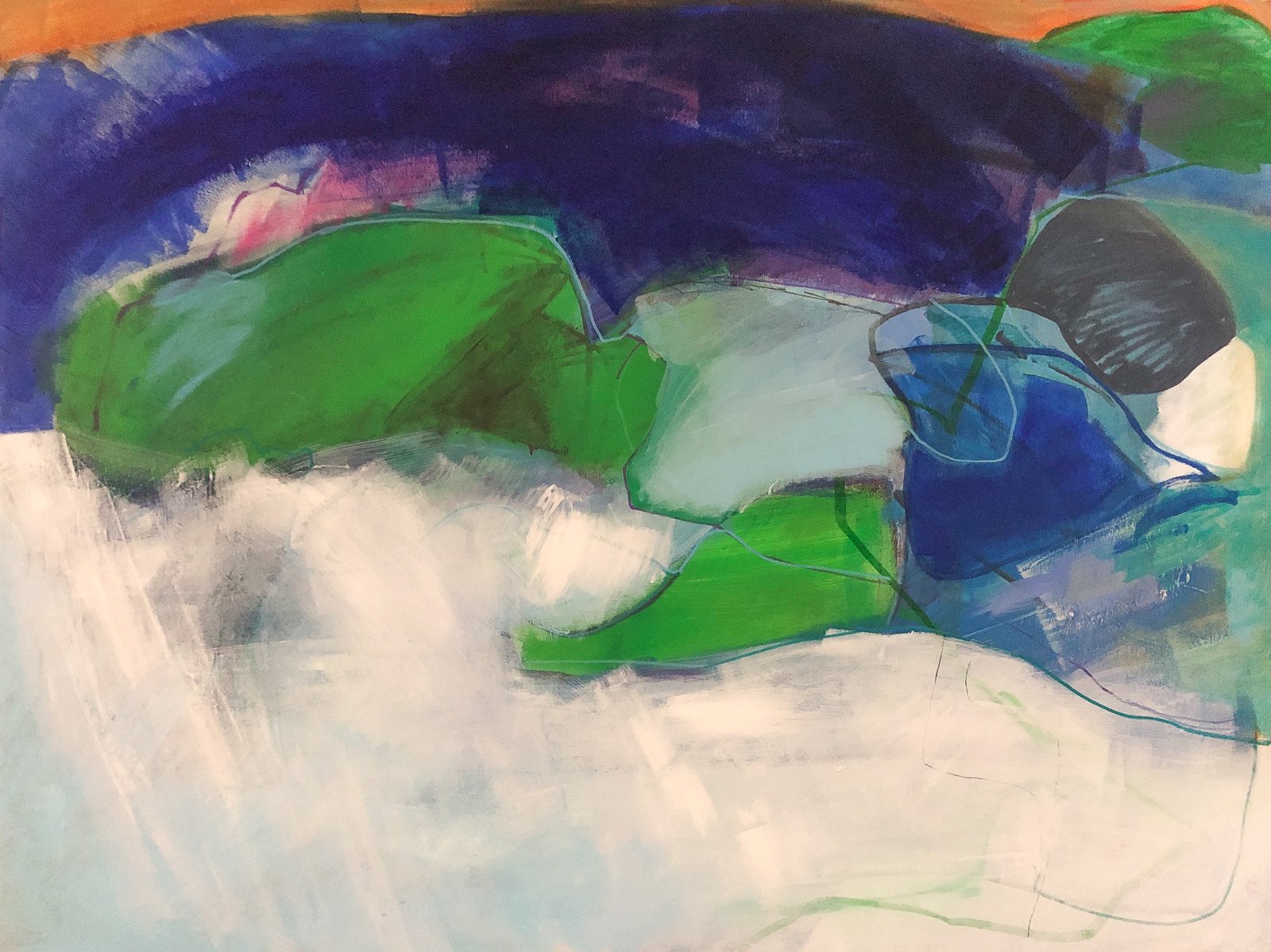
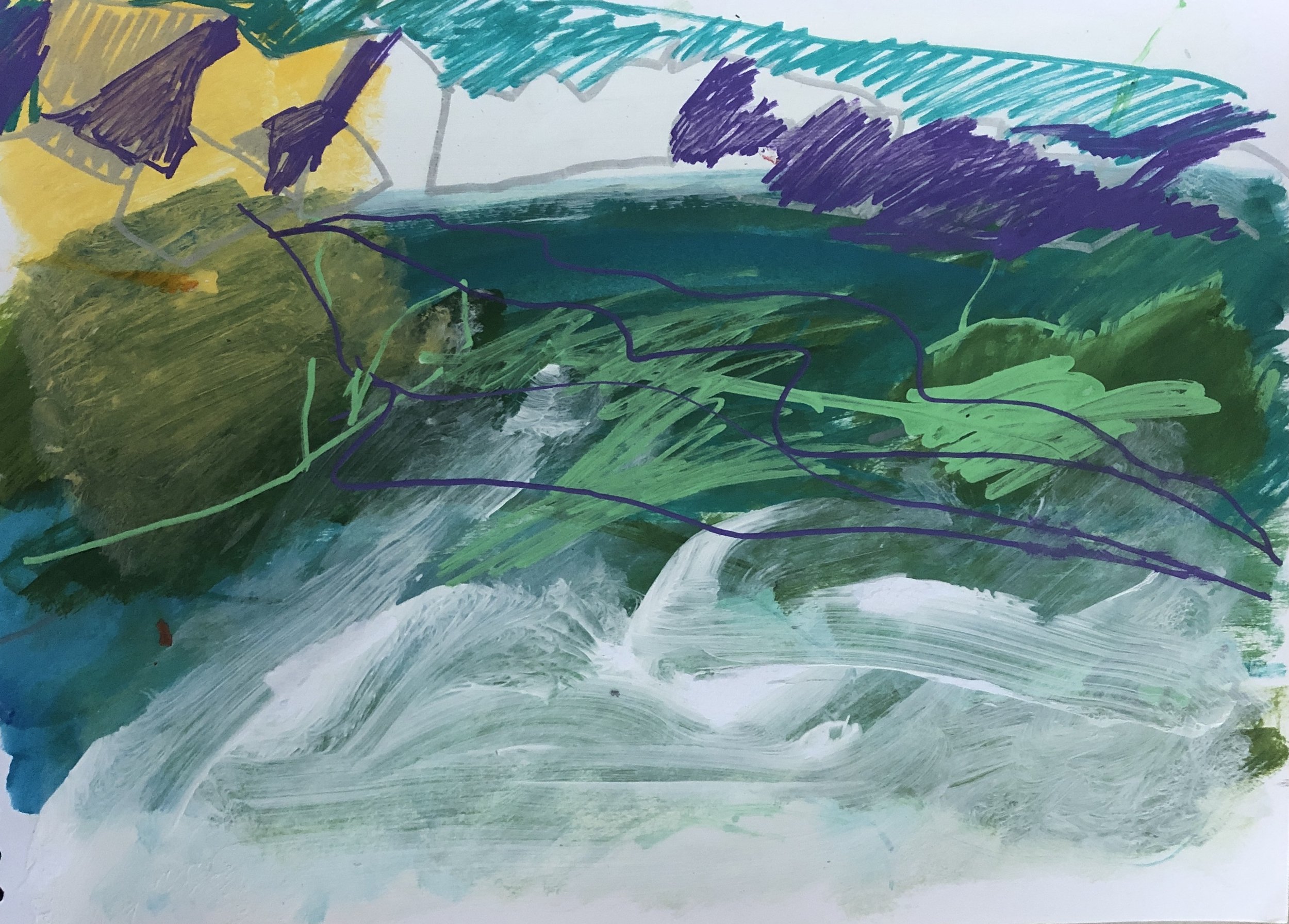
“These paintings make direct reference to a cove, Gunwalloe, in Cornwall, and reference my family and enduring heartfelt life connections. Previous paintings are more metaphoric of internal states of mind.
‘Oncoming Wave’ aims to capture the immediacy and momentary rise and fall of a wave. When finished it reminded me of the Japanese Painter Hokusai and his fascination with the sea. The Japanese painting style Sumi-E or Ukyio-e emulates the immediacy and moment of the mark, or brushstroke. A moment that will never come again and in that moment is unique.
Paintings 2023: ‘Sargassum Swarm’ and ‘North Atlantic Swirl’.
More recently, my paintings uses a more formal format of seascape painting, working with immediacy exaggerated by using highly viscose paint. My aim is to achieve a sensation of rapid movement, maybe explosion and unsteadiness.
Sargassum Swarm takes the metaphor of the troublesome migration of islands of seaweed floating in water, which can be a hazard. I aim to create a tension between beauty and something more sinister.
‘North Atlantic Swirl’, though less explosive, was painted on the edge of a cliff overlooking the sea on parched grass; a desert yellow in colour burnt by the sun. Beautiful, yet treacherous.”
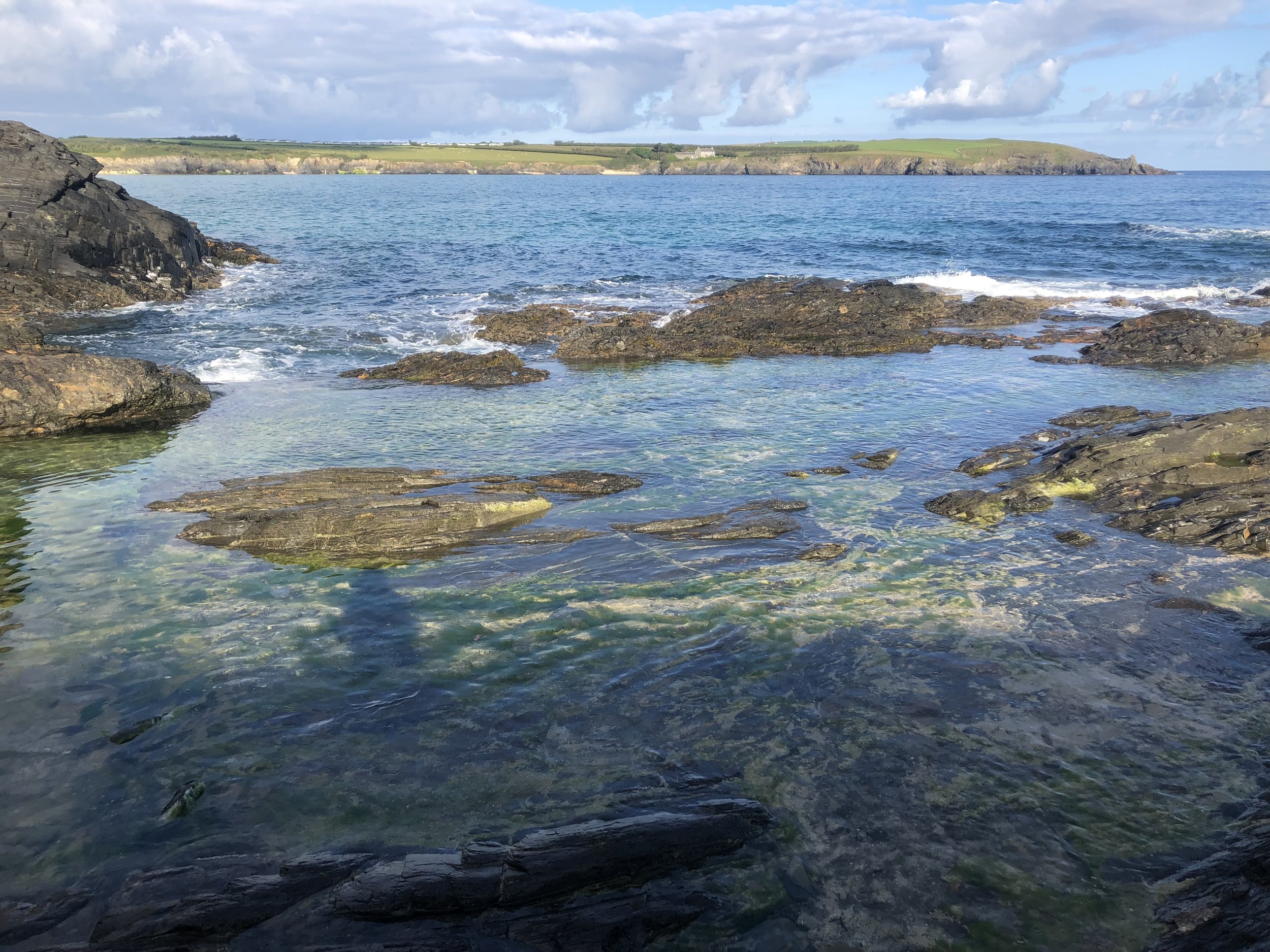
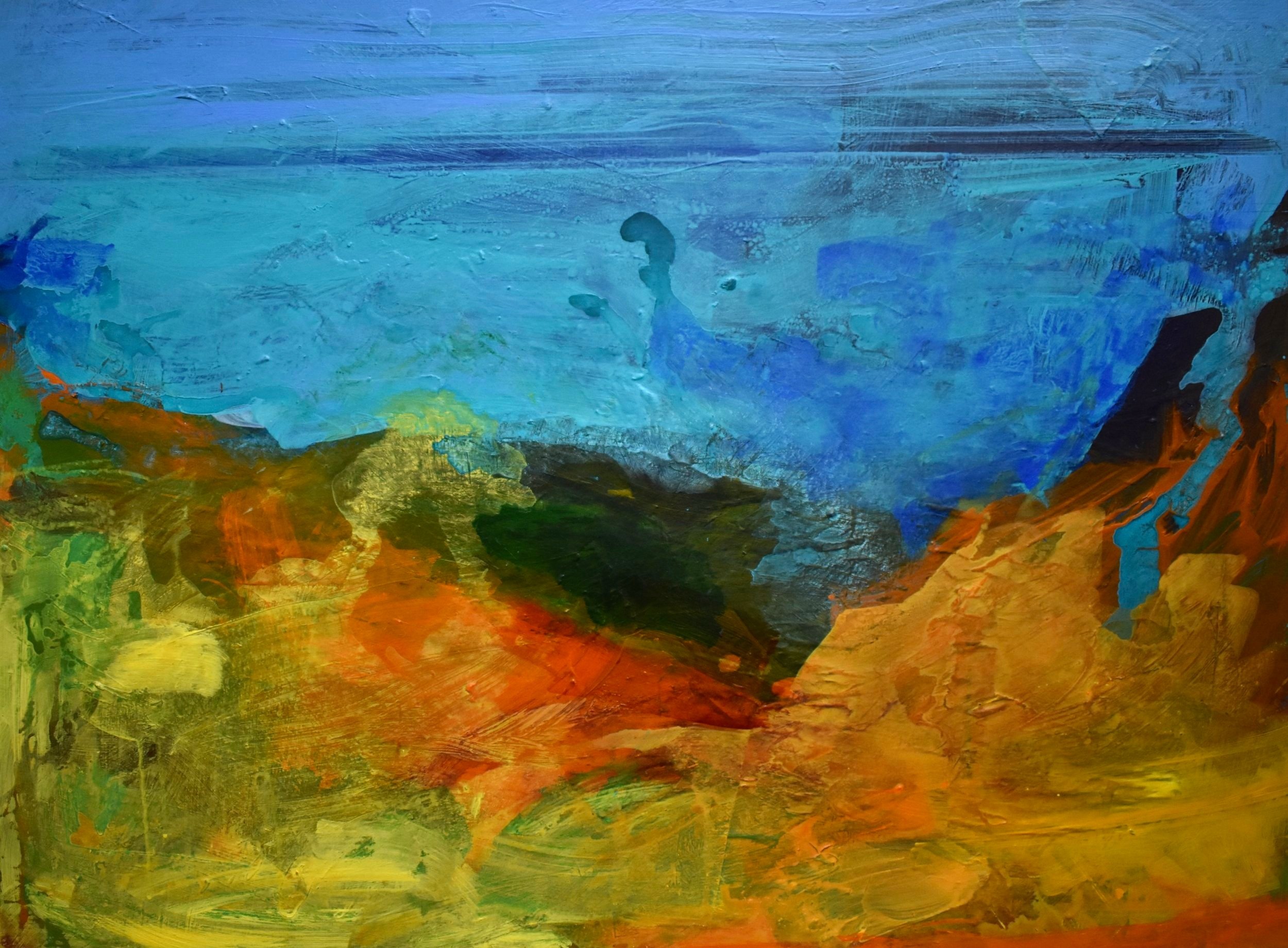
Lastly Sue, how do you work with others through art?
“In addition to being a painter I have been a creative arts therapist and psychotherapist for three decades. My passion has been to explore and facilitate other people’s creativity alongside their personal development.
I use a range of processes, such as feedback loop painting, which can help people express their deeper psychological and emotional lives through art. Arts therapy is a powerful healing tool because it accesses the right side of the brain, where unconscious or repressed memories are stored. In addition to self-expression and release, neuroscience has also confirmed that engagement with the arts can help rewire neural circuitry and create new pathways. It’s an incredibly powerful medium to work with.”
To access Susan Retford’s stunning portfolio work - check out www.susanretford.com

Sargassun Swarm, by Susan Retford

5 Insights from Your Brain On Art
By Susan Magsamen and Ivy Ross,
Anna, at the launch of Creative Places Ballaghaderreen. Photo by Marek Petrovic.
Art, Design & Well-Being: Insights from Your Brain On Art
Today’s essay draws on the research in Your Brain On Art by Susan Magsamen and Ivy Ross, a book that is rapidly becoming foundational in the emerging field of the neuroarts.

Back West performing at Katie’s Claddagh Cottage. Photo by Anna King
People often describe creative activities, painting, singing, dancing, as profoundly therapeutic. What is fascinating is that science is beginning to explain why. Researchers in neuroaesthetics argue that arts-based experiences can influence our bodies, brains and behaviour in measurable and transformative ways.
Art Can Enhance Health
In their groundbreaking book, Magsamen and Ross gather an extraordinary body of research showing that just twenty minutes of an aesthetic experience can begin to change our biology. They present evidence that art can prevent disease, support emotional and physical health, and act as a powerful blueprint for future approaches to community and healthcare design.
Whether we are navigating pain, anxiety, depression, cognitive decline, grief or chronic illness, the authors show that “acts of art” can help us heal and thrive. Around the world, healthcare practitioners are now prescribing museum visits; hospitals are integrating arts therapies; and architects and designers are rethinking the built environment in response to this growing research.
Five key insights from Your Brain on Art

William Merrigan. Live music at Annaghdown Well, by the Whileaways. Photo by Anna King. An art project to celebrate the role of Wells in modern community life.
1. Awareness, Attention & the Senses
Magsamen and Ross emphasise that the transformative potential of an art experience begins with awareness – a practice remarkably similar to mindfulness:
paying attention
noticing the present moment
being attuned to the environment
sensing what the body is registering
Understanding how our senses work is central to understanding how art affects us.
“All stimuli that we encounter – visual, auditory, somatosensory, gustatory, olfactory, and others – change the structure and function of cells within our brains and bodies.” (p.99)
Our brains are constantly processing sensory input at extraordinary speed. Thanks to modern imaging technologies, scientists can now observe how light, sound, taste and other sensations trigger neurobiological cascades that shape our thinking and emotions.
Art (whether painting, literature, dance or theatre) influences us through these sensory channels.
A Simple Example
Our response to music is shaped by memory, culture and personal association, but not only that. Certain frequencies affect the human nervous system in similar ways across individuals, for example: Slow rhythms tend to support rest and sleep. This aligns with long-standing contemplative traditions that use sound, such as a Tibetan singing bowls, to shift the nervous system from alertness to calm.
2/ Making art can physically affect neuroplasticity

PLACEWAYS - Creative Places Ballaghaderreen project with Anna & St. Nathy’s College.
When we learn, or when something captures our interest, our brain cells communicate with other cells in a process known as synaptic transmission. New circuits form; existing circuits strengthen. As the saying goes, “when cells fire together, they wire together.” Over time, our brains physically change in response to what we think, feel and do. This is neuroplasticity.
Magsamen and Ross emphasise that these neural connections are reinforced – or not – depending on the intensity of the sensory stimuli and the quality of the experience (p.12). Art, they argue, has a particularly significant effect on neuroplasticity. This is based on imaging studies showing how the brain responds to aesthetic stimuli and how those responses shift over time.
These insights hold profound implications for fields such as education and healthcare. For example, people living with severe memory loss sometimes recall forgotten experiences when they hear familiar music; a reminder of how deeply art is woven into our neurological patterns.
3/ Self Expression Through Art
Another important insight in Your Brain On Art is that creative expression supports both individual and collective well-being. Self-expression through art helps people move through difficult emotions such as grief, trauma and loneliness. By working with abstract forms – paint, music, sculpture, movement – we access and release feelings that may be difficult to articulate in words.
Art can also activate the relaxation response, lowering stress and anxiety. Over time, this supports better mood regulation and emotional resilience.

Contemplative Walks, with Artist Researcher, Anna King
4/ Art Spaces Within Community
It is well recognised that meaningful social engagement improves mental and emotional health. One reason for this is that self-expression is a fundamental human need. When communities have welcoming spaces for creativity: places where people can be seen, heard and valued, individuals who may feel marginalised or isolated have opportunities to reconnect.
This aspect of Magsamen and Ross’s work is especially important. It offers practical ways forward at a time when loneliness and disconnection are becoming pressing social issues.
The arts empower us to reimagine, re-envision and reconnect – opening pathways toward more vibrant, resilient communities (p.227).
5/ Our Built Environment -
For centuries, architects such as Christopher Alexander have recognised that our built environment profoundly shapes our well-being. Alexander wrote:
“The specific patterns out of which a building or a town is made may be alive or dead. To the extent they are alive, they let our inner forces loose and set us free; but when they are dead, they keep us locked in inner conflict.”
— The Timeless Way of Building (1979, x)
Magsamen and Ross build on this lineage, offering a contemporary blueprint for how art and design can be integrated into our homes, workplaces and public spaces in ways that support both individual and community health.
My next blog will explore artistic spaces within community in more details. Keep an eye on instagram for updates: Contemplative Art

Heritage Exhibition - Creative Places Ballaghaderreen curated by Anna, Eithne Gallagher & community.
References:
Magsamen, S and Ross, I. (2023) Your Brain On Art. Canongate.
Alexander, C. (1979) The Timeless Way of Building. New York: Oxford University Press.