
What is contemplative Art? (and why it matters today)
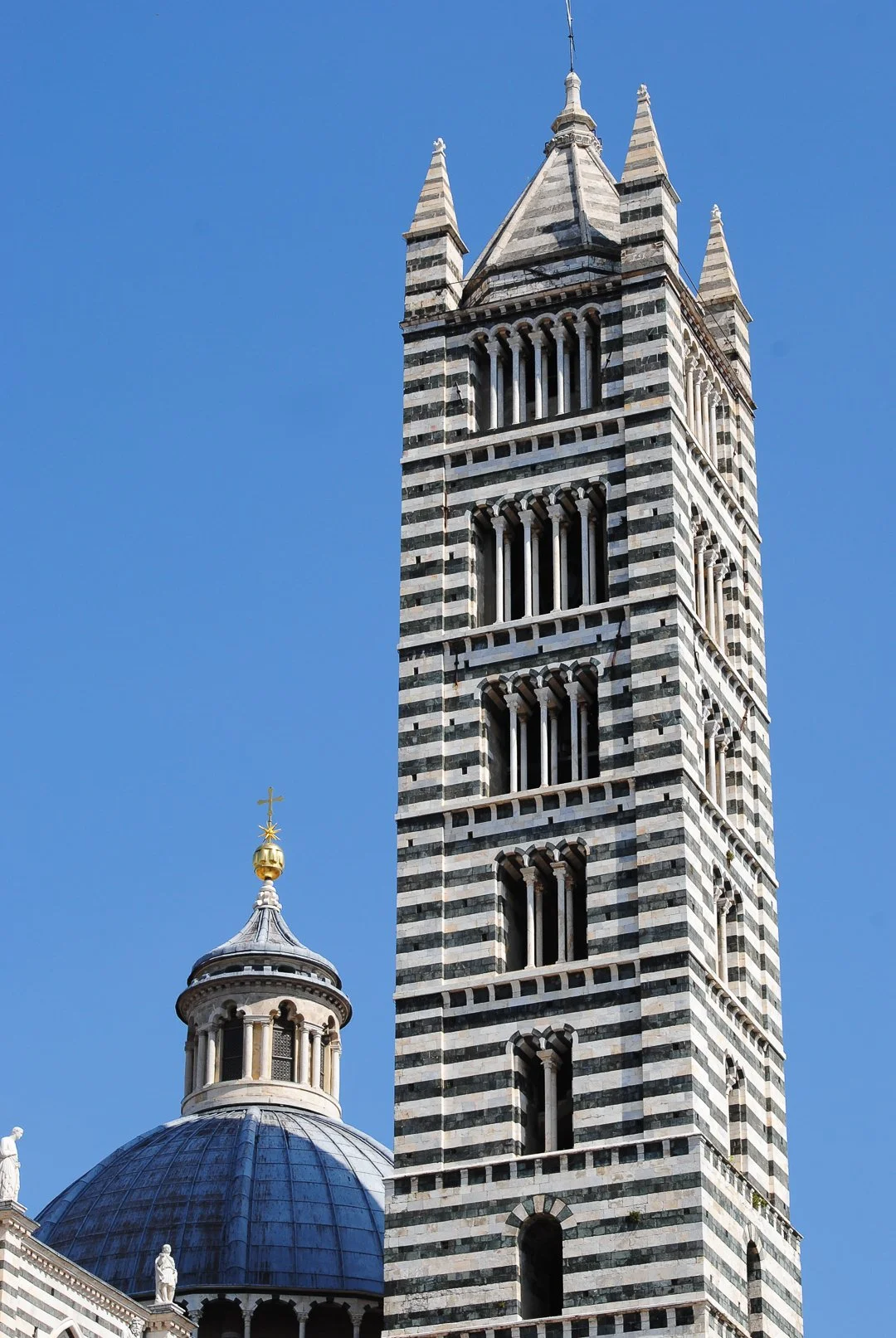
All photos for this blog were taken by Anna. Siena Cathedral, Tuscany, Italy.
This is the first in a three-part series exploring the meeting place between art and contemplative practice.
My aim is to explore how certain forms of art and design can deepen our attention, expand perception and bring us into a more intimate relationship with the world around us.
For many years I taught meditation in formal settings, yet over time I discovered something unexpected: the same states of presence and spaciousness that arise in meditation can emerge naturally through encounters with art, architecture, symbol and place.
Contemplative art offers us new ways of seeing – as well as new ways of being seen.
This series explores how and why.
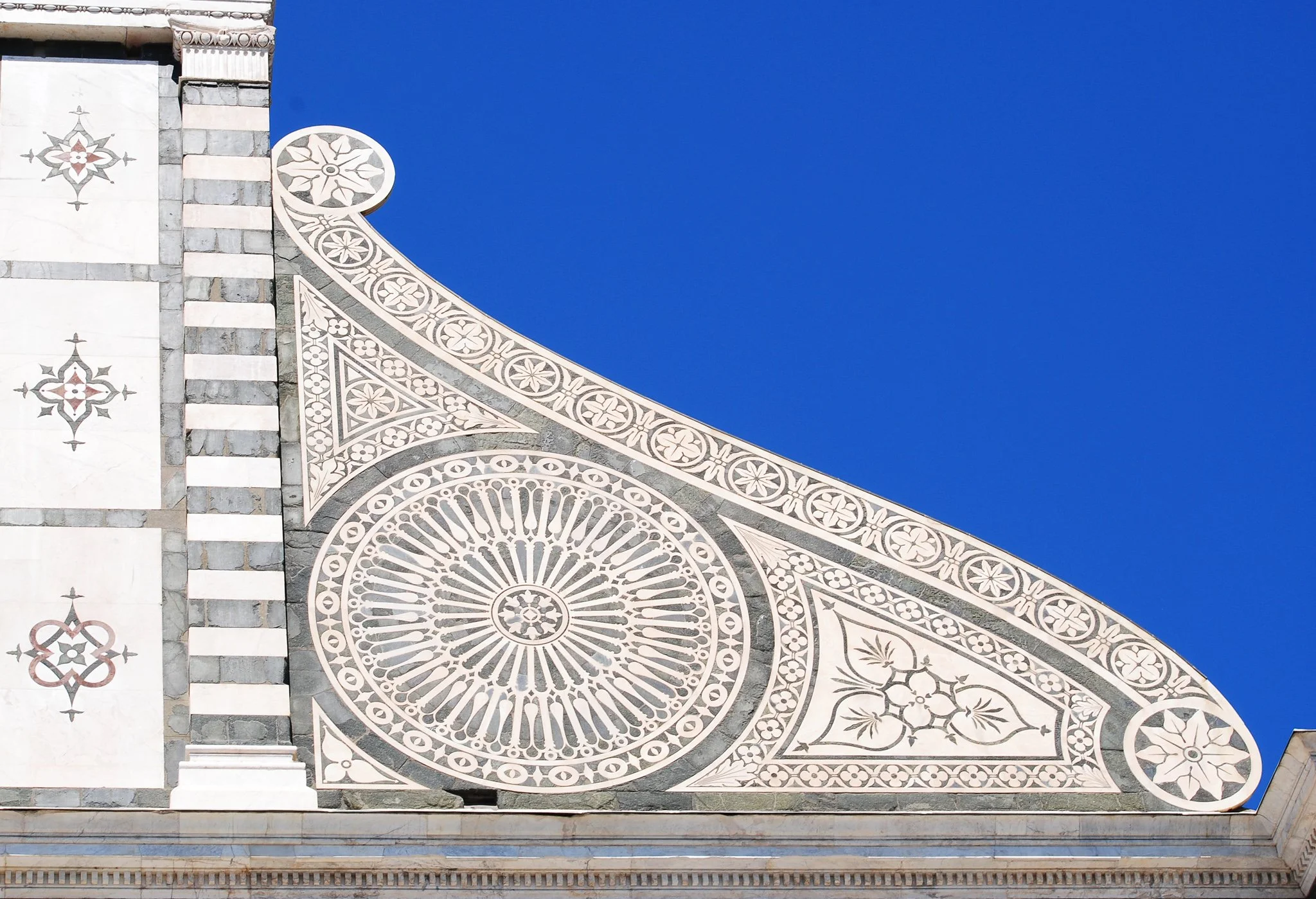
Detail of Santa Maria Novella, Florence.
Why Art? Why Now?
There is a long lineage of using artworks (from illuminated manuscripts to frescoes, icons, altarpieces and architectural motifs) as tools for reflection, learning and transformation. Symbolic forms, colour palettes and layered imagery have carried cultural memory for centuries.
Today, this lineage feels increasingly relevant. We are living through a time marked by environmental uncertainty, social fragmentation and a growing sense of disconnection from the natural world. Contemplative encounters provide us with an an antidote: they are an opportunity to (re)engage and create meaning in our lives through simple creative practices.
What interests me is how contemplative art shifts consciousness.
If the “why” speaks to the moment we are living through, the “how” lies in the particular qualities of form, rhythm and attention that art awakens.
Certain visual forms invite stillness.
Certain patterns expand the field of awareness.
Certain spatial experiences – light, geometry, proportion – can alter how we inhabit ourselves and, in turn, how we meet the world around us.
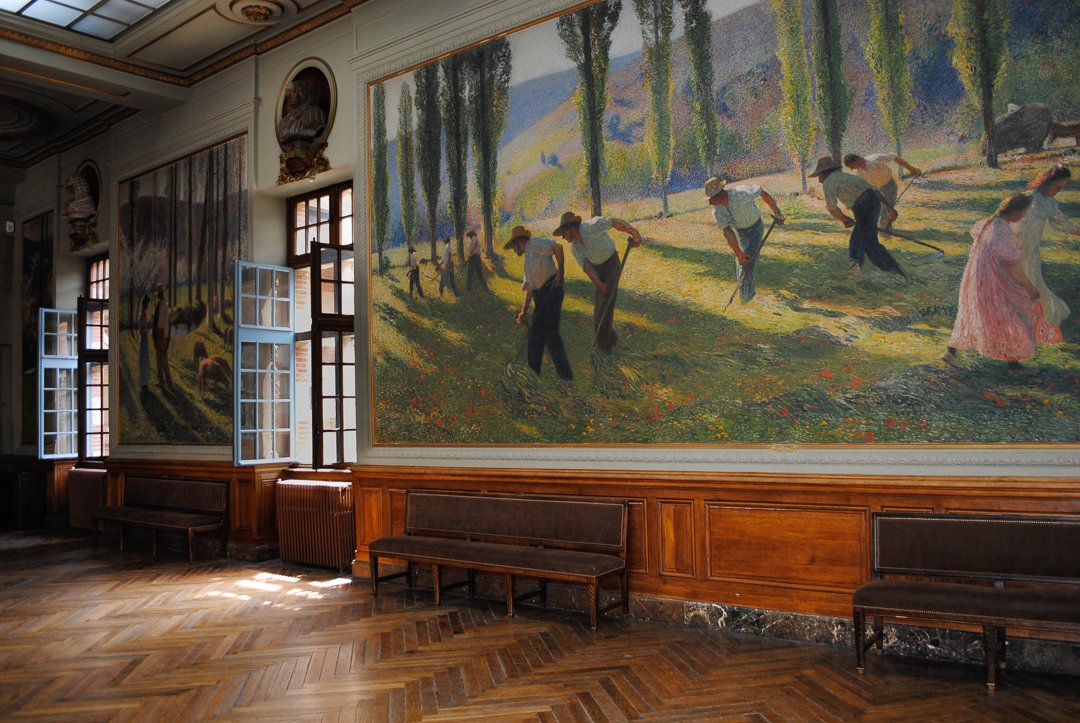
A visit to Toulouse, France.
Two Strands of Contemplative Art
To start our journey, it is helpful to distinguish between two related but different strands of contemplative art:
1. Contemplative art practices:
Intentional methods of looking, deep listening, or attending that cultivate presence and deeper perception. My Emily Mason meditation, for example, uses colour, abstraction and slow attention to gently shift internal states and open new ways of sensing.
2. Contemplative works of art:
Artworks where subject matter, form, rhythm or atmosphere naturally evoke spaciousness, stillness or reflection. Certain paintings, architectural spaces or photographs invite contemplation simply through what they embody and how they are made.
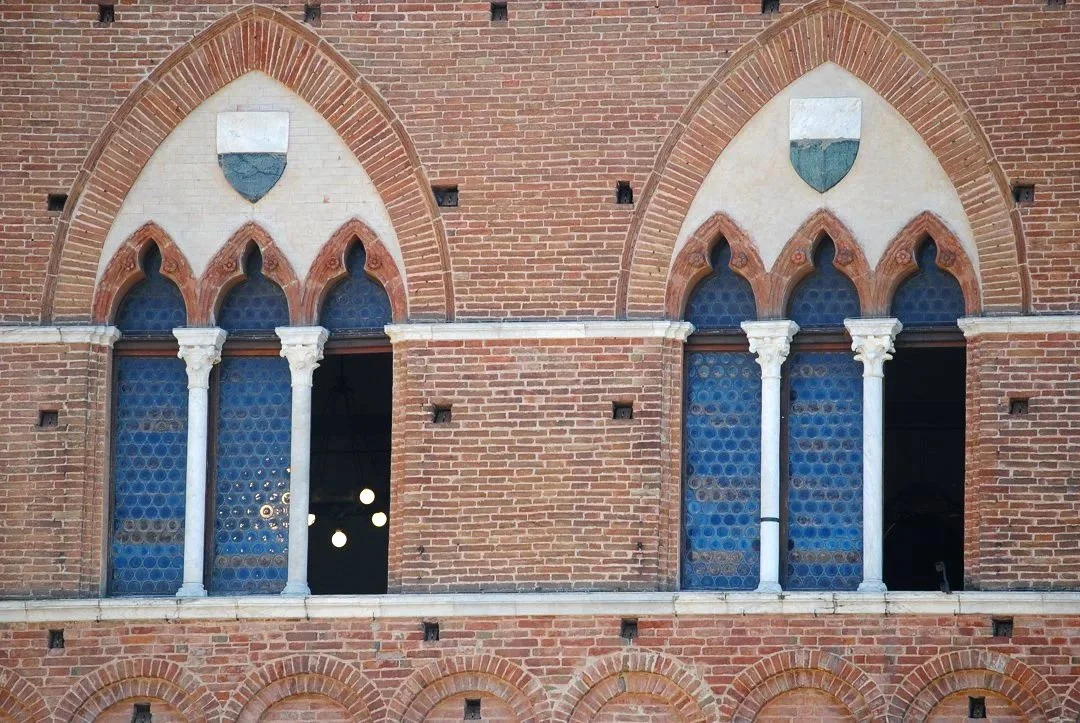
Inner and Outer Worlds in Contemplative Perception: Palazzo Pubblico, Siena, Tuscany
These two strands often overlap:
A contemplative practice can transform how we encounter an artwork; and a contemplative artwork can, in turn, draw us into an inner state of attention without any deliberate technique.
A simple example is the way many people respond to the paintings of Georgia O’Keeffe. Her magnified flowers, long horizons and elemental forms slow the viewer’s gaze, stretch perception and elicit a sense of calm. No instructions are required; the artwork itself becomes an invitation into another way of seeing and being. This is contemplation arising from form.
Inner and Outer Worlds in Contemplative Perception
One of the most important aspects of contemplative art is recognising that our internal world – our emotional life, memory, imagination and sensory awareness – is never separate from the external world.
Architecture shapes our interior states.
Light influences mood.
Colour modulates attention.
This mutuality is at the heart of a contemplative art practice.
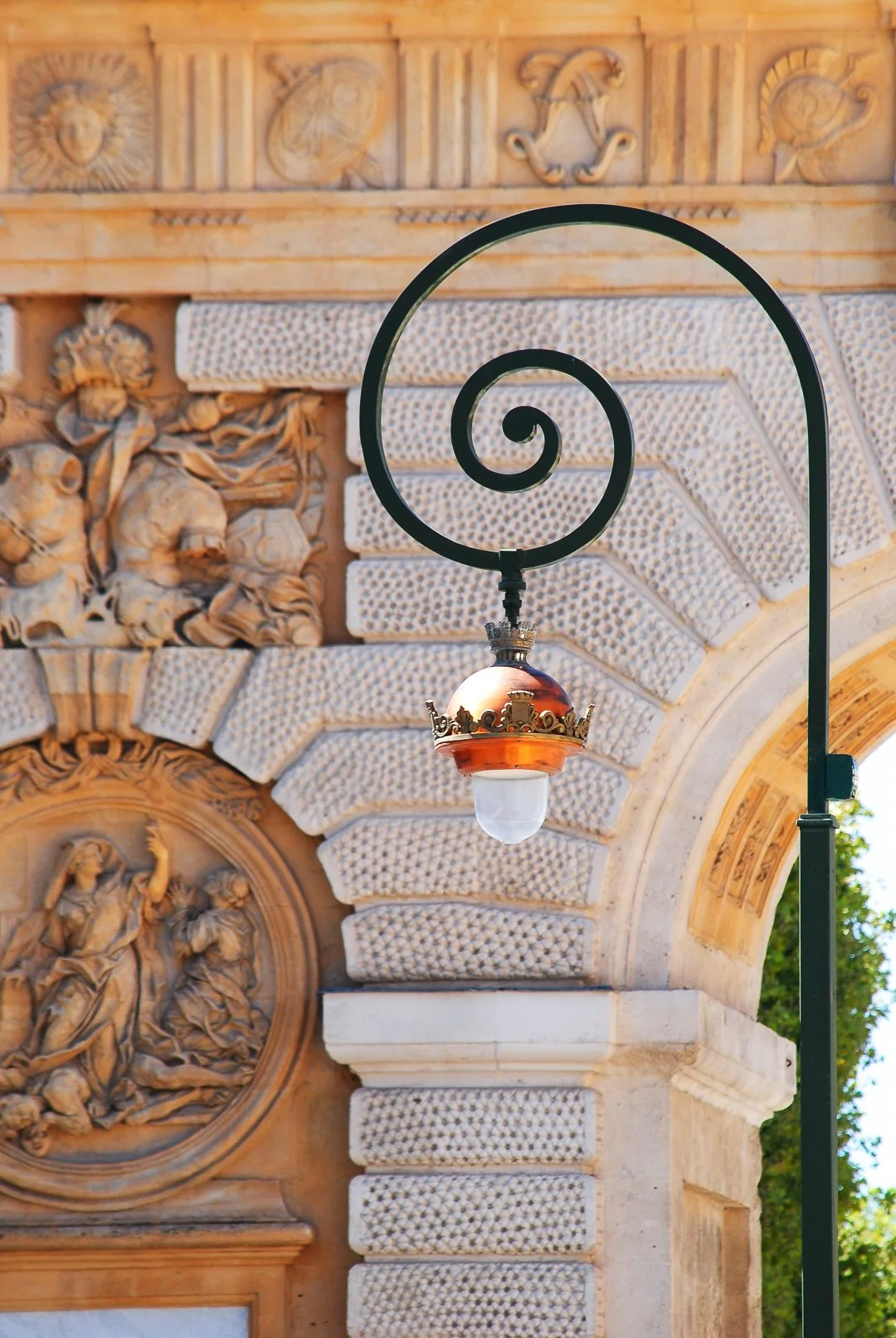
Spiral-shaped lamp in Montpellier, illustrating symbolic geometry and contemplative design.
A simple example is the breath.
It is a continuous cycle without a fixed beginning or end; a movement that belongs simultaneously to the self and to the surrounding world. One breath contains both interiority and environment.
Likewise, art and design move between the internal and external in ways we rarely notice.
A line, a curve, a piece of stonework, or the way light falls through a window can influence emotion before thought even appears.
These are perceptual experiences that reveal how deeply interconnected we already are.
However, most of us move through life with the subtle sense that “self” is here and “world” is out there; as if our inner life and our outer circumstances are divided.
Contemplative art (and practice) invites us to gently examine this assumption.
When we pay close attention to an artwork, a building or a landscape, something curious happens: the ‘boundary’ between self and world dissolves. This is an opportunity to experience life as an interwoven field of relationships, rather than a series of isolated events.
This is what I sometimes call passing through the veil of separation – an experiential shift that arises naturally through presence, attention and sensory engagement.
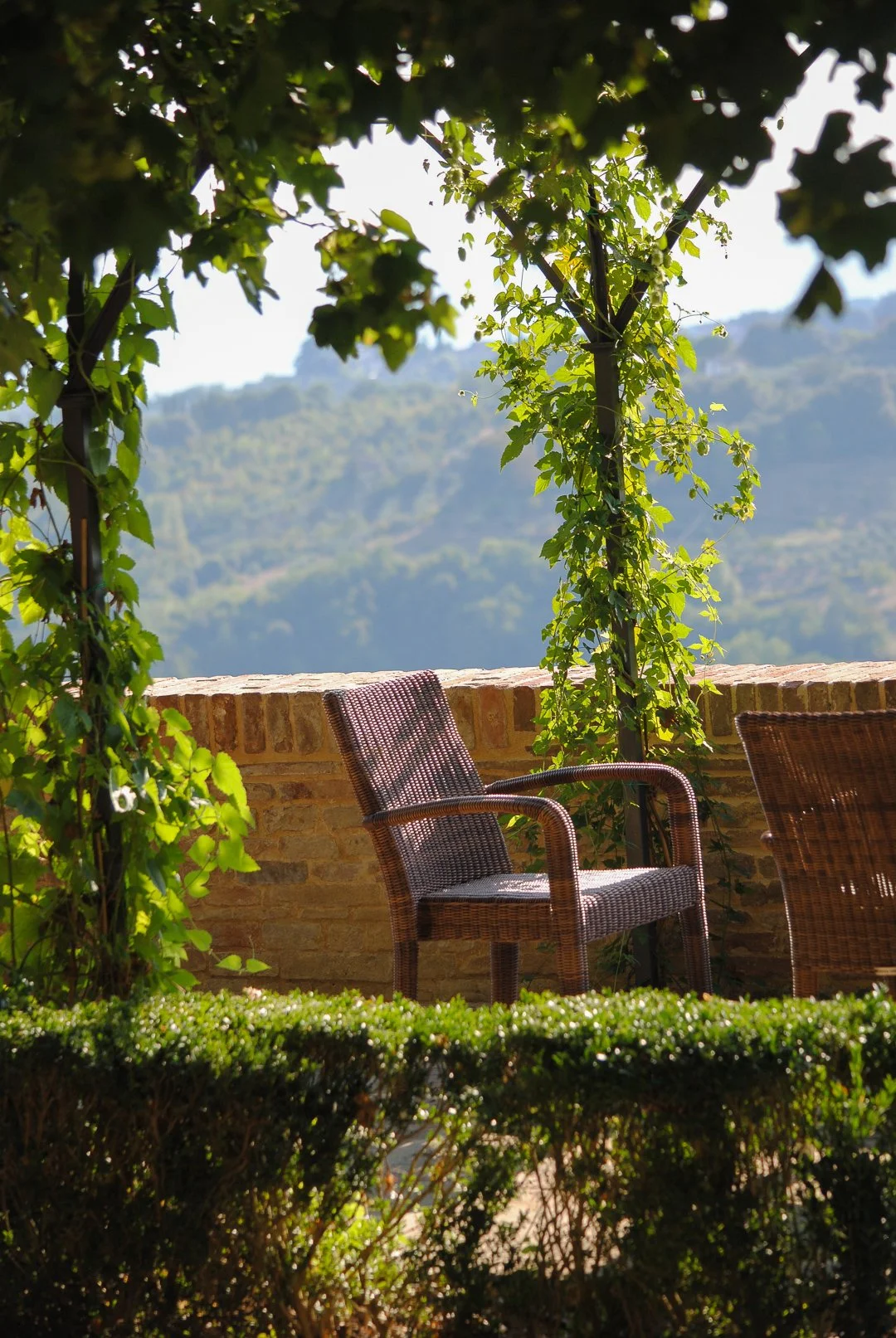
View of Siena, Tuscany. Reflecting on interconnectedness and contemplative ways of seeing place.
A few last words about Moments of Stillness and Recognition
A vital aspect of contemplative art engagement is offering ourselves moments of pause through embodied presence. When we slow down, even briefly, something in us reorganises. Space opens. Meaning reveals itself. We notice what is truly present.
It is often in these small, unguarded moments that something profound stirs:
a shift in perspective,
a softening of an old pattern,
a glimpse of the world as connected, alive and luminous.
An Invitation
This three-part series is an invitation into a slower way of seeing and being.
Join me on a journey through contemplative art that may help you deepen your creativity, expand your perception and cultivate a more intimate relationship with the world around you.
Our Next Essay: Discover the forms, spirals, branching patterns, rhythms and cycles that reveal the deep structures of connection that underlie all living systems.
Thank you for reading.
I would love to hear your reflections, and if you feel inspired, you can follow along on Instagram where I share images, field notes and contemplative observations that extend the themes touched on here.