The Lazy Wall
The Lazy Wall Gathering, by Anna King
Funded by Roscommon County Council Creative Ireland Programme and supported by Ballaghaderreen Tidy Towns, The Lazy Wall is a participatory art project rooted in the social and working life of Ballaghaderreen’s creamery.
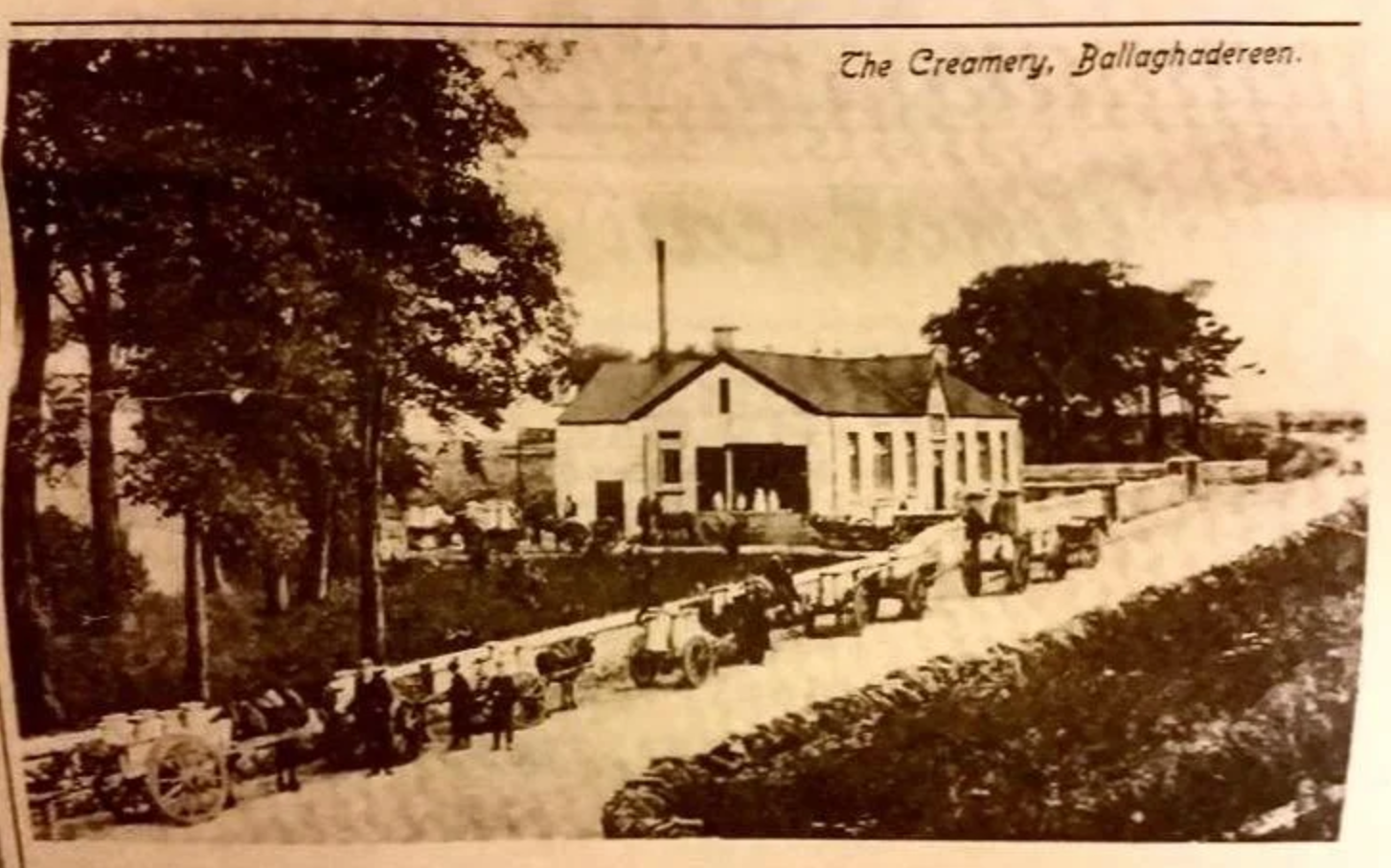
The original creamery was located at the back of St. Mary’s Hall, opposite the Cathedral. A new larger facility was built in 1908 (now Circular Road). Photo: Ref. 1.
Once a vital centre of exchange, the creamery shaped daily rhythms, local economies and relationships across the community.
Beside the creamery stood the Lazy Wall, a place where farmers gathered as milk was weighed. Time was shared and stories exchanged, as knowledge passed between generations.
The Lazy Wall also provided a focus for social ritual and acts of initiation, such as a young person lifting a full milk can for the first time. With laughter passing between neighbours and news travelling from one end of the wall to the other, the Lazy Wall represented how people were bound together through the practicalities of everyday life.
News From the Lazy Wall
This project brings this tradition into the present as a way of encouraging storytelling, exchange and connection across our community. Over the next three weeks, Lazy Wall Post Boxes will be hosted at five locations around Ballaghaderreen, including the Men’s Shed, The Shambles and Library.
People are invited to contribute a story, memory, community news, or something that has inspired them.
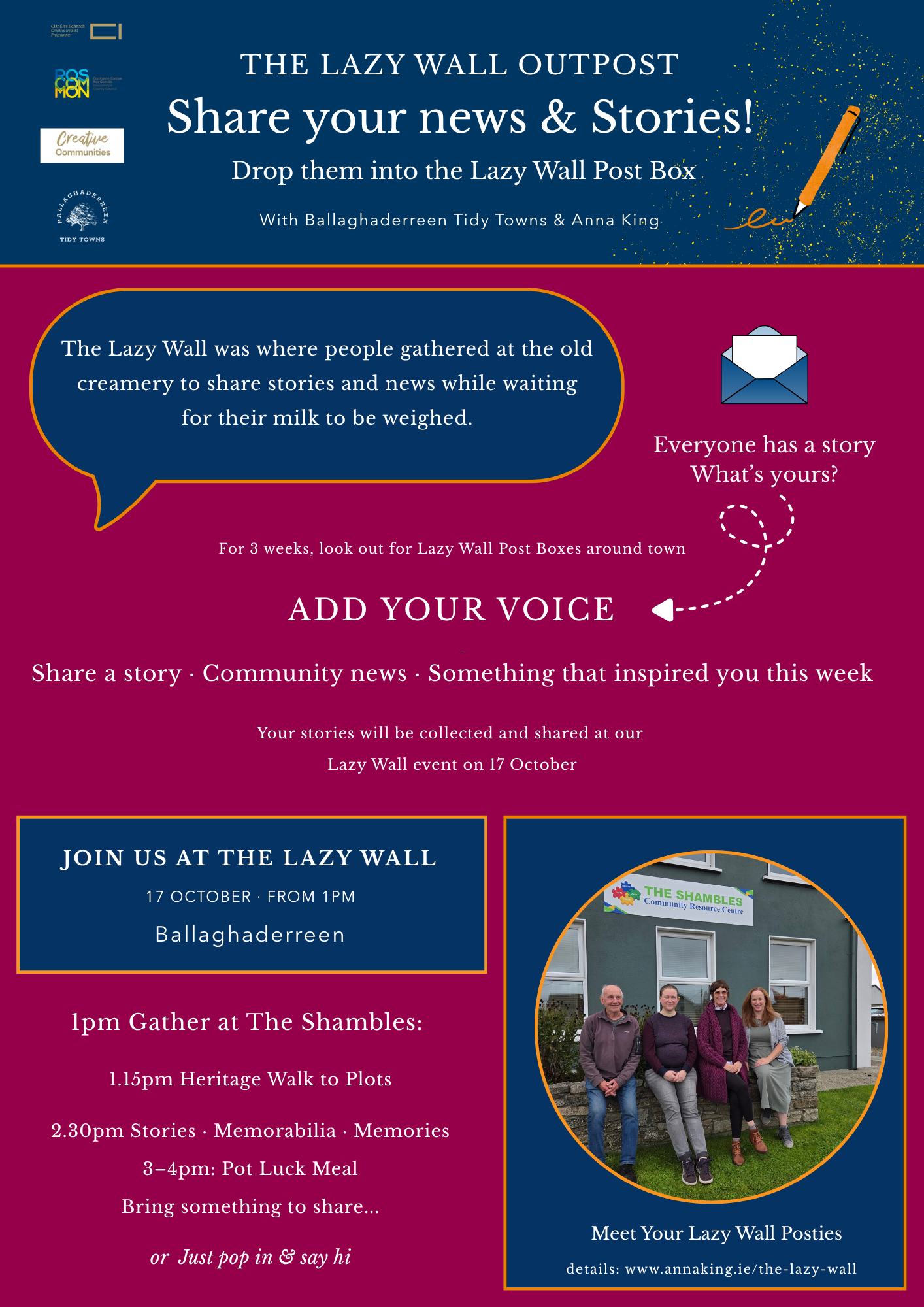
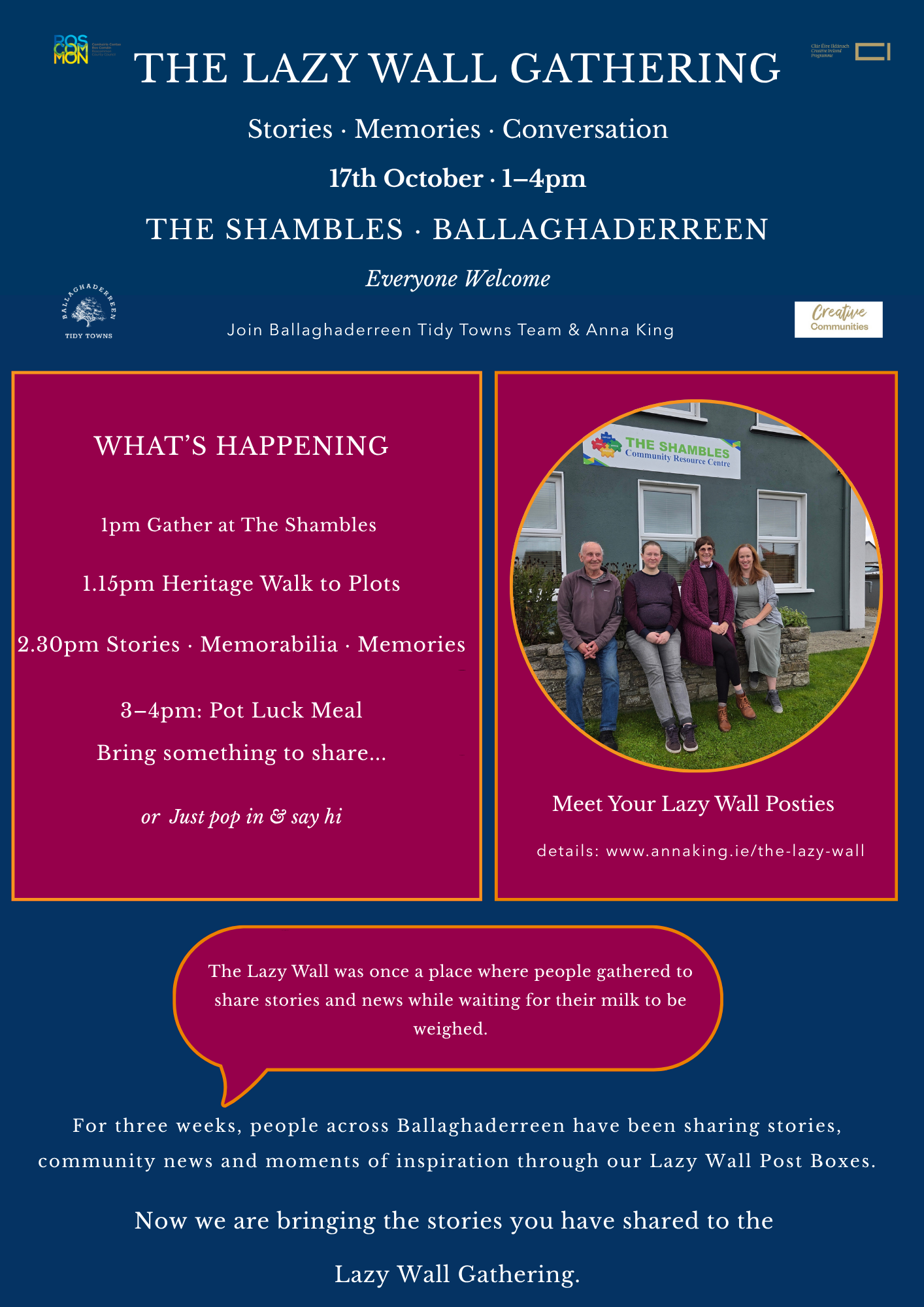
Our Lazy Wall Posties will collect the contributions and bring them to the Lazy Wall Gathering at The Shambles on 17 October, 1 - 4pm, where they will become starting points for storytelling and conversation. The gathering will also include a heritage walk, creamery photographs and memorabilia, a temporary reconstruction of a small Lazy Wall in stone, and a communal pot-luck meal.
About the Creamery
The creamery co-operatives in Ireland were vital centres for local and regional trade, milk processing and social life up until the mid-20th century.
Their decline was mainly due to the advent of larger-scale dairy processing factories, technological advancements in the industry, and increasing competition from more efficient centralised processing facilities. This shift occurred gradually, over several decades.
Collaboration was a cornerstone of rural life In the 1930’s
The farmers of Ballaghaderreen were faced with the daunting daily task of transporting their milk to the creamery by horse and cart. To ease this burden, they organised themselves into groups of six farms. Under this arrangement, the farmers took turns in delivering the collective’s milk to the creamery, which meant just one trip a week for each farmer. On the seventh day, the farmer’s wives would churn their own milk to ensure they had enough supplies for the week ahead.
This collaborative effort not only lightened the load for individual farmers, but it also fostered a sense of community and shared responsibility.
It is worth noting that the creamery, as well as the local egg store, were important sources of employment for women in the area. During the 1930s, working full-time at the creamery typically yielded an average monthly wage of 4-6 pounds, providing vital income and economic stability to many women in the community (ref.2).
Ref 1. Ballaghaderreen Past & Present Facebook Page.
Ref. 2: History Blog - Kathleen Roddy Glynn.
This project builds on Anna’s heritage walks developed during her 2024 Creative Places Ballaghaderreen artist-research residency: PlaceWays.